Album Review: Chromakopia

Adem Jones || Issue 7 || November 4, 2024

In the realm of hip-hop, few artists can seamlessly blend vulnerability with bravado quite like Tyler, the Creator. With his latest album, Chromakopia, Tyler not only showcases his artistic evolution but also dives deep into the complexities of identity and fame. The journey begins with the music video for “Sorry Not Sorry,” a B-side from Call Me If You Get Lost. Tyler invites us into a theatrical experience, gathering an eclectic cast of friends, family, and former lovers in a cinematic setting. As a soldier leads them to their seats, we are introduced to the transformative character of St. Chroma, which is a representation of Tyler’s inner struggles.

The narrative unfolds dramatically, with Tyler enclosed in glass, where he engages in the act of shedding his past. This culminates in the pivotal moment when he removes the pastel ushanka of Sir Baudelaire, symbolizing the release of old personas that no longer define him. Front and center, Tyler’s mother, Bonita Smith, opens the album with a powerful statement: “You are the light. It’s not on you, it’s in you.” This sentiment reverberates throughout the project, framing Tyler’s introspective exploration of legacy and self.

Musically, Chromakopia is an ambitious endeavor that captures Tyler’s duality. The album opens with “St. Chroma,” which bursts forth with a melodic flute that resembles a battle cry.

Accompanied by driving rhythms, Tyler’s whisper-rap urges listeners to lean in, as he says, “I have something important to share.”

Daniel Caesar’s ethereal vocals bring more life to the track, prompting us to question, “Can you feel that fire?”

The atmosphere shifts, drawing us deeper into Tyler’s psyche.

In tracks like “Noid,” Tyler navigates the depths of his mind, confronting fears that lurk beneath the surface. He reflects on the pressures of fame, revealing feelings of being constantly observed by fans and critics. At 33, Tyler grapples with the reality that while many of his friends are starting families, he is haunted by anxieties about potential break-ins from obsessed admirers. The eerie electric guitars sampled from Zamrock legends Ngozi Family create a chilling mood that resonates throughout the song. It echoes the haunting Swahili warning from Get Out: “Listen to your ancestors. Something bad is coming. Run.”

A consistent voice throughout the album, Tyler’s mother, serves as his moral compass. In the heartfelt track “Like Him,” he questions whether he will follow in the footsteps of his estranged father. Bonita complicates this narrative by sharing, “He’s always wanted to be a father to you… He’s a good guy,” prompting Tyler to reflect on his long-held criticisms of his father’s absence. Coupled with the anxiety of a pregnancy scare in “Hey Jane,” it becomes clear why Tyler is so preoccupied with fatherhood. In “Take Your Mask Off,” he confronts his fears, confessing, “Boy, you selfish as f***, that’s really why you scared of bein’ a parent.” This really highlights the humbling experience of recognizing flaws within one’s self.

Unlike the flashy lifestyle depicted in Call Me If You Get Lost, Chromakopia redefines Blackness as a cultural status symbol.

Tyler weaves themes of white supremacy into his narrative with subtlety and skill. In the track “I Killed You,” he begins with a playful interpolation of “Wheels on the Bus,” but quickly pivots to critique Western beauty standards.

With vibrant percussion reminiscent of a New Orleans parade, he challenges Black listeners to embrace their uniqueness,

boldly proclaiming, “You the room, baby, they the motherf-ing elephant.”

Tyler’s collaborations with several Black women further amplify the joy of music-making as a Black artist in hip-hop. In “Sticky,” featuring GloRilla, Sexyy Red, and Lil Wayne, he confidently says, “Give a f*** ’bout pronouns, I’m that n**** and that b****,” all delivered over an irresistibly catchy beat. The energy of this track is high and exciting, with a hook that’s sure to stick around in the listener’s heads long after the song ends. Tyler’s ability to shine through whimsical beats, as seen in tracks like  “Balloon” and “Thought I Was Dead,” reinforces his prowess as a rapper.

For all the introspection that comes with navigating his thirties, it’s the confident tracks like “Thought I Was Dead,” “Rah Tah Tah,” “NOID,” and “Sticky” that resonate the most. Tyler’s disdain and ultimately rejection of his former self hits hard as he raps, “That version of Tyler that you knew was a memory,” anticipating critiques with a dismissive, “Who is that? You n***** get too attached to hear the theory.” Not long ago, his controversial lyrics incited fear and controversy in listeners and in the media, but he has emerged as a more approachable figure without sacrificing the sharp wit that defines him as an artist and a lyricist. Not many artists have his infectious confidence, which he is able to use as a tool for creating discussions rather than flat-out cockiness.

Ultimately, Chromakopia stands as a testament to Tyler’s growth and it is a powerful exploration of identity, vulnerability, and the struggles that come with fame. He emerges as an artist who isn’t afraid to confront his past while celebrating his present, making light of some of the darker portions of his journey. This album is so much more than a collection of songs, it’s a journey through Tyler’s mind, a picture painted using his experiences, fears, and triumphs. As he navigates insecurities and revels in successes, Tyler, the Creator remains a force that captivates, challenges, and inspires.

Game Review: Animal Crossing

Heaven Carter || Issue 7 || November 4, 2024

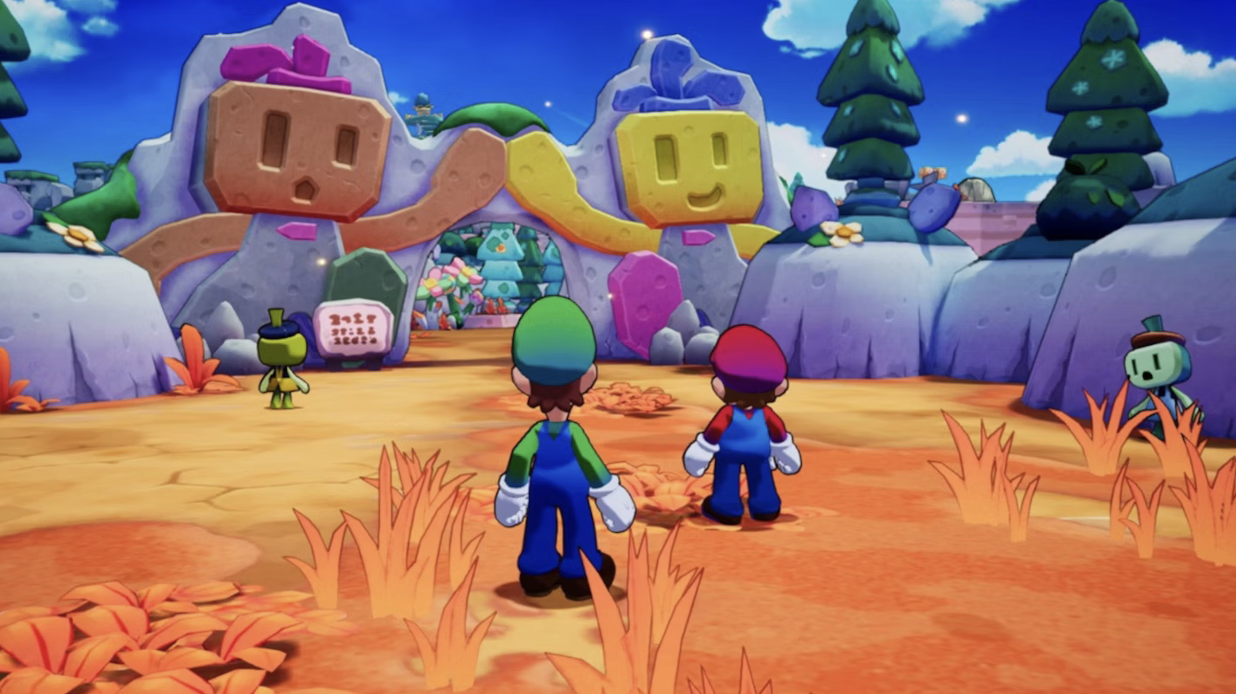
You get on a train from the train station and see all these empty seats until you are called by a blue cat who introduces himself as Rover. Next thing you know you’re thrown into an adventure that’s not too big and not too small. Just taking care of a small island and making new friendships. What is this you ask? Well it’s an animal crossing game!! For those unfamiliar city folk was the first animal crossing game to come out on the GameCube. In almost every single game not including spin offs or pocket camp you are the island representative and it’s not exactly a goal but more of a note in mind if you’d like to nurture your town back to its former glory.

The new installment New Horizons which came out in 2020 has taken into account only some aspects that the old games have incorporated though and even if they have

expanded on them, like crafting, diys, nook miles, cooking and even new ways to decorate houses like in the dlc happy home designer which is now happy home paradise the old games have just some level of charm to them that seems to be just missing.

From the back stories of each npc to the slow burn friendships you make with each villager instead of them being a little too friendly in new horizons.

One old feature I’d like to take into account in this article though is the center tree in New leaf. There’s a small ceremony where you plant your own tree and after it grows you can then sit at it.

Doing so initiates a cutscene with slow and memorable music and lists the dates of each achievement that passes throughout your time in your little town. It’s something that’ll never leave my mind to this very day and I so wish that was the case for new horizons but just keep in mind that it’s not a completely bad game because of it. The thing is New Horizons was promised to be updated for at least three years but stopped and decided to go the dlc route.

Though the wait for dlc from New leaf was even longer there was still stuff to do within the game, such as tortimer’s multiplayer Island. I just hope that the next installment takes into account the things that have made animal crossing… Well, animal crossing!!

Rabies & What We Have Wrong!

What are some common misconceptions with it?

Aidan Durie || Issue 7 || November 5, 2024

When you ask a person to think of rabies, a few animals come to mind right away. Such as dogs, rats, raccoons, mice, foxes, bats, skunks, cats, and possums, but do all of these commonly thought of animals really deserve all this bad press? The answer to that question is what we’ll briefly cover here, as well as a couple common misconceptions related to this horrifying incurable disease. 

     Firstly we’ll talk about which of these prior listed animals commonly do carry rabies. Those carriers being bats, foxes, skunks, raccoons, and cats! With cats being number one in terms of domestic animals according to the New York state “Among domestic animals, cats are most frequently diagnosed with rabies in New York State.” As stated on the rabies section of their website. As for some of the animals that don’t commonly carry rabies we have mice, rats, many other rodents, dogs, and opossums (which are marsupials not rodents). Which is quite surprising to most people; the thought that most commonly rodents and dogs carry rabies less often than cats, raccoons, foxes and skunks comes as quite a shock.

More often than not we as people associate rodents with filth and disease, but it is instead some of our cutest animals we need to watch out for most when it comes to disease! As for some common misconceptions when it comes to rabies past just rodents not being the primary carriers, we’ve got the idea that if you get bitten by an animal with rabies you’re just completely screwed. Which is only the case if you don’t take action after being bitten by an animal and that animal happens to have rabies; once symptoms present, yes you are most likely dead, but if you

immediately take action after an animal bite, and receive proper post-exposure prophylaxis as it’s put by the CDC, your chances of survival spike up dramatically, as this whole procedure of PEP is “is nearly 100% effective if administered promptly.” States the CDC’s rabies page.

Another misconception about rabies is that it can only be transmitted through bites, which isn’t quite the case; in truth “the virus can be transmitted when saliva enters any open wound or mucus membrane (such as the mouth, nose, or eye).” says a rabies article from the IAMAT. Which means that things such as scrapes, spits, and licks as well can transmit this flagrant frothy disease to your body! 

     Hopefully you learned something new and useful from this article, and maybe next time you won’t say that a cat’s got your tongue, but a rat instead, at least if you don’t want rabies that is!

OPENAI Shifts into a For-profit Business

OPENAI’s Multi-million Dollar Gambit

Adem Jones || Issue 7 || November 4, 2024

OpenAI has announced a shift from its original nonprofit structure to a capped-profit model. This change is designed to attract the substantial investments necessary to fuel its ambitious goals in artificial intelligence (AI). As people begin to learn about and understand the implications of this decision, it’s clear that the tech landscape is undergoing a transformation that raises questions about the balance between innovation and ethics.

     Originally founded in 2015 as a nonprofit committed to ensuring that artificial general intelligence (AGI) benefits all of humanity, OpenAI has recognized that the growing costs associated with AI research demand a new approach. Sam Altman, OpenAI’s CEO, says “The only way to make progress in AI is to invest heavily in it.” This sentiment reflects a reality in which the competition for cutting-edge AI technology is intensifying, and the financial stakes are higher than ever.

The decision to switch over to a capped-profit model is primarily driven by the high expenses tied to developing advanced AI systems. As Altman pointed out, building AGI that is aligned with human interests requires a lot of resources.

With giants like Microsoft and Google now heavily investing in AI, OpenAI must position itself competitively. Microsoft’s $1 billion investment in OpenAI in 2019 illustrates the kind of financial backing that can propel the organization forward.

Partnering with Microsoft has enabled OpenAI to tap into essential cloud computing resources, speeding up its research efforts.

     However, this shift has sparked concern among some critics. There’s a fear that the move toward this new model might compromise OpenAI’s foundational principles, leaving people to wonder, will prioritizing financial gain become the priority over ethical considerations? The history of tech companies suggests that profit motives can sometimes lead to neglecting social responsibilities. 

     In defense of the change, Altman insists that the goal remains to continue to do good. The capped-profit model is intended to balance the need for financial sustainability with the commitment to ethical responsibilities. By offering a limited return on investment, OpenAI aims to fund its research without sacrificing its mission to benefit humanity. But this raises a critical question: Can a company truly uphold its ethical commitments while being influenced by turning a profit?

This debate also intersects with the ongoing discussions about regulating AI technologies. As these systems become more embedded in our daily lives, issues surrounding accountability, transparency, and bias have come to the forefront.

The concern is that in the pursuit of profit companies might overlook the importance of ethical AI development.

     OpenAI’s transition reflects a broader trend in the tech industry. Many startups are reevaluating their funding strategies as the demand for advanced AI solutions continues to surge. Altman remarked, “We need to adapt to the realities of AI development, which requires an unprecedented level of investment.” This adaptation, while necessary, can create tension regarding the long-term implications for ethical AI development.

     While the transition to a capped-profit model may provide OpenAI with the resources needed to accelerate its projects, the larger ethical concerns remain in focus. As OpenAI embarks on this new journey, the eyes of stakeholders across sectors will be observing how the organization balances profit motives with its commitment to responsible AI advancement.

     At this crucial juncture in AI evolution, we must keep the conversation centered on the ethical considerations that must accompany technological progress. OpenAI’s shift to a capped-profit model could be a necessary step toward sustainability, but it also serves as a prompt for broader discussions about the future of AI and the responsibilities that come with it. 

Archaeologists Find Tiny Frescoed House

What are frescos, and why are they just being found now?

Jonah Flanagan || Issue 7 || November 4, 2024

Recent reports of a small house located in Rome, lacking an atrium but decorated with preserved frescoes has been discovered in the roman city of Pompeii, which was destroyed by Mount Vesuvius in A.D. 79.

Pompeii was a flourishing resort city in the south of Rome, that was built around 8-9th  century B.C. by the oscans. But along the coast of the city was the shadow of a volcano called Mount Vesuvius where its famous eruption occurred which devoured the city in ash and rubble in 79 A.D.

Photo credits: Archaeological Park of Pompeii

Aside from the famous eruption, Pompeii was most known for its buzzing city life, from the artifacts, the cult of Isis, Fashion, and its art. Mostly it’s frescos. Frescos is an art technique that consists of its mural painting, the process would include mixing water and powdered dye pigment  with a plaster that would be applied to a wall, which would result in a mural.

The site has been named “The House of Phaedra” after the mythological queen of Athens, who is depicted in one of the paintings with her stepson Hippolytus, who refuses her advances.

On the other walls depicting patterns, scenic views from nature, an encounter between a satyr and a nymph, and gods who may or may not represent Venus and Adonis. Unlike many of the houses excavated at the site, it was not built around the traditional atrium, which is an open space with a pool for collecting rainwater. Despite its small size, the house is stated to “strike us for the high level of its wall decorations,” which means they were of similar quality to much larger and more opulent homes near the discovery, which lies at the center of the site.

Malcolm in the Middle Star goes Nascar Racing: Actor Frankie Muniz Advances Lifetime Dream of Nascar Racing

Alan Conklin || Issue 6 || October 28, 2024

The name Fankie Muniz is usually associated with the Fox hit TV show “Malcolm in the Middle”, which ran from 2000 to 2006.  Rightfully so as in 151 episodes the show racked up nearly 100 Emmy nominations, winning 29.  Its streaming availability on Hulu and Disney Plus also keep it relevant as many rewatch or discover it for the first time.  But even as the show’s main star, Malcolm, Muniz hopes that in the near future he will be known as NASCAR driver first, actor second.

At age 38, Muniz is certainly on the older side of full time NASCAR drivers, but he is no beginner to racing.  Despite his early start as an actor, Muniz had always wanted to be a racecar driver.  He got his first chance to experience this during the 2004 Toyota Pro/Celebrity race, then dabbled with American open wheel racing in a variety of series throughout the rest of the 2000s.  In the 2010 he took a step back, only appearing in a few select one-off races.  But as the 2020s came around he had shifted his focus to NASCAR. He dabbled with NASCARs lesser known ARCA Menards series with a few races in 2022, before going fulltime in 2023 with Rette Jones Racing. 

He had a successful season with them, which led him to move up to part time racing in NASCARs third and second tier series, the Craftsman Trucks and Xfinity, for 2024.

He made the most out of these opportunities, as the team he had run part time for this year, Reaume Brothers Racing, has signed him to pilot their number 33 Ford fulltime in the Truck series next year.  Getting a full time ride in one of NASCARs three premier series is a huge part of eventually becoming a Cup series driver.  Muniz hopes to take full advantage of this opportunity in his continued pursuit of a lifelong dream.

Road to the 140lb Crown: Jack Catterall vs Regis Prograis

Ameer Lausell || Issue 6 || October 28, 2024

In a division that is red hot with competition following the defeats of champions Isaac “Pitbull” Cruz, Devin “The Dream” Haney, and Puerto Rican pressure fighter Subriel Matias, 2 men meet in the squared circle each jockeying for title position and with something to prove. On October 26, Jack Catterall (29-1, 13 KOs) and Regis Prograis (29-2, 24 KOs) will share the ring. Coming fresh off of a unanimous decision loss, hard-hitting 35-year-old former WBA champion Regis Prograis looks to recapture boxing gold and establish himself among the big fish in the 140lb division. But can he do so against a hungry, young (31) and dogged Jack Catteral? 

Caterall’s lone controversial loss came at the hands of former undisputed champion Josh Taylor which he avenged in commanding fashion in May of this year leaving no doubt that he should’ve been the top dog in the division. Prograis also shared the ring with Taylor where he lost in a 12-round war of a unification bout that ended in a majority decision for Taylor back in 2019 on his road to undisputed.

In boxing styles make fights. Each man is an elusive south-paw who fights mainly as a counter-puncher. Expect sharp and accurate blows from both men and, if you love a good chess match, this is the fight to watch. Like many fighters of the post-Mayweather era, Catterall has patterned his style after Floyd, utilizing the Philly shell defense and pumping sharp flickering jabs consistently.

Photo Credits: Getty Images

Prograis also has adopted the Philly shell only adjusting it so that he can land his signature straight left cross leading to 24 of his 29 wins coming by way of knockout. 

This is essentially “Money Mayweather” vs “Pretty Boy Floyd”. This is vitality vs experience. For Catterall, this is only his second high-profile opponent; can he continue proving that he is a 5-star boxer? For Prograis, does he still have what it takes to hang with the young fighters of the division? We will find out soon. Ringwalks start at 5pm and will be streamed on DAZN or check in with your local sports bar!

Figure Skating and Backflips

Olivia Henry || Issue 6 || October 28, 2024

Backflips on ice. The most controversial and difficult move in the history of figure skating. A move done by those most daring. In fact, it was so concerning that it was banned for decades in the 1900s. Skaters could face penalties as severe as disqualification for performing the dangerous move on ice. And though the backflip was illegal until 1976, that did not stop a certain someone from making a daring decision.

That certain someone I am referring to is Surya Bonaly. A retired figure skater from Nice, France. An audacious athlete, breaking barriers and making history in the world of figure skating, a very notable career. She succeeded in doing a backflip, landing on one blade during the 1998 Winter Olympics. She incorporated the move throughout her career countless times.

Surya isn’t the only athlete to succeed at performing the backflip. As the move has become more popular to add to skaters’ routines, people like Ilia Malinin, Nathan Chen, and Siao Him Fa have done so. And if jumping off the ice to do full rotations in the air seemed daunting, backflips could
cause nausea. First off, concerning the mind, there’s like a mental rift you have to cross without a bridge. Second, you have to weigh the risks. Third, you have to be courageous. It’s not something anyone can do.

Watching a backflip being per-
formed on ice was shocking, scary, and stunning. The first time I ever saw the movie performed was by Nathan Chen during the Stars on Ice tour in Boston, Massachusetts, in 2023. I did not expect to see a backflip during the show, much less on ice. This was when I

was ignorant of the backflip existing as a figure skating move. Since then, I am still scared when seeing it done, but praying no person is injured. If there’s something we can all agree on, it’s that we don’t want to watch anybody possibly break any bones. But I believe these athletes know what they’re doing and must be confident in their abilities to take risks that they believe are worth taking. To set new records and challenge themselves by doing what hasn’t been done before. It’s exciting to set a new bar while aiming to reach for the one higher than it.

Photo Credits: Eric Feferberg/AFP via Getty Images

This Week in Sports

Izzie Holt || Issue 6 || October 28, 2024

Women’s Volleyball played in a scrimmage at Dutchess Community College on Tuesday evening October 22nd. They won their 5-set battle, led by Abbigail Newell, who had 17 kills, 29 digs, and 1 ace. She was followed by Jordan Peacock with 11 kills, 12 digs, and 1 ace. The team’s entire roster saw the court, using a full team effort to take down Dutchess Falcons.

Women’s Soccer played Onondaga Community College on Tuesday, October 22nd, at 6pm, on the opponent’s campus in Syracuse. They took a loss, ending in the first round of playoffs to #2-seeded Onondaga. They tallied a total of 5 shots on the day. The team’s goalie Meaghan Casabonne made a total of 18 saves and only allowed 2 goals. The Viking’s offense could not break past the Lazer’s defense. The team ended the season with a final record of 4-8.

Men’s Soccer took a loss on Wednesday, October 23rd, against Herkimer College. This was the NJCAA Region III Semifinals, and was hosted at the Herkiemer campus, in Herkimer NY. They ended their season with a record of 6-7-2. The Vikings held the other side to just a single goal and keeper William Brown had a total of 5 saves.

Recognize Me: Chapter 4

Samarun Suhana || Issue 6 || October 28, 2024

A carnival turned crime scene. A serial killer using a weapon so rare not much research has been done on it. The cautious one in the friend group lives to tell the tale. The odd one in the friend group is nowhere to be found. 

Chapter 4: MASON KIM… Mason Kim, 18 y.o., Korean, always top of his class but quiet. I have been friends with him for as long as I could remember. The profilers came up to me and continuously asked “Where is he?” to which I replied with “I want to know the same thing.” There was a meeting between the police and FBI talking more about the profile and how Mason fit it to a T. I wasn’t allowed in this meeting but that one detective who helped solve Cooper’s wife’s death felt it was okay to tell me, but because of this interaction, the other detectives thought that I was hiding Mason but I really had no idea where he was.

His photo was passed around so everyone knew what he looked like and could turn him in or arrest him if they saw him. I realized at that point how much trouble he was in, when all of a sudden, the area went quiet with a single phone ringing, someone answered and it was from the hospital. The detectives congregated for a minute, wondering if they should tell me, I was relentless though. I needed to know what had happened because I knew it was related to this case. 

A detective from this group came up to me and said “Sam didn’t make it.” My heart dropped. My only other friend was gone. The poison was too strong, he already had a compromised immune system due to asthma. I was so focused on finding this killer I had forgotten about Sam, this was my cross to bear. I dedicated so much time and effort into something that could’ve been discovered without me, I could’ve checked up on Sam, been there for him. The detective handed me a tissue, I hadn’t realized I started crying, heavy. He asked if I needed a space to cry, but all I could think of was seeing Mason in the back of a cop car, looking defeated. I needed to find him for my friends. 

 I rejected the offer and walked away saying “Let’s find him.” I couldn’t think of a reason as to what compelled Mason to take lives or even why he does it. I thought he was good, harmless, normal. Clearly, I was wrong. I’ve known him for so long, it was just so unbelievable, even now after everything that’s happened, I believe that there was something else that in a way forced him to do this.

After about an hour passed and the detectives were just about ready to give up when all of a sudden, there he was. Mason was found. Sitting behind and under the mechanical works of the ferris wheel, there he was, manically laughing at a picture of me. I have no idea where he got the picture because I’ve never sent it to anyone. 

     This exact picture had red marker all over my face and it was cut up. There were hearts everywhere as well. It was horrifying. He was taken in for questioning and admitted he was guilty. When asked why kill his friends, Elly and Sam, he claimed “They got in the way of my love.” He was so mentally gone. Mason admitted to all the murders and said I was supposed to be the last one. I was the main target. When asked about a motive, Mason Kim said “I love her. I want her to recognize me.” 

THE END.