
Adem Jones || Issue 13 || February 19, 2025
President Donald Trump has issued an executive order renaming the Gulf of Mexico to the Gulf of America, a change already implemented in government documents, corporate communications, and digital maps in the United
States. The Gulf is a critical region for energy production and trade, and major oil companies such as BP and Chevron have updated their materials to reflect the new name. Google Maps has also made the change for U.S. users, though the company disabled comments on the update after negative user reviews. The White House has stated that the renaming is part of an effort to “assert American leadership” and align the body of water’s name with its importance to the
nation’s economy. The government of Mexico has objected to the decision, with President Claudia Sheinbaum calling the move historically inaccurate. The Gulf, which borders not only the United States but also Mexico and Cuba, has been known internationally as the Gulf of Mexico for centuries. Mexican officials have suggested they may challenge the decision through diplomatic channels or international organizations. A Reuters/Ipsos poll found that a
majority of Americans are not in favor of the change, with critics arguing that it is a symbolic move with little practical effect. Others believe it reflects a shift in U.S. policy toward emphasizing national identity in geographic naming conventions. Supporters of the decision say it recognizes the Gulf’s economic contributions to the United States and reflects a broader push to assert American interests.
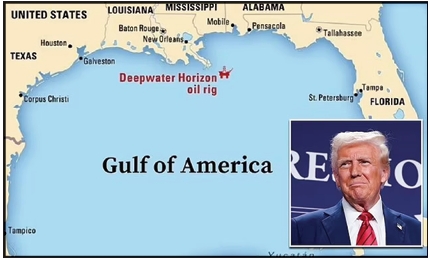
The media has taken different approaches to the name change. The Associated Press has chosen to continue using the Gulf of Mexico, stating that it follows internationally recognized geographic names. Other outlets, such as The New York Times and The Washington Post, have maintained the previous name as well, while several conservative-leaning publications and broadcasters have adopted Gulf of America. The White House has not commented on reports that AP journalists have faced restricted access to press briefings following the organization’s decision. The impact of the name change on businesses and international relations remains uncertain. Some oil companies, including Shell and ExxonMobil, have chosen not to update their usage, while others have already adopted the new name. Legal experts have suggested that unless recognized by international bodies, the change may have limited effects outside of U.S. government and corporate use. Geographic name changes have occurred in the past, including President Obama’s 2015 decision to re
name Mount McKinley as Denali, a move intended to aid in the restoration of indigenous history. The Gulf of America renaming follows a different context, and whether it becomes widely accepted or remains a politically contested issue will likely depend on future administrations and international responses.


 The Hudsonian