Experts warn of growing cancer incidence among young adults, citing lifestyle and environmental factors.
Recent studies reveal that cancer rates are on the rise among young adults, particularly for colorectal and breast cancer, two types traditionally more common in older adults. Data from Cedars-Sinai shows that diagnoses for these cancers in younger age groups have steadily increased over the past few decades, with individuals in their 20s, 30s, and 40s facing higher risks than before.
Experts aren’t entirely certain why these rates are rising but believe changes in lifestyle, diet, and environmental factors might contribute. Factors such as processed food consumption, sedentary habits, and rising obesity levels are under scrutiny. Additionally, genetics and family history remain important aspects, with some individuals more susceptible to cancer at younger ages due to inherited genetic factors.
The rise in these cases has led to adjustments in screening recommendations. For example, the American Cancer Society now suggests that individuals begin colorectal cancer screening at 45 instead of 50, in response to the increasing diagnoses in younger adults. Breast cancer screenings are also being reconsidered, with recommendations for early screenings for those with a family history or higher risk factors.
Dr. John Leppert from Cedars-Sinai explains that “Catching cancer early can be a huge factor in treatment success,” adding that, especially with early-onset cancer, “regular checkups and knowing family history are more important than ever.” Doctors recommend that young adults stay proactive about their health, report unusual symptoms early, and advocate for screenings if they believe they might be at risk.
The rise in cancer rates among younger adults is alarming, but there are positive steps that can be taken. Young adults can reduce their risk by making lifestyle changes such as increasing physical activity, eating a balanced diet, and staying on top of regular health screenings. While there’s still much to learn, researchers and health professionals are working to understand this trend, offering strategies to help younger populations stay vigilant and informed.
The United States presidential election has concluded. Donald Trump is back in office for his second term. Some people are upset, others are joyful, and the neutral part of the population feels no particular way. It has been a year of infighting for the United States as it always is during the presidential election. And though the battle for president is done, the political war will rage on.
For decades, people in the U.S. have found themselves in an endless war of politics. Vote red or vote blue. Democrat or Republican. Far left or far right. You’re either saving the country or destroying it. You must choose a side; neutrality is not an option. This is dangerous rhetoric. Being constantly promoted to the two extremes can leave one feeling everything is black and white with no grey in between. We ironically see freedom of choice trampled over with this two-party system lunacy. There has always been a growing divide in politics, and it never ends no matter how many election cycles we have and no matter who is running for president.
Whether the matter is about elected officials, policies and law, or the justice system, politics is always going to cause an uproar. Because politics is concerned with the governing body over a group of people; someone is always going to have something to say.
Photo credits: The Observer
In the States, everyone has an equal opportunity to be heard. That doesn’t guarantee all requests to be granted, because we live in a nation where every vote counts and in turn the majority rules. But it seems people aren’t satisfied with that, the system that creates the most opportunity for fairness.
The reality is that nobody is going to get everything they want out of government. Somebody is always going to be stepping on someone else’s foot, intentionally or not.
And because of the vicious climate of politics, how it’s worsened over the years, the fighting will not cease.
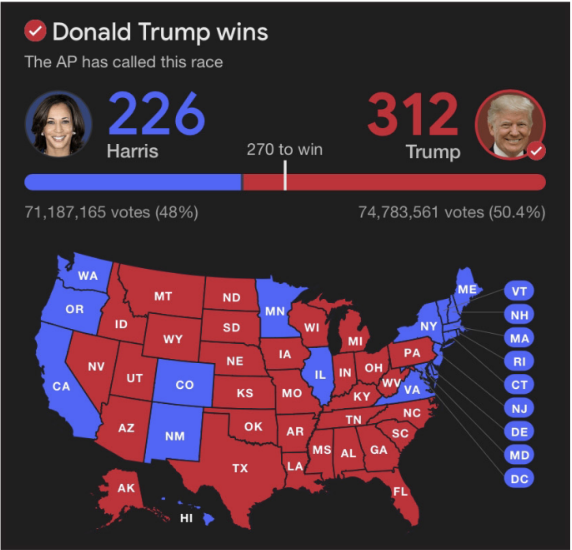
After nearly two years of campaigning for both parties, the 2024 presidential election is finally over. Although votes are still being counted days later, the election was called for Donald Trump earlier than possibly anyone expected. Nearly every poll and aggregator claimed the election was extremely close — Nate Silver, statistician and founder of poll-aggregation site 538, claimed to have run 80,000 simulations on his forecasting model and found the results to be “literally closer than a coin flip” with Harris having a 50.015% chance to win. Journalists and citizens alike bemoaned a possible repeat of the 2000 election, with drawn-out discourse over the true winner and possible recounts.
Nevertheless, the results were clear—and they were as surprising as they were devastating to Democrats.
Not only did Trump win the electoral college, including all of the “tipping point” swing states (Wisconsin, Michigan, Pennsylvania, North Carolina, and Georgia), but he beat the odds and took the popular vote as well.
Furthermore, nearly every state had a noticeable shift towards the Republican Party in its voter results, with California and New York holding the strongest shift at 12%.
No bones about it — it was a blowout, the belated “red wave” that conservatives had promised in 2022.
Both candidates made unique speeches Wednesday touching on their top issues.
Kamala Harris’ speech focused on the future of American democracy, which was the top polled voting issue for Democrats this election. Harris was sure to point out that “A fundamental principle of American democracy is that when we lose an election, we accept the results.” This is no doubt referring to the attack on the Capitol in 2021 spurred on by Trump’s insistence that the 2020 election had been stolen. Though she conceded that America may well be “entering a dark time”, Harris reassured voters that “the light of America’s promise” would endure.
Trump’s speech started out a bit differently. “We have a country that needs help, and it needs help very badly,” Trump said at a rally in Florida Wednesday morning. “We’re going to fix our borders, we’re going to fix everything about our country.” The language leaned towards an image of an America that had been thoroughly broken, and had even been taken over by foreign, un-American entities: “This will forever be remembered as the day the American people regained control of their country.” Although Trump claimed “It’s time to put the divisions of the past four years behind us,” he may not have been referring to anyone on the left at all–in the same speech, he praised Vice President elect JD Vance for voyaging “into the enemy camp” for Vance’s interviews on CNN and MSNBC.
It’s hard to reconcile a supposed message of unity with this and Trump’s vague, often ominous promise to purge “the enemy from within”. So, what’s next for America in 2025? The most talked-about potential policy change this week is Trump’s proposed tariffs on all foreign goods. The current plan is to place tariffs up to 60% on goods imported from China, and a universal tariff of 10% or more on all other imports. Though tariffs are meant to encourage consumers to buy products made in their home country, America has offloaded so much of its manufacturing that consumers may just have to deal with the increased prices.
Many American manufacturers also use parts and materials imported from other countries, so even domestic products will likely see a price increase. Even those who voted for Trump are reportedly feeling uneasy about what this means for their personal finances. While the economy was the issue that likely pushed Trump over the top in this election, many liberals are more concerned with “Project 2025” a game plan written by some of those closest to Trump’s administra-tion that could prove devastating to social and economic progr-essivism in the United States. Among the proposed policies are a move towards a national ban on abortion, legislation aimed at restricting birth control options, cutting environmental regulations drastically, removing legal protections for all LGBT+ people, dis-mantling federal programs like Medi-care and Medicaid, and even getting rid of the Department of Ed-ucation altogether. The plan could cripple the working class by destroying America’s social safety net, and make the country an extremely dangerous place for women and minorities. And jud-ging from Google search result trends, with “what is Project 2025” spiking after Trump’s election, many voters were not informed that this plan even existed. Ultimately, as with every new administration, we’ll have to wait and see which campaign promises are fulfilled, and which were made to be broken.
Blood donations are crucial to maintaining the health and well-being of patients across the country, and with the need for blood constantly rising, there has never been a better time to give. On Wednesday, November 13, the Red Cross is providing an excellent opportunity to allow those who wish to donate blood. At 9:00AM through 3:00PM in the Bulmer Telecommun-ications Center (BTC), students and staff are able to schedule an appointment for the donation through the Red Cross website.
To ensure that blood donations are managed efficiently and safely, it’s required to schedule an appointment ahead of time.
When booking an appointment, there will be two options: Power Red or Blood. These appointments mean different things and are different types of donations. Power Red donation does collect the red blood cells but returns most of the plasma and platelets to the donor. To do this, there are specific requirements such as having type A Neg, B Neg, or O blood. On the other hand, Blood is the most common type of donation where one pint of blood is usually taken.
There are some requirements that need to be taken into account when someone is interested in donating blood. The person must be in good health with a maintained iron level. Moreover, there are height and weight requirements for those who are 18 or younger listed on the Red Cross Website. Those donating blood should weigh 110 lbs or more. It is also important to have forms of ID like a student ID or driver’s license. If unsure about the eligibility to donate, the Red Cross website provides an excellent webpage about the requirements for those interested at “Eligibility Requirements – Red Cross Blood”.
Veterans Day was yesterday, November 11th, and as the nation pauses to honor those who served in the military, HVCC is committed to recognizing the contributions and sacrifices of our veterans and active-duty service members. This day is an important reminder of the courage and dedication that these individuals demonstrate in serving our country, often at great cost. As a college community, there is great importance in the acknowledgment of their efforts, and providing support as they may transition to civilian life or continue their education.
On campus, the Vet-Roc (Veterans Resource and Outreach Center) plays a vital role in assisting veterans.
The center offers a wide variety of services tailored to the unique needs of veteran students, including academic advising, counseling, and help navigating benefits such as the GI Bill. Additionally, the center provides a welcoming space where veterans can connect with one another, share experiences, and build a sense of community. This support system is crucial for many veterans as they adjust to academic life, often after their military service.
The Vet-Roc also helps educate the campus community about military culture, encouraging all students to understand and appreciate the challenges faced by those who have served.
By fostering this awareness, the center ensures that veterans feel recognized and valued on campus, creating an inclusive environment
where they can thrive both academically and personally.
Throughout this week following Veterans Day, The Hudsonian and Hudson Valley invites the entire college community to reflect on the bravery and dedication of our veterans and active-duty military members. It’s an opportunity to thank those who have served and to reaffirm our commitment to supporting them in their journey forward.
Through campus resources and the shared spirit of respect, we stand united in honoring veterans- not just on one day, but throughout the year.
Christian Rasmussen || Issue 8 || November 12, 2024
Four Arrested Amidst Devices Found Onboard a Plane in a Germany Airport…
Western Security Officials have spotted two incendiary devices placed on passenger aircraft from Europe to the U.S., and Russia is the suspected perpetrator. Four people have currently been arrested for the scheme, and an investigation is still pending. The Wall Street Journal was the first to report on this matter, and Polish authorities have taken the suspects into custody.
The incendiary devices were tracked by the DHL while at Leipzig/Halle airport in Germany, and state that there is no current threat to U.S.-bound aircraft. The White House and CIA declined to comment at this time. There were two other incidents in July reported by Britain and Germany that were also suspected to be of a Russian plot. This incident was “to test the transfer channel for such parcels” (NBC). The U.K. counterterrorism police also decline to comment at this time.
Many nations of Europe have recently accused Russia of aggressive sabotage campaigns, which are presumed to aim at disrupting Western support to assist Ukraine in the ongoing war.
This attempted sabotage was also set to hurt Germany by a plot to ‘bomb or set fire to military bases in Germany.
International spokespeople of Russia have denied these accusations and have claimed that all of the information is fake and that the sabotage against United States aircraft was ‘one of such fakes’.
The feud between Russia and NATO continues with the war in Ukraine, and it is possible that Russia is heating up the conflict through these sabotages.
The city of Albany’s newly installed school zone speed cameras have issued a stunning 12,000 speeding tickets in just 10 days. Located near school zones, these cameras are active during school hours and have a strict tolerance, drivers going even just over the limit receive a ticket. Each fine is set at $50, which adds up fast, considering the volume of tickets issued in this short time.
The speed cameras aim to make school zones safer for students by deterring speeding and raising awareness about speed limits in high-traffic areas.
However, some Albany residents feel the cameras are catching too many people unaware, especially since they were recently introduced. As Albany Mayor Kathy Sheehan pointed out, the city has a responsibility to make school areas safe, and the cameras are a direct response to the increase in reckless driving observed in these zones.
Yet, some drivers feel the strictness of the system is too much and too fast. Critics argue that the city should give more warnings before issuing fines and question if the cameras are more about revenue than safety.
According to city officials, however, the cameras are meant to serve as a deterrent, and the fines are just a consequence of drivers failing to follow posted limits.
Albany officials are monitoring public feedback, but with safety as the priority, the cameras are likely here to stay. Whether or not ticket numbers decline in the coming weeks will show how effective these cameras are in achieving their goal of slowing down drivers and protecting students.
Christian Rasmussen || Issue 7 || November 4, 2024
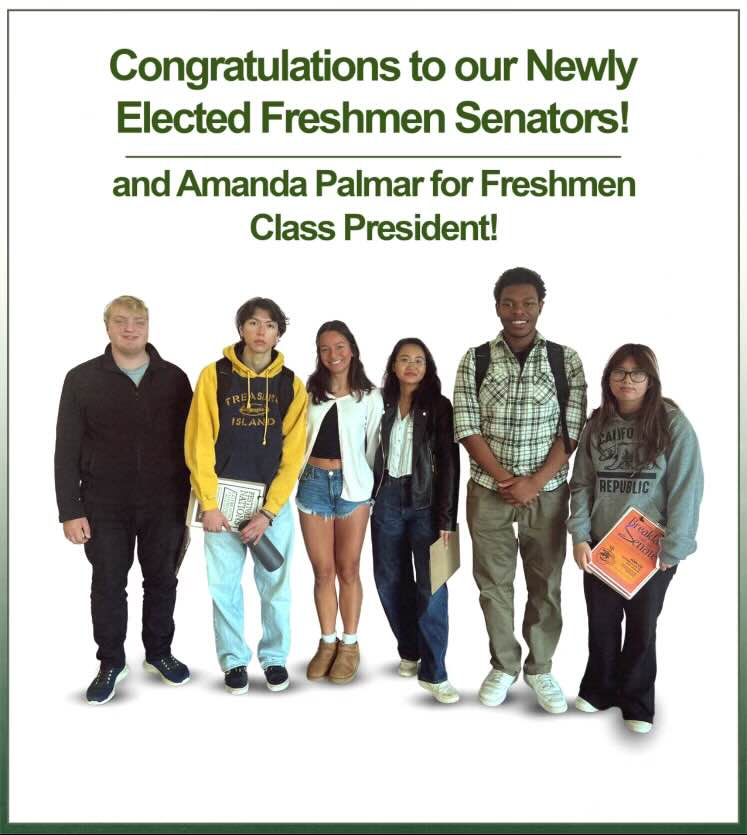
On October 21, 2024, the Hudson Valley Community College Student Senate elected the Freshman Senators and Freshman Class President for 2024-25. The following students were elected as Freshman Senators: Jane Y Htet, Htet, Keegan Brady, Matty P Keller-Haller, Kelly Nguyen, and Kercel Montes. Then voted Freshman Class President: Amanda Palmar!
“I’m really excited for what’s to come with the senate and all the events we’re going to plan this year,” Amanda said. The Freshman Senators went through the election and voting process in the weeks leading up to the Senate Meeting on October 21, and all have great aspirations for student advocacy. Congratulations to our new Student Senators!
When you ask a person to think of rabies, a few animals come to mind right away. Such as dogs, rats, raccoons, mice, foxes, bats, skunks, cats, and possums, but do all of these commonly thought of animals really deserve all this bad press? The answer to that question is what we’ll briefly cover here, as well as a couple common misconceptions related to this horrifying incurable disease.
Firstly we’ll talk about which of these prior listed animals commonly do carry rabies. Those carriers being bats, foxes, skunks, raccoons, and cats! With cats being number one in terms of domestic animals according to the New York state “Among domestic animals, cats are most frequently diagnosed with rabies in New York State.” As stated on the rabies section of their website. As for some of the animals that don’t commonly carry rabies we have mice, rats, many other rodents, dogs, and opossums (which are marsupials not rodents). Which is quite surprising to most people; the thought that most commonly rodents and dogs carry rabies less often than cats, raccoons, foxes and skunks comes as quite a shock.
More often than not we as people associate rodents with filth and disease, but it is instead some of our cutest animals we need to watch out for most when it comes to disease! As for some common misconceptions when it comes to rabies past just rodents not being the primary carriers, we’ve got the idea that if you get bitten by an animal with rabies you’re just completely screwed. Which is only the case if you don’t take action after being bitten by an animal and that animal happens to have rabies; once symptoms present, yes you are most likely dead, but if you
immediately take action after an animal bite, and receive proper post-exposure prophylaxis as it’s put by the CDC, your chances of survival spike up dramatically, as this whole procedure of PEP is “is nearly 100% effective if administered promptly.” States the CDC’s rabies page.
Another misconception about rabies is that it can only be transmitted through bites, which isn’t quite the case; in truth “the virus can be transmitted when saliva enters any open wound or mucus membrane (such as the mouth, nose, or eye).” says a rabies article from the IAMAT. Which means that things such as scrapes, spits, and licks as well can transmit this flagrant frothy disease to your body!
Hopefully you learned something new and useful from this article, and maybe next time you won’t say that a cat’s got your tongue, but a rat instead, at least if you don’t want rabies that is!
OpenAI has announced a shift from its original nonprofit structure to a capped-profit model. This change is designed to attract the substantial investments necessary to fuel its ambitious goals in artificial intelligence (AI). As people begin to learn about and understand the implications of this decision, it’s clear that the tech landscape is undergoing a transformation that raises questions about the balance between innovation and ethics.
Originally founded in 2015 as a nonprofit committed to ensuring that artificial general intelligence (AGI) benefits all of humanity, OpenAI has recognized that the growing costs associated with AI research demand a new approach. Sam Altman, OpenAI’s CEO, says “The only way to make progress in AI is to invest heavily in it.” This sentiment reflects a reality in which the competition for cutting-edge AI technology is intensifying, and the financial stakes are higher than ever.
The decision to switch over to a capped-profit model is primarily driven by the high expenses tied to developing advanced AI systems. As Altman pointed out, building AGI that is aligned with human interests requires a lot of resources.
With giants like Microsoft and Google now heavily investing in AI, OpenAI must position itself competitively. Microsoft’s $1 billion investment in OpenAI in 2019 illustrates the kind of financial backing that can propel the organization forward.
Partnering with Microsoft has enabled OpenAI to tap into essential cloud computing resources, speeding up its research efforts.
However, this shift has sparked concern among some critics. There’s a fear that the move toward this new model might compromise OpenAI’s foundational principles, leaving people to wonder, will prioritizing financial gain become the priority over ethical considerations? The history of tech companies suggests that profit motives can sometimes lead to neglecting social responsibilities.
In defense of the change, Altman insists that the goal remains to continue to do good. The capped-profit model is intended to balance the need for financial sustainability with the commitment to ethical responsibilities. By offering a limited return on investment, OpenAI aims to fund its research without sacrificing its mission to benefit humanity. But this raises a critical question: Can a company truly uphold its ethical commitments while being influenced by turning a profit?
This debate also intersects with the ongoing discussions about regulating AI technologies. As these systems become more embedded in our daily lives, issues surrounding accountability, transparency, and bias have come to the forefront.
The concern is that in the pursuit of profit companies might overlook the importance of ethical AI development.
OpenAI’s transition reflects a broader trend in the tech industry. Many startups are reevaluating their funding strategies as the demand for advanced AI solutions continues to surge. Altman remarked, “We need to adapt to the realities of AI development, which requires an unprecedented level of investment.” This adaptation, while necessary, can create tension regarding the long-term implications for ethical AI development.
While the transition to a capped-profit model may provide OpenAI with the resources needed to accelerate its projects, the larger ethical concerns remain in focus. As OpenAI embarks on this new journey, the eyes of stakeholders across sectors will be observing how the organization balances profit motives with its commitment to responsible AI advancement.
At this crucial juncture in AI evolution, we must keep the conversation centered on the ethical considerations that must accompany technological progress. OpenAI’s shift to a capped-profit model could be a necessary step toward sustainability, but it also serves as a prompt for broader discussions about the future of AI and the responsibilities that come with it.