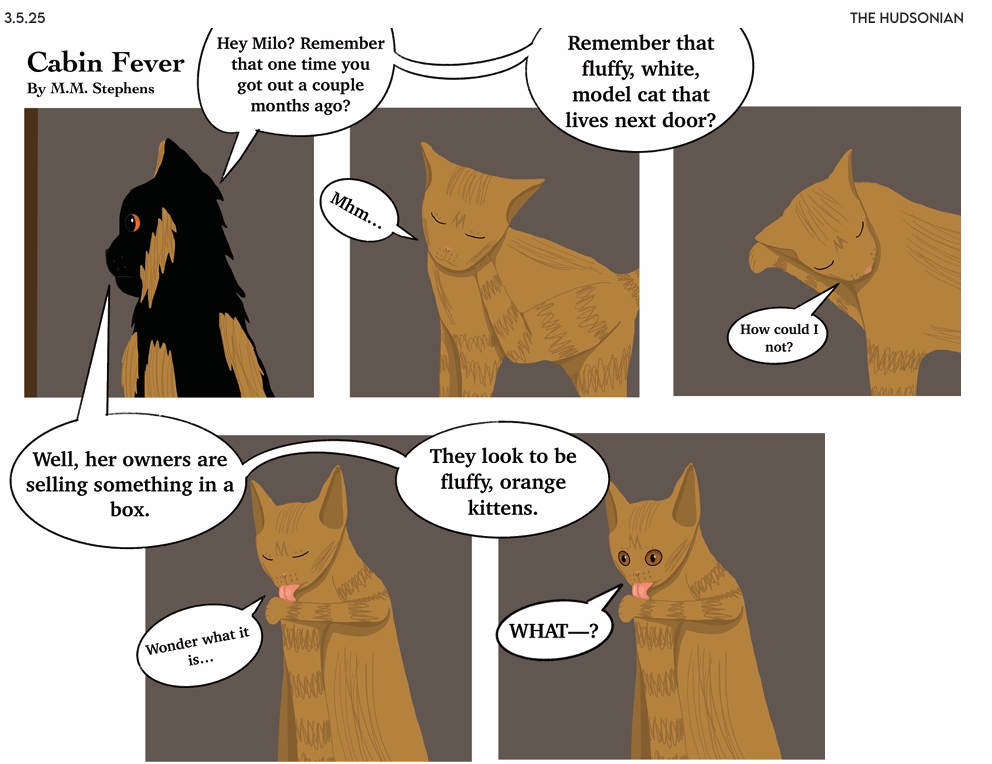
Errant – Part 3

Liam May || Issue 14 || February 25, 2025

The knight picked up his stick and shifted a log in the fire patiently awaiting the stranger’s monologue. The ranger sized up the knight one last time before beginning his analysis. “You must be skilled in battle, otherwise you wouldn’t have accepted a Hunt this difficult. You’re not overconfident, your mannerisms disprove that.” The ranger gestured to the knight’s shield, “You’re on the younger side for a Crested Knight, so you must have done something heroic to earn that.” The ranger paused, “Unless it isn’t your Crest because it isn’t a rooster rampant, it’s a Cockatrice rampant.” He smiled, “How did I do, Knight?” The knight folded his arms across his chest. “Fairly spot on.” The ranger’s grin widened, “Now a better question is why a knight Sworn to the Order Cockatrice is helping some poor village get rid of a beastie.” The knight shrugged, “They offered some money, and I was in a pinch.” The ranger lowered himself to the ground, closed his eyes, and leaned back against the log. “What a coincidence,” he muttered. He cracked open an eye, “Your turn.” The ranger frowned as the knight had paused mid-movement, the warrior scanning the tree line with careful and smooth motion. The ranger tilted his head, listening, but the only sound besides the crackling fire was the soft rustle of pine needles in the chill breeze. The horse shifted nervously, pawing at the ground. The knight slowly shifted into a crouch, coiled like a spring, his body taut with potential violence. The ranger didn’t move his head but silently picked up his bow and arrows. As the archer quickly tied the quiver to his belt, he whispered, “What is it?” The knight focused his senses and inhaled deeply. The air hung heavy with the scent of pine smoke and damp earth, tinged with the faint grease of the rabbit they had eaten. And yet there was the fainter, predatory musk scent of a Hunter. He couldn’t quite place the exact location, but it
was enough for now. When he opened his eyes, his hazel irises almost glowed amber in the firelight, something savage flaring deep in the pupils as he drew the mace from his belt. “We are surrounded.” And the warrior bared his teeth in a grin for the first time that night.

Values for Vikings: Buying in Bulk

Molly Graiff || Issue 14 || February 25, 2025

It’s winter and nothing is worse than having to make multiple stops on the way home from class to get your week’s necessities. Shopping in bulk is not a new concept. BJ’s and Sam’s Club are both located within the capital region. However, with the chance of Costco starting construction in Guilderland this year, it’s important to be informed on the benefits and downsides of buying in bulk. Membership costs are a common fee when attempting to shop at a warehouse. Sam’s Club is running a new year offer until May 31st. New joiners get 25% off their membership meaning instead of a $50 a year card, it’s now only $25. Not a bad deal. A standard BJ’s membership is regularly $60 a year but their website is currently promoting a deal for new members with the card being only $20. The details of this promotion are unclear on the website.


Is it worth the membership fee? Buying in bulk is known to be a cheaper alternative to the grocery store. Where can you buy a family-size pack of pencils and a rotisserie chicken? If you shop for a large amount of people, this may be the place for you. Rather than buying multiple packs for the same thing, these places are best for people who need a lot of the same. However, this is not the place to try something you might not like, unless you try the free samples, as you’ll be stuck with an entire pack of it. Perhaps the best deal at warehouse stores is their cafes. Sam’s Club’s meal deals include a hot dog and a drink for just $1.50, a slice of pizza and a drink for $2.50, and frozen yogurt for $1. Buying in bulk is a great option to find a large quantity of all your favorites, if you’re interested in joining a warehouse club now is the time as the membership fee is reduced.

Beyond Fear: Awakening Inner Strength and Writing Our Own Story

Hamide AK || Issue 14 || February 25, 2025

Fear is an inseparable part of human nature. It serves as a natural defense mechanism that protects us from danger, yet it can also become a restricting barrier in our lives. Humans experience anxiety in the face of the unknown because anything unfamiliar may be perceived as a threat. However, fear is not merely an emotion to be avoided; rather, it presents an opportunity for growth and empowerment. If we can manage
our fears appropriately, they can guide us beyond our limitations and shape us into more courageous individuals. Although fear is often perceived as a negative emotion, it plays a crucial
role in our lives and provides certain benefits. Fear safeguards us from danger and triggers instinctual responses necessary for survival. Particularly in the presence of physical threats, it activates our bodies to react swiftly. Furthermore, fear encourages us to surpass our limits and learn to be braver. Despite our hesitations about stepping into new experiences, fear enhances our awareness and caution, serving as an essential guide on the path to success. It also contributes to our personal development; every time we summon the courage to overcome a fear, we feel stronger and more self-confident. This process transforms us into more resilient individuals who can navigate life’s challenges. In essence, fear acts as a companion that helps us explore our boundaries, develop courage, and realize our potential. Perhaps the greatest virtue fear can grant us is this ability to discover our own strength. Facing our fears may cause discom
fort, yet it is deeply rooted in psychological factors. Fear is often associated with the unknown or uncontrollable, which generates a sense of insecurity. The less predictable an event or situation is, the greater the fear it evokes, as uncertainty fosters vulnerability. Confronting fear necessitates experiencing this uncertainty firsthand, forcing individuals out of their comfort zones. This situation can trigger anxiety about potential physical or emotional harm. Addressing fear also means confronting past traumas, vulnerabilities, and weaknesses. Thus, fear frequently emerges as a mental defense mechanism, as the human brain, consciously or subconsciously, seeks to protect itself. However, while these confrontations may be challenging, they also facilitate personal growth. Facing fears ultimately allows individuals to discover their inner strength and mature, though this process may initially be unsettling, as change always occurs outside the comfort zone. Therefore, fear persists both as a protective force and as a catalyst for development.

Overcoming fear and embracing a transformed identity enriches our lives in numerous ways. First and foremost, self-confidence increases, enabling in dividuals to confront challenges with
greater courage. This positively impacts personal relationships, professional endeavors, and overall quality of life. As individuals become more self-aware, they gain a clearer understanding of their desires and values, fostering inner peace and balance. Overcoming fears enhances adaptability and resilience, better preparing individuals for life’s fluctuations. As we assume new identities and roles, our perspectives on the world evolve, making us more open-minded and empathetic individuals. This transformation not only fosters self-acceptance but also serves as an inspiration to others, providing them with courage. Ultimately, reconciling with and overcoming fear renders life more meaningful, fulfilling, and rewarding. The success stories of prominent scientists, educators, and innovators are filled with examples of individuals who confronted their fears and achieved remarkable accomplishments. For instance, Thomas Edison, despite experiencing numerous failures and disappointments, invented the electric lightbulb. Edison viewed each failure as a learning opportunity and remained undeterred. The fears and uncertainties he encountered only strengthened his determination and resilience. Another example is the renowned scientist Marie Curie, who challenged both societal perceptions of women and the limitations of the scientific field. Despite the risks and uncertainties of her research, she became the first woman to win a Nobel Prize and revolutionized her discipline. By discovering and embracing their potential, these individuals confronted their fears and overcame them, transforming themselves into symbols of courage and perseverance. Their journeys illustrate how fear shaped their lives and propelled them toward meaningful
achievements. In conclusion, for individuals ready to confront their fears and undergo transformation, the first step is to trust in their inner strength. Fear often originates from deep-seated subconscious anxieties, making it a process that must be gradually overcome. Progress should be made step by step, as each small victory fosters significant confidence. Understanding and confronting fears is the initial and most crucial step toward overcoming them. Additionally, developing mental awareness to counteract negative thoughts is essential. When thinking about fears, it is important to acknowledge the emotions they evoke and approach them with kindness. Learning to trust oneself is a critical component of this journey. Rather than comparing oneself to others, individuals should celebrate their own progress. One must accept that fear is not a hindrance but
a force that strengthens and empowers. Ultimately, overcoming fear will cultivate a stronger, more resilient individual. While this transformation takes time, each step forward leads to greater freedom and inner peace.

Game Review: Avowed

Liam May || Issue 14 || February 25, 2025

Avowed is a complex game to review. I am one of Obsidian Studios’ biggest fans. I loved Fallout New Vegas. My squad and I have played hours upon hours of Grounded, so not coming away with a similarly happy experience left me thinking I was reviewing wrong, not that the game had issues. In the end, it has a good base and can become something great, but I found it underwhelming, especially compared to the other First-Person Story RPG I played recently, Kingdom Come 2. I found the combat animations weird and claustrophobic, the world very lacking in immersion, and besides graphics, I thought there were very few things that stood out about this game. The story was unique, but it is nowhere near the openness levels of Skyrim. Many things such as Item Collision, Town/NPC Interactions, and Physics are surprisingly subpar compared to older games. However, I have
to say that while the story was a tad cliche, with “Outlander comes from afar to fix the frontier’s issues” being the prevalent theme, I found the world and Soul plague to be quite interesting. Having never played Pillers of Eternity, which is the world the game takes place, I was glad for an opportunity to check out the setting. In addition, I found the issue of the “Last of Us but magical” zombie issue intriguing yet ultimately underwhelming like most other aspects. I also thought locking the character behind playing a Godlike Envoy instead of letting players have a more free-form character creation be
far more annoying than immersive. In the end, Avowed is not for everyone, but as someone who has played over 100 hours of games in this genre, I think playing Outer Wilds, Grounded, and Fallout New Vegas is a better Support of Obsidian than wasting money on the 70-dollar price tag of Avowed.

Movie Review: Emilia Pérez

Olivia William || Issue 14 || February 25, 2025

(MINOR SPOILERS AHEAD!!)

With thirteen Oscars nominations, a Rotten Tomatoes critics score of 72%, and a Golden Globes winner of multiple awards, you’d expect Emilia Pérez to be a great movie. You’d be unpleasantly surprised. After watching the
film, the 17% audience score makes sense. Emilia Pérez is a musical crime drama following the journey of Juan “Manitas” Del Monte aka Emilia Perez (played by Karla Sofía Gascón), a Mexican cartel leader who decides to go through with a gender-affirming surgery in order to escape her criminal past and then attempts to make up for the atrocities she committed while operating in the cartel. The film aims to explore themes related to redemption and identity in the midst of transitioning all while attempting to showcase
Mexican culture. However, all of these attempted feats go highly undone. The film does little to properly delve into these heavy subjects, leaving much to be desired, and it is as if they were only included to check a box rather than genuinely explore any of these subjects. The exploration of the trans-identity is lackluster, and it does not seem to delve seriously enough into the complicated nature of how a redemption arc is even possible for a former cartel leader. There is also the issue of the stereotypical depiction of Mexican culture, which has led to many Mexican actors and individuals boycotting the movie altogether or walking out of a viewing. So much so, that the major movie theater chain in Mexico, Cinépolis, had to clarify their policy from the sheer number of people requesting refunds due to their dissatisfaction. There is a decent amount of controversy surrounding this movie, not only concerning the general distaste towards the movie from the respective communities they attempt to tailor to. But the director himself is French, failed to cast any Mexican actors, and has made rather rude comments towards the Mexican and Spanish-speaking communities. Not only that but the main actress Karla Sofia has received major backlash for comments that she’s made. These only enhance the shallow way the film approaches its social themes.

Karla Sofia Gascón does alright playing Manitas/ Emilia. Zoe Saldana and Selena Gomez also star in the movie. Zoe Saldana plays a lawyer trying to clear “Manitas” past and aiding in transitioning the main character. Meanwhile, Selena Gomez plays the main character’s ex-wife. Zoe Saldana does a decent job with the role she’s been given. Selena Gomez does seem to try her best here, but she is not fluent in Spanish and allegedly had minimal time to learn, so her dialogue’s cadence in the movie appears off, even to the un
trained ear. There is also the fact that this movie
is a musical. However, most of these musical numbers come off as poorly written and choreographed, with off key singing more often than not. It comes off as gimmicky at times and almost feels like an SNL skit of a musical
at some points rather than a serious film. Perhaps it would come off as more entertaining had it been made to be a comedy. Look up any of the
songs if you’d like to see for yourself. ‘El Mal’ or ‘La vaginoplastia’ will do. Perhaps a bigger blunder is that even with all the plot lines, music, and failed thematic exploration, the film begins to feel rather boring the longer it drags on, it becomes a struggle to even sit through one viewing. The overall filmmaking exudes a sense of being erratic. The writing comes off as surface-level and messy. So many plot threads come up that all just feel rather pointless in the end.

Who Gets a Seat at the Table?

Adem Jones || Issue 14 || February 25, 2025

Walk through Hudson Valley Community College on any given day, and you’ll see a student body that represents a wide range of backgrounds, cultures, and perspectives. But step into a room where major decisions about the college are made, and it’s like stepping into another world. The diversity that defines the campus doesn’t seem to make it past the door. I saw this firsthand when I attended a Board of Trustees meeting last semester. Nearly everyone in the room, those making decisions, those speaking, those holding positions of power, was white. Among the board members, just one Black person sat at the table. Looking around, I realized I was the only Black person in the audience. For a campus as diverse as HVCC, it was jarring. The people shaping the policies and future of this college looked nothing like the students walking its halls. And now, as HVCC searches for its next president, the same pattern is playing out. The final candidates for the position are all white, following a long-standing trend in higher education where leadership often fails to reflect the students it serves. This isn’t just about checking a box or making the administration look more inclusive—it’s about the reality
of who gets to lead and make decisions that impact all of us. Representation matters. Leadership influences everything from curriculum to hiring practices to funding priorities. When the people in charge share similar backgrounds and perspectives, the policies they create often reflect that limited worldview. It’s not like there aren’t qualified candidates of color in higher education, but according to the American Council on Education, only about 13% of college presidents nationwide are people of color, despite the increasing diversity of student populations across the country. Leadership in higher education has long been dominated by white administrators, a pattern that isn’t just coincidental, it’s systemic. Barriers to advancement, limited recruitment efforts, and the preference for candidates who fit a traditional mold all contribute to the lack of diversity at the top. At HVCC, that system is playing out in real time. A school that thrives on diversity is once again placing power in the hands of a leadership team that doesn’t reflect it. It sends a message, intentional or not, that while students of
all backgrounds are welcome here, the highest levels of leadership are still reserved for a select few.
No one is saying the current candidates aren’t qualified. But in a school where diversity is central to student life, shouldn’t leadership reflect that? Shouldn’t the people making decisions for the future of HVCC represent the students they’re leading? It’s a question worth asking. The real one, though, is whether those in power are actually listening.

Zelensky Offers to Step Down for Nato Membership

Sam Kipling || Issue 14 || February 25, 2025

Ukrainian President Volodymyr Zelenskyy has expressed his willingness to step down from his position if it would secure Ukraine’s membership
in NATO. Speaking at a press conference on Sunday, which marked the third anniversary of Russia’s invasion, Zelenskyy stated, “If it brings peace to Ukraine, and if my resignation is necessary, I am prepared to do so. I am ready
to exchange my position for NATO membership, should that be a condition.” However, Ukraine’s path to NATO membership appears increasingly uncertain, particularly in light of recent shifts
in U.S. foreign policy under President Donald Trump. Trump has taken a firm stance against continued support for Ukraine’s defense efforts,
complicating the country’s desire to join the alliance. Defense Secretary Hegseth has also cast doubt on the feasibility of NATO membership as
part of a negotiated resolution to the conflict. Considering NATO originally was an anti-Soviet alliance Ukrainian admittance could be taken as Western aggression.

In a controversial move, Trump reportedly engaged in direct talks with Russian President Vladimir Putin and sent a delegation to Saudi Arabia to negotiate an end to the war—without
consulting Ukraine or its European allies. This has raised concerns about the exclusion of Ukrainian interests in potential peace agreements. Zelenskyy also criticized a proposal from the Trump administration that would grant the U.S. control over Ukraine’s mineral reserves in exchange for continued military aid. He condemned the terms of the deal, which would
require Ukraine to repay the aid it has received to defend against Russian aggression. Zelenskyy emphasized that such conditions are unacceptable, noting that the $500 billion figure cited by Trump as the total aid provided to Ukraine is vastly exaggerated. In reality, the amount is less than one-fifth of that sum. Ukraine’s aspirations to join NATO appear unlikely and unfounded.

U.S. Faces Trade War Risks with New Tariffs

Sam Kipling || Issue 14 || February 25, 2025

On President Trump’s first day in office, he signed an executive order to impose 25% tariffs on all imports from Canada and Mexico. Said tariffs went into effect February 1, 2025. In theory, the President’s goal is to promote American industries and exports by discouraging outsourcing to Canada. Radical protectionism many times will raise the cost of living and harm American consumers. It is a risky game to play because oftentimes tariffs will backfire and lead to what is sometimes referred to as a trade war. Canada is already imposing retaliatory tariffs on the United States. Economic tensions are on the rise between these two nations. Consumers will be the ones to pay for it, with price increases and counter-tariffs that will make goods less affordable. President Trump has let it be known that he intends to use these tariffs to negotiate in the United States’ favor. Canada is already suggesting ways to call off the tariffs. President Trump is giving Canada a 30-day ultimatum to stop the potential trade war.

Prime Minister Trudeau promised to do his best to comply with the United States’ requests to secure the border and stop the flow of fentanyl
through the border. Canada Public Safety Minister David McGuinty had this to say, “The goal is to stop fentanyl and precursors from coming into our country or being made in this country, keeping in mind less than one percent of fentanyl going to the U.S. is coming from Canada,” McGuinty said. “Our goal today and our goal tomorrow is no tariffs.” From the looks of it, neither Canada nor the United States wants this trade war to escalate further and Canada’s willingness to comply is a promising sign that it won’t. We can hope for the leaders of our country to negotiate a deal and that it will minimally affect consumers and cost of living.

Hamas Free’s Last of Israeli Hostages

Liam May || Issue 14 || February 25, 2025

On Saturday 2/22/2025, Hamas released the final six living Israeli hostages as part of the first phase of the Gaza ceasefire agreement. The ceasefire, which began last month, has seen a total of 192 hostages returned to Israel, with 147 alive and 45 deceased. The hostages freed include Eliya Cohen, Omer Shem Tov, Omer Wenkert, Tal Shoham, Avera Mengistu, and Hisham
Al-Sayed. In return, Israel was set to release approximately 600 Palestinian prisoners and detainees, the largest group since
the start of the ceasefire. However, the release of these prisoners has been delayed without explanation, causing frustration and concern among the families of the detainees. The exchange was also preceded by the return of the body of Shiri Bibas, an Israeli mother whose remains were initially misidentified earlier on the 20th. This tragic mix-up caused significant outrage and condemnation in Israel, further straining both sides and the fragile ceasefire.

The hostages were released in separate locations within Gaza, including the city of Rafah in the south and the Nuseirat refugee camp in the center of the enclave. Stages were set up in each location, surrounded by Hamas fighters and crowds of onlookers. The hostages were handed over to Red Cross officials in a series of signing ceremonies, after which they were transported to Israeli custody. The ceasefire is nearing the end of its first phase, and negotiations for the next phase are expected to be challenging. Both sides will need to navigate the complexities of prisoner releases, hostage exchanges, and maintaining peace in a region fraught with tension and historical grievances.

Russia Attacks Ukraine with 267 Drones Accounted For

Zachary Suarez || Issue 14 || February 25, 2025

Saturday night recorded the biggest attack Russia issued in the war with Ukraine. Rockets and missiles entering Ukraine territory has been an unfortunate daily occurrence but during this attack specifically 267 drones were sent. Ukraine’s air force and defense claimed to have stopped most of the drones. The regions affected were Dnipropetrovsk, Odesa, Poltava, Kyiv and Zaporizhzhia. Ukraine and their president continue to urge and thank its European and American partners for the aid and resources provided. Along with its own people who fight for peace in their country.