Journalist Allegedly Abducted in Iraq as Officials Launch Ongoing Investigation

Jaydan Miles || Staff Writer || Issue 18

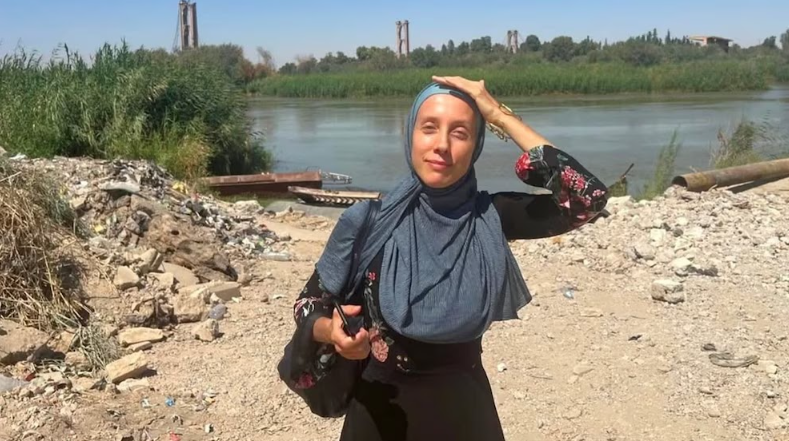
A report published on March 31 details a developing and serious situation involving the reported kidnapping of a journalist. According to the article, a female reporter, whose identity and professional background have not been publicly disclosed, was allegedly abducted Tuesday afternoon by individuals identified as members of the country’s Ministry of Interior. The circumstances surrounding the abduction remain unclear, including the exact location and whether the journalist was targeted specifically due to her work or presence in the area.

In response to the reports, an Iraqi government spokesperson stated that officials are “closely tracking these reports” but declined to provide further details, citing “privacy and other considerations.” The limited public response comes amid heightened tensions in the region, particularly involving the United States and Iran, raising concerns about the broader geopolitical implications of the incident. Observers note that incidents involving journalists in politically sensitive regions often draw international attention, especially when state-affiliated actors are allegedly involved.
ABC News

Authorities have confirmed that initial steps have been taken in the investigation. Security forces reportedly arrested one suspect and seized a vehicle believed to have been used in the abduction. In an official statement, the Ministry of Interior emphasized that efforts remain ongoing to locate and apprehend additional individuals involved, secure the journalist’s release, and pursue legal action against those responsible. Officials also indicated that intelligence units and specialized investigative teams have been deployed to assist in gathering information and coordinating search efforts.

While specific details remain limited, reports suggest that checkpoints and security measures in surrounding areas may have been increased as part of the response. Law enforcement agencies are said to be reviewing surveillance footage and conducting interviews with potential witnesses in an effort to reconstruct the timeline of events. Authorities have not disclosed whether any communication has been received from the individuals responsible or if ransom demands or political motivations are suspected.

The investigation remains active, with few confirmed details released to the public. Given the region’s complex political climate and history of conflict, the incident underscores ongoing concerns about press safety and regional stability. Journalists operating in conflict zones or politically volatile environments often face heightened risks, including threats, detention, and violence, which has been widely documented by international press freedom organizations. Officials have not indicated whether the case is linked to broader international tensions.

Efforts continue as authorities work toward resolving the situation and ensuring the safe return of the journalist. Government officials have stated that updates will be provided as more verified information becomes available, though they emphasize the importance of maintaining operational security during the investigation. The situation remains closely monitored both domestically and internationally as developments unfold.

No NATO For Ukraine — For Now

Jonah Flanagan || Issue 15 || March 5, 2025

National Security Adviser Mike Waltz stated that the idea of Ukraine joining NATO is “not back on the table,” despite President Zelenskyy’s offer to resign in exchange for NATO membership. “I do not see the United States having Ukraine enter into NATO and then having United States troops essentially obligated immediately in terms of Article 5 or to have U.S. troops coming directly in for the offense of Ukraine…. that’s very different than the U.S. commitment to NATO and existing NATO countries,” Waltz said on Fox News’ “Fox & Friends.”. Waltz emphasized that the U.S. is not willing to directly commit troops to defend Ukraine under NATO’s Article 5, as this would differ from the U.S. commitment to existing NATO member countries. Zelenskyy has expressed his willingness to resign from the presidency in order to achieve peace or secure NATO membership for Ukraine. “Of course, the U.S. would protect our assets for which we were invested in,” Waltz said. “This could mean trillions
not only for the Ukrainian people but for us and for stability for the region that economic investment is one of the security guarantees that Ukraine could hope for.” Waltz recently led discussions with
U.S. officials to negotiate an end to the Russia-Ukraine conflict, but Ukrainian officials were not
present during these talks. Former President Trump criticized Zelenskyy, referring to him as a “dictator without elections” and suggesting that the U.S. might be more accommodating to Pu
tin’s demands. Waltz reaffirmed that the U.S. supports European nations providing robust security guarantees for Ukraine. He reiterated a proposal for the U.S. to offer security in exchange for access to Ukraine’s rare minerals.

Buying the American Dream

Adem Jones || Issue 15 || March 5, 2025

President Donald Trump has announced plans for a new “Trump Gold Card,” a streamlined process for immigrants to gain permanent and immediate legal status for $5 million. “It’s going to be a route to citizenship, and wealthy people will be coming into our country by buying this card. They’ll be wealthy, and they’ll be successful, and they’ll be spending a lot of money and paying a lot of taxes,” Trump said. This announcement came from the Oval Office on February 25th during conversations with reporters following Trump’s signing of executive orders. Trump’s intention for the gold card is to create an opportunity for wealthier individuals to enter the country, allowing them to immediately begin contributing to the US economy. This influx in finances will be seen as a means to not only boost the economy but to help the US pay down its financial debt, which as of right now, stands at $36.5 trillion. The US Secretary of Commerce, Howard Lutnick said, “200,000 of these gold, green cards are $1 trillion to pay down our debt and that’s why the President is doing it.” This decision has been met with mixed reviews from both politicians and American citizens. Concerns have risen regarding the creation of a sort of hierarchy system that gives priority and privilege to those who are wealthy. In addition to this, people have voiced concerns about how this policy may open the door to larger issues such as fraud, money laundering, and corruption. Other concerns are whether or not this decision will play out as American citizenship becoming something that you can buy, opposing the longstanding belief that citizenship is something that must be earned and achieved. “We don’t recall Trump campaigning on selling citizenship to the highest bidder,” Dan Stein, president of the conservative immigration group, FAIR, said. “In our view, Congress would have to approve this program, you don’t want to hang a sign on the Statue of Liberty that says ‘America is on sale,’” Stein said. Another concern from a more humanitarian standpoint is that it’s simply unfair. To put a price tag on American citizenship is to reduce people to their economic background. Regardless of credentials, intention, or character, with this system in place, only the wealthy will be able to benefit. “We were talking about having scientists come to America to cure disease and now he takes it to ‘let’s have Russian oligarchs here,’ to come to America and play golf with him,” Jake Auchincloss, a democratic representative from Massachusetts, told CNN in an interview. Whether or not this gold card will come to fruition is to be determined, conversations about how this decision may or may not involve congress are still underway and the implications of this announcement will be seen in months to come.

Zelensky Offers to Step Down for Nato Membership

Sam Kipling || Issue 14 || February 25, 2025

Ukrainian President Volodymyr Zelenskyy has expressed his willingness to step down from his position if it would secure Ukraine’s membership
in NATO. Speaking at a press conference on Sunday, which marked the third anniversary of Russia’s invasion, Zelenskyy stated, “If it brings peace to Ukraine, and if my resignation is necessary, I am prepared to do so. I am ready
to exchange my position for NATO membership, should that be a condition.” However, Ukraine’s path to NATO membership appears increasingly uncertain, particularly in light of recent shifts
in U.S. foreign policy under President Donald Trump. Trump has taken a firm stance against continued support for Ukraine’s defense efforts,
complicating the country’s desire to join the alliance. Defense Secretary Hegseth has also cast doubt on the feasibility of NATO membership as
part of a negotiated resolution to the conflict. Considering NATO originally was an anti-Soviet alliance Ukrainian admittance could be taken as Western aggression.

In a controversial move, Trump reportedly engaged in direct talks with Russian President Vladimir Putin and sent a delegation to Saudi Arabia to negotiate an end to the war—without
consulting Ukraine or its European allies. This has raised concerns about the exclusion of Ukrainian interests in potential peace agreements. Zelenskyy also criticized a proposal from the Trump administration that would grant the U.S. control over Ukraine’s mineral reserves in exchange for continued military aid. He condemned the terms of the deal, which would
require Ukraine to repay the aid it has received to defend against Russian aggression. Zelenskyy emphasized that such conditions are unacceptable, noting that the $500 billion figure cited by Trump as the total aid provided to Ukraine is vastly exaggerated. In reality, the amount is less than one-fifth of that sum. Ukraine’s aspirations to join NATO appear unlikely and unfounded.

U.S. Faces Trade War Risks with New Tariffs

Sam Kipling || Issue 14 || February 25, 2025

On President Trump’s first day in office, he signed an executive order to impose 25% tariffs on all imports from Canada and Mexico. Said tariffs went into effect February 1, 2025. In theory, the President’s goal is to promote American industries and exports by discouraging outsourcing to Canada. Radical protectionism many times will raise the cost of living and harm American consumers. It is a risky game to play because oftentimes tariffs will backfire and lead to what is sometimes referred to as a trade war. Canada is already imposing retaliatory tariffs on the United States. Economic tensions are on the rise between these two nations. Consumers will be the ones to pay for it, with price increases and counter-tariffs that will make goods less affordable. President Trump has let it be known that he intends to use these tariffs to negotiate in the United States’ favor. Canada is already suggesting ways to call off the tariffs. President Trump is giving Canada a 30-day ultimatum to stop the potential trade war.

Prime Minister Trudeau promised to do his best to comply with the United States’ requests to secure the border and stop the flow of fentanyl
through the border. Canada Public Safety Minister David McGuinty had this to say, “The goal is to stop fentanyl and precursors from coming into our country or being made in this country, keeping in mind less than one percent of fentanyl going to the U.S. is coming from Canada,” McGuinty said. “Our goal today and our goal tomorrow is no tariffs.” From the looks of it, neither Canada nor the United States wants this trade war to escalate further and Canada’s willingness to comply is a promising sign that it won’t. We can hope for the leaders of our country to negotiate a deal and that it will minimally affect consumers and cost of living.

Hamas Free’s Last of Israeli Hostages

Liam May || Issue 14 || February 25, 2025

On Saturday 2/22/2025, Hamas released the final six living Israeli hostages as part of the first phase of the Gaza ceasefire agreement. The ceasefire, which began last month, has seen a total of 192 hostages returned to Israel, with 147 alive and 45 deceased. The hostages freed include Eliya Cohen, Omer Shem Tov, Omer Wenkert, Tal Shoham, Avera Mengistu, and Hisham
Al-Sayed. In return, Israel was set to release approximately 600 Palestinian prisoners and detainees, the largest group since
the start of the ceasefire. However, the release of these prisoners has been delayed without explanation, causing frustration and concern among the families of the detainees. The exchange was also preceded by the return of the body of Shiri Bibas, an Israeli mother whose remains were initially misidentified earlier on the 20th. This tragic mix-up caused significant outrage and condemnation in Israel, further straining both sides and the fragile ceasefire.

The hostages were released in separate locations within Gaza, including the city of Rafah in the south and the Nuseirat refugee camp in the center of the enclave. Stages were set up in each location, surrounded by Hamas fighters and crowds of onlookers. The hostages were handed over to Red Cross officials in a series of signing ceremonies, after which they were transported to Israeli custody. The ceasefire is nearing the end of its first phase, and negotiations for the next phase are expected to be challenging. Both sides will need to navigate the complexities of prisoner releases, hostage exchanges, and maintaining peace in a region fraught with tension and historical grievances.

Russia Attacks Ukraine with 267 Drones Accounted For

Zachary Suarez || Issue 14 || February 25, 2025

Saturday night recorded the biggest attack Russia issued in the war with Ukraine. Rockets and missiles entering Ukraine territory has been an unfortunate daily occurrence but during this attack specifically 267 drones were sent. Ukraine’s air force and defense claimed to have stopped most of the drones. The regions affected were Dnipropetrovsk, Odesa, Poltava, Kyiv and Zaporizhzhia. Ukraine and their president continue to urge and thank its European and American partners for the aid and resources provided. Along with its own people who fight for peace in their country.

Trump To Use 1798 Alien Enemies Act for Immigration Crackdown

Jonah Flanagan || Issue 13 || February 19, 2025

President Donald Trump is planning to take aggressive action on immigration by invoking the 1798 Alien Enemies Act, a wartime law that has not been used since World War II. This law would allow him to deport immigrants alleged to be gang members without going through the normal court hearings, thereby bypassing due process rights. Trump’s intention to use the Alien Enemies Act marks a significant escalation of his immigration crackdown. Originally designed to target foreign nationals during times of war, the law could be applied more broadly to swiftly remove migrants, including potentially those not charged with any crimes. This unconventional use of the law could significantly boost his push for mass deportation.

The White House has announced plans to designate criminal cartels and gangs, such as the Venezuelan gang Tren de Aragua, as terrorist organizations. This designation would enable the administration to use the Alien Enemies Act to deport individuals deemed part of an “invasion or predatory incursion,” bypassing the usual legal proceedings. While the Trump administration’s plans are likely to face legal challenges, the president seems determined to test the limits of his authority regarding immigration. Opponents argue that the Alien Enemies Act should not be used to intensify deportations in the absence of an actual conflict. However, the administration believes that invoking the law could establish presidential power to carry out such actions in the future.

Trump Renames Gulf of Mexico to Gulf of America

Adem Jones || Issue 13 || February 19, 2025

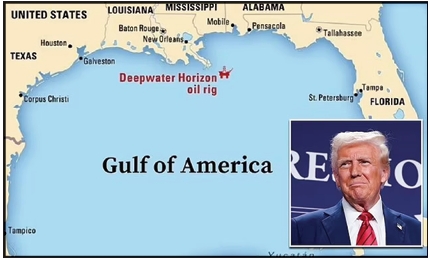
President Donald Trump has issued an executive order renaming the Gulf of Mexico to the Gulf of America, a change already implemented in government documents, corporate communications, and digital maps in the United
States. The Gulf is a critical region for energy production and trade, and major oil companies such as BP and Chevron have updated their materials to reflect the new name. Google Maps has also made the change for U.S. users, though the company disabled comments on the update after negative user reviews. The White House has stated that the renaming is part of an effort to “assert American leadership” and align the body of water’s name with its importance to the
nation’s economy. The government of Mexico has objected to the decision, with President Claudia Sheinbaum calling the move historically inaccurate. The Gulf, which borders not only the United States but also Mexico and Cuba, has been known internationally as the Gulf of Mexico for centuries. Mexican officials have suggested they may challenge the decision through diplomatic channels or international organizations. A Reuters/Ipsos poll found that a
majority of Americans are not in favor of the change, with critics arguing that it is a symbolic move with little practical effect. Others believe it reflects a shift in U.S. policy toward emphasizing national identity in geographic naming conventions. Supporters of the decision say it recognizes the Gulf’s economic contributions to the United States and reflects a broader push to assert American interests.

The media has taken different approaches to the name change. The Associated Press has chosen to continue using the Gulf of Mexico, stating that it follows internationally recognized geographic names. Other outlets, such as The New York Times and The Washington Post, have maintained the previous name as well, while several conservative-leaning publications and broadcasters have adopted Gulf of America. The White House has not commented on reports that AP journalists have faced restricted access to press briefings following the organization’s decision. The impact of the name change on businesses and international relations remains uncertain. Some oil companies, including Shell and ExxonMobil, have chosen not to update their usage, while others have already adopted the new name. Legal experts have suggested that unless recognized by international bodies, the change may have limited effects outside of U.S. government and corporate use. Geographic name changes have occurred in the past, including President Obama’s 2015 decision to re
name Mount McKinley as Denali, a move intended to aid in the restoration of indigenous history. The Gulf of America renaming follows a different context, and whether it becomes widely accepted or remains a politically contested issue will likely depend on future administrations and international responses.

Army Identifies Two Soldiers Killed in Black Hawk Helicopter Crash

Jonah Flanagan || Issue 13 || February 19, 2025

The U.S. Army has released the names of two soldiers who were killed in a collision between a military Black Hawk helicopter and a passenger jet. However, the name of the third soldier is being withheld at the family’s request. The Army identified the two deceased soldiers as Staff Sergeant Ryan Austin O’Hara, 28, and Chief Warrant Officer 2 Andrew Loyd Eaves, 39. No additional information has been
provided about the third soldier. An Army official previously reported that the Black Hawk crew consisted of two male soldiers and one female soldier. The Army has stated that the name of the third soldier will not be disclosed at this time, respecting the family’s wishes. This decision is somewhat unusual, as the Pentagon typically releases the names of fallen troops within 24 hours, as was standard during the wars in Afghanistan and Iraq. Conspiracy theories have already begun to circulate online regarding the identities of the soldiers. One post falsely identified a transgender pilot from the Virginia National Guard as being on board. However, the Virginia National Guard confirmed that no personnel from their unit were involved in the incident. The helicopter was part of the 12th Aviation Battalion, based at Fort Belvoir, Virginia. This unit is responsible for helicopter flights in the Washington D.C. area and is capable of transporting senior U.S. government officials. President Trump has suggested,
without providing evidence, that the collision may be linked to the Federal Aviation Administration’s efforts to hire a more diverse workforce. However, officials have not yet confirmed the cause of the crash.