Who Gets a Seat at the Table?

Adem Jones || Issue 14 || February 25, 2025

Walk through Hudson Valley Community College on any given day, and you’ll see a student body that represents a wide range of backgrounds, cultures, and perspectives. But step into a room where major decisions about the college are made, and it’s like stepping into another world. The diversity that defines the campus doesn’t seem to make it past the door. I saw this firsthand when I attended a Board of Trustees meeting last semester. Nearly everyone in the room, those making decisions, those speaking, those holding positions of power, was white. Among the board members, just one Black person sat at the table. Looking around, I realized I was the only Black person in the audience. For a campus as diverse as HVCC, it was jarring. The people shaping the policies and future of this college looked nothing like the students walking its halls. And now, as HVCC searches for its next president, the same pattern is playing out. The final candidates for the position are all white, following a long-standing trend in higher education where leadership often fails to reflect the students it serves. This isn’t just about checking a box or making the administration look more inclusive—it’s about the reality
of who gets to lead and make decisions that impact all of us. Representation matters. Leadership influences everything from curriculum to hiring practices to funding priorities. When the people in charge share similar backgrounds and perspectives, the policies they create often reflect that limited worldview. It’s not like there aren’t qualified candidates of color in higher education, but according to the American Council on Education, only about 13% of college presidents nationwide are people of color, despite the increasing diversity of student populations across the country. Leadership in higher education has long been dominated by white administrators, a pattern that isn’t just coincidental, it’s systemic. Barriers to advancement, limited recruitment efforts, and the preference for candidates who fit a traditional mold all contribute to the lack of diversity at the top. At HVCC, that system is playing out in real time. A school that thrives on diversity is once again placing power in the hands of a leadership team that doesn’t reflect it. It sends a message, intentional or not, that while students of
all backgrounds are welcome here, the highest levels of leadership are still reserved for a select few.
No one is saying the current candidates aren’t qualified. But in a school where diversity is central to student life, shouldn’t leadership reflect that? Shouldn’t the people making decisions for the future of HVCC represent the students they’re leading? It’s a question worth asking. The real one, though, is whether those in power are actually listening.
Short Story: Errant Part 2

Liam May || Issue 13 || February 19, 2025

The ranger was seemingly oblivious to the knight’s critical gaze, but the black longbow that was resting at his side, was still strung, showing a professional preparedness. The arrows in his quiver were of exceptional quality and every piece of equipment on the man was well maintained. The knight tore the meat off the hunk of rabbit he was chewing on and tossed the bones into the fire. The marrow crackled as it oozed out onto the embers. The ranger looked up from his own piece of meat and met the knight’s steel gaze. He sighed and wiped his mouth with his sleeve. “I have already told you that I’m a friend, yet your eyes betray your suspicions.” The knight snorted. “I have nothing to measure your word with, thus it is meaningless. I trust only your actions, and I do not trust rogues that stalk into my camp after sunfall.”

The ranger shook his head, “Can’t you see I’m not a threat? I even drank from my skin first.” He ended his rebuttal with a swig from the “water “skin on his hip. At that, the knight only grunted and shifted his gaze to dancing flames of
the campfire. The ranger paused. “You know, I still don’t know your name, Knight” The knight looked up with a grim smile. “This is true,” he said, “Names have power, and I don’t think I’ll be telling you mine.” The ranger narrowed his eyebrows, “Why not?” “I haven’t decided if you are some Fiend, Fae, or Shifter here to curse me
for a relative I’ve killed.” The ranger leaned forward and put his elbows on his knees. He narrowed his eyes at the knight and then grinned. “How about a game then?” The knight sighed, “A mark towards Devil or Fae then.” The ranger waved a hand at the jibe. “We will guess things about the other, and then we will see how far our trust extends.” “Hmph,” the knight considered for a moment then replied, “Very well, I will play.”

Value for Vikings: Thrift Stores

Kelly Nguyen || Issue 13 || February 19, 2025

It’s February, and with the new year underway, many people are cleaning out their closets. Thrift stores offer second-hand products at a fraction of the cost. It’s not hard to find some real gems among the racks. Perhaps the best deal of all is buying secondhand. The Capital Region is full of thrift stores with a great one being Doors of Hope in West Sand Lake. I’ve found designer dresses, new with tags, and brand-name clothes consistently at this location. They offer a great variety of clothing items as well as shoes and household goods. The prices are very low on good quality items. I’ve found that at the beginning of the year, the finds are the best as many people are cleaning out their closets and sometimes donate next to new or even never worn items. Similarly, the CAPTAIN’S Treasures in Clifton Park has great quality pieces. If you search on their website, you will find that they do a weekly savings deal with some weeks being 50% off the clothing. This drops already low prices even lower. At this location, I’ve found several designer items in really good condition. Both the CAPTAINS and Doors of Hope offer food pantry services funded by their thrift stores so buying items at their shops gives back directly to the community. While getting a good deal is always a priority, you don’t want to sacrifice quality. I’ve found that observing the condition is very important when thrift shopping as it allows you to avoid purchasing an item that may be too worn. The best part about thrifting is you never know what you might find because a lot of the items are vintage or one-of-a-kind. Understanding your fashion sense will help you find exactly what you’re looking for. I recommend giving thrift stores a shot when looking to update your wardrobe on a budget.

Opinion Review: Community College: The Smarter Choice

Sohaib Khan || Issue 13 || February 19, 2025

Too many students are pressured into thinking a four-year university is the only respectable choice after high school. But here’s the truth: community college is the smarter, more practical option for most students. Let’s talk about money. The average tuition for a four-year university can leave students
drowning in debt, while community college offers the same foundational education at a fraction of the cost. Why pay tens of thousands for general education classes when you can take them for a few hundred dollars? The “2+2” model—two years at a community college before transferring saves
thousands without sacrificing the value of a degree. Beyond affordability, community colleges offer flexibility that traditional universities can’t match. With evening classes, online options, and smaller class sizes, students get a more personalized education while balancing jobs or family responsibilities. And the stigma that community colleges offer a “lower quality “education? Completely outdated. Many professors teach at both community colleges and four-year universities, and employers increasingly recognize the value of associate degrees, especially in technical fields. Some people argue that community college doesn’t provide the “full college experience,” but what does that really mean? If “college experience” refers to dorm life, parties, and social events, is that worth thousands of extra dollars in debt? Students at community colleges can still join clubs, engage in campus life, and form meaningful friendships all without the financial burden. Most importantly, community college gives students the chance to explore their interests without making a costly commitment. Many students
enter four-year universities unsure of their major, only to change it later and spend more time (and money) in school. Community colleges allow students to figure out their path before making a long-term investment. The bottom line? Community college is not a second-rate option—it’s a financially responsible and academically strong choice that more students should consider.

Movie Review: The Substance

Adem Jones || Issue 13 || February 19, 2025

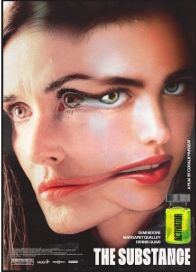
There’s something about watching beauty fade in real time that makes people squirm. Not just in a personal way, but in a collective, cultural way. Hollywood is built on the illusion that youth is infinite, that desirability equals existence, and that once a woman stops being either of those things, she stops being anything at all. “The Substance” takes that idea, pulls it apart piece by piece, and forces us to sit with the wreckage. Elisabeth Sparkle (Demi Moore) is a woman who has spent her life being seen, until suddenly, she isn’t. She isn’t young anymore, and in this world, that means she isn’t relevant. After a chain of events, Elisabeth finds herself introduced to “The Substance,” and it doesn’t take long for her to or
der. That’s where Sue (Margaret Qualley) comes in. Sue is the new, improved version of Elisabeth. The younger, shinier model. But Sue isn’t a person. She’s a concept, and the creators of the substance emphasize the harsh truth, Elisabeth and Sue are one. What’s most unsettling about Sue isn’t just that she replaces Elisabeth; it’s that she does it so easily. Sue has no last name, no history, no depth. And yet, she rises to unimaginable success, adored and consumed by an industry that never questions where she came from.

The most heart-breaking moment in The Substance for me comes when Elisabeth stands in front of the mirror, getting ready for a date with a man who sees her, really sees her, as she is, and finds her beautiful. For a moment, there’s hope. Maybe she can believe it too. But every time she moves toward the door, she catches a
glimpse of Sue’s billboard outside, that impossibly ageless face staring back at her, daring her to measure up. So, she turns back to the mirror, adjusting. A little more makeup. A higher neckline. Cover the hands. More powder. Fix the hair. But it’s never enough. She wipes it all off and starts over, faster, rougher, until she’s clawing at her face, smearing the foundation into something unrecognizable, rage, grief, desperation, all of it collapsing in on
itself. It’s the most honest moment in the film because so many people have been there in some way, standing in front of a mirror, trying to be something better, younger, more palatable. And in the end, Elisabeth doesn’t leave. She never even gets out the door. The body horror is relentless, grotesque, and exactly what it needs to be. The transformation is not just physical but existential. This is what happens when you reject aging, when you buy into the lie that you can stay young forever. It turns you into something unrecognizable. The film doesn’t shy away from the ugliness of it, the desperation, the self-destruction, the way the pursuit of perfection consumes everything in its path. And then there’s the ending. After everything, after the blood and the madness, Elisabeth, Sue, Monstro Elisa Sue, or what’s left of her, steps back into the light. She has no illusions anymore. She knows what the world sees when they look at her, and she doesn’t
care. The audience, both in the film and in real life, is forced to confront their own role in this. The way we consume beauty. The way we discard women once they no longer fit the image we’ve projected onto them. It’s ugly. It’s uncomfortable. And it’s brilliant. “The Substance” isn’t subtle, but it doesn’t need to be. It holds up a mirror, and whether we like what we see or not, it doesn’t look away.

Oscars Review: Oh The Horror!

Matthias Mojallali || Issue 13 || February 19, 2025

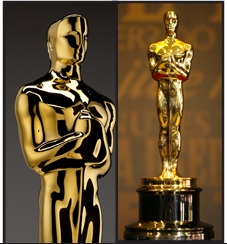
When you hear the words “Oscar winning film” what’s the genres you think of? Do you think of adventure, drama, or maybe romance? One I’m sure you never think of is horror. I mean, why
would you? Horror is a gimmicky, art less genre after all, as many people seem to think. In my eyes, people who think that fail to understand that horror is an art. Unfortunately, it seems as though even those in Hollywood don’t see horror as real cinematic art. Throughout Hollywood, many amazing horror films such as “Halloween,” “Alien,” and even “The Shining” have never won an Oscar. All of these films inspired many other amazing films yet, even nowadays, films like this are blown off just because they’re horror. Months and years go into working on horror films to make them a true art museum of terror. Yet the hard-working men and women behind the scenes on these films get nothing in recognition of everything they’ve done. In my eyes, and the eyes of many others who can appreciate the dark art of horror films, it’s time for a change. It’s time for horror films to be remembered as something worth winning an Oscar over. Because they are, and many will deny it, but the truth is very
much there. Let’s see some horror films win an Oscar. It’s time for horror to be triumphant for the impact it has.

Game Review: Kingdom Come Deliverance 2

Liam May || Issue 13 || February 19, 2025

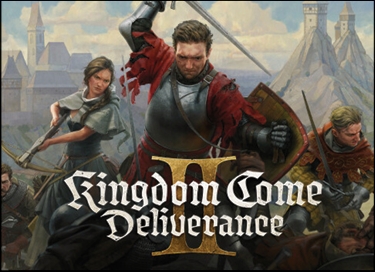
“Kingdom Come Deliverance 2” is a realistic first person RPG, set in 15th century Europe. You play as Henry, a blacksmith turned Knight errant. In the first game, your village is slaughtered by Cumans led by King Sigismend in a war for dominance over Bohemia. In the end, you join the army and you go
on to fight the Cuman invasion with a variety of tactics and the arsenal of a small army. Plenty of side quests such as, smithing, fighting, drinking, gambling, and exploration to fit any fan of the Skyrim series. While not strictly necessary, I highly recommend playing the first KCD game. Much of the story and characters make more sense with the knowledge gained through the first entry into this title. For people that have played the first game, KCD is little more than a prequel DLC in comparison to the sequel. Warhorse Studios received so much funding that they were able to completely improve the game. It is only in high population areas that I noticed significantly annoying bugs, and even then it was incredibly well optimized, my lower end graphics card was able to handle the beautiful settings never dipping 60-70 FPS. The main campaign is about 20 hours longer than the first game. Completing all the side content will take you about 100 hours total. I only have two main issues with the game. Firstly, in an effort to improve the difficulty level of combat, they may have made end game levels too strong. This allows you to blow through a few narratively important duels. Regardless, combat is a lot more fluid and as a general rule it is an improvement. My critique is only that player skill becomes unimportant in the face of game stats. My other issue is that you become wealthy fairly quickly as compared to other games, receiving a lot of money for quests. With side quests money stops being an issue about midgame in Kdc2. Overall, I had a blast playing this game and I think this is 100% a day one (or day seven) purchase.

Value For Vikings: Discounted Regal Movie Tickets

Molly Graiff || Issue 12 || February 4, 2025

Welcome to the spring semester! If you’re new to HVCC, welcome! The Hudsonian is your source for the latest campus news, current events, and interesting stories. Values for Vikings is a column that highlights the deals around campus giving you the most bang for your buck. One of the best on-campus deals is the discounted Regal movie tickets at the Student’s Activities office. Located in the Siek Campus Center in Room 210, the Student Activities office offers amazing events. Each Tuesday from 10 AM-3 PM and 4-5:30 PM (Evening students only) Regal movie tickets are sold for $5 each. There is a limit of two tickets per week per student. You must show your current HVCC ID to get this deal. A typical Regal ticket for an adult is about $15 meaning buying yours at HVCC saves you $10.

Some exclusions apply. I used my tickets bought at HVCC to see Inside Out 2 and Wicked and both times I had a $1.50 upcharge per ticket once I got to the theatre. There are upcharges on new releases or specific movies so you must note that when planning. Even with the upcharge, it was such a better deal to get my tickets at Hudson Valley. If there are no ticket sales for the week that should be reflected in Brightspace as well as the college’s website so, look out for those posts. Consider purchasing your Regal movie tickets at HVCC saving you money while also conveniently grabbing them after class.

Opinion Review: Can You Be the Obstacle on the Path to Success?

Hamide AK || Issue 12 || February 4, 2025

success a matter of fate? Or is it a legacy passed down from one person to another? No! Success is tied to the goals a person sets for themselves. Success is a concept that varies from person to person and is often defined as achieving a goal, gaining personal satisfaction, or creating a positive impact on society. Achieving a predetermined goal or completing a planned task also constitutes success. However, success involves utilizing one’s abilities and potential to the fullest. It is not just about external results but also the sense of fulfillment a person feels internally. For instance, helping others, leaving a positive mark on society, or making a difference in others’ lives. For some people, success is not
about money or career but a happy and peaceful life. Finding inner peace and achieving personal happiness is also a form of success. Naturally, this
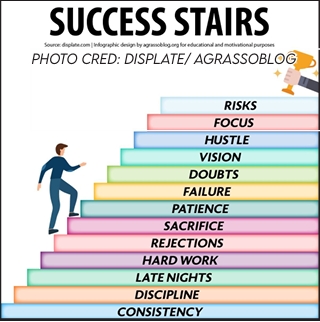
concept of success, which leads us to the most beautiful points in life, is not easily achieved. As the saying goes, “You cannot climb the ladder of success with your hands in your pockets.” Isn’t this a profoundly true statement? Now, I want to ask: how high is your ladder to success? If we consider each step of that ladder as an obstacle, how many steps of obstacles do you have on
your path to success? Have you faced all these barriers? Moreover, what is your determination to overcome them? Factors That May Hinder You on the Path to Success: On the journey to success, the obstacles you may face can be personal, environmental, or psychological. Here are some examples: 1. Lack of Self-Confidence If you do not believe in your abilities, you may hesitate to take risks or try new things. 2. Lack of Clear Goals The absence of specific and achievable goals can reduce your motivation. 3. Poor Time Management Failing to plan, prioritize, and use your time effectively can slow down your progress. 4. Negative Thoughts like “I can’t succeed” or “I have no chance” can hold you back. Negative thoughts drain your confidence and energy. 5. Environmental Factors An unsupportive environment, critical family members, or unmotivated friends can make your journey difficult.

  1. Lack of Discipline Without consistency and determination, achieving long-term success is challenging.
    1. Fears and Anxieties Fear of failure, reluctance to make mistakes, or worrying about what others think can prevent you from taking steps forward. 8. Health and Mental State Physical or mental health issues can affect your motivation and focus. Solutions:1. Set Goals: Define specific, measure from small but consistent steps. 3. Believe in Your Potential: Encourage yourself with positive affirmations. 4. Seek Support: Spend time within spiring people and seek guidance from mentors or professionals if necessary. 5. Manage Your Time: Create daily, weekly, and monthly plans. Determine your priorities. 6. Take Care of Your Health: A healthy body and mind are crucial for success. Factors Shaping Success: Personal Goals: Success depends on the goals a person sets for themselves. With each goal you achieve, your belief and confidence in yourself will growable, realistic, and time-bound goals .

When you reach a goal, your self-confidence increases. This enables you to approach bigger goals with courage in the future. The thought “I succeeded, I can do it again!” motivates you. Values and Beliefs: Success is often defined as achieving what is important to individuals. This does not necessarily have to be tangible. Filling in whatever is missing on your path to being your true self (even if it is abstract) is
also, a form of success. You begin to appreciate your abilities and efforts. This enhances yourself respect and helps build a stronger character. Societal Perception: Sometimes, society defines success through wealth, status, or social acceptance. However, this definition is not always accurate. People around you notice your successes and appreciate you. This leads to greater respect and support in
your social circle. Your achievements can also inspire those around you, including your children, friends, or colleagues, making you feel more valued. In conclusion, success is subjective; what matters is creating your own definition of success and progressing accordingly. Living a life aligned with your values and dreams is the foundation of true success. Remember, success is a journey. Making mistakes or slowing down occasionally is a natural part of the process. What matters is not giving up and continuing on your path. Overcoming challenges, persevering, and refusing to give up
are critical elements that define success. Success positively impacts you not only through external results but also through the internal changes you experience. Whether big or small, what matters is achieving a goal that is meaningful and valuable to you. Success is the courage to keep going despite the obstacles encountered in life. When you take steps toward your dreams, remember that the road may not always be easy; but difficult paths create strong travelers. Success is born not just from great victories but also from the small steps and perseverance you show every day. If you have a goal and are working toward it, you are already successful. Remember that even your mistakes and failures are lessons that make you grow and strengthen you. Believe, be patient, and take one more step toward your dreams each day. Because success is the reward for those who do not give up. Trust yourself because what you can achieve in this world is limitless!

Opinion Review: Nostolgia in Pop Culture

Adem Jones || Issue 12 || February 4, 2025


I’ve been obsessed with Tate Mcrae’s new song, “Sports Car,” lately. There’s something about it that feels so familiar that it’s almost a little lackluster, yet just fresh enough for me to keep coming back. Then, I saw the perfect comparison and it all made sense. Tate Mcrae is trying to reheat Nelly Furtado and Timbaland’s nachos.
The problem is that she’s missing the cheese, but it’s 3 am, and you’re a little drunk, so you eat them anyway, and in that moment, in that context, they’re the best nachos you’ve ever had.
Nostalgia, as we experience it today, is like reheated nachos, oftentimes I’m perfect, but still a satisfying relic of the past. A flawed recreation that feels just right because of the context. It’s messy, it’s missing something, but strangely, it’s exactly what we need. It’s this longing for a time we didn’t fully live through or experience that
has become a driving force in pop culture. It’s not about perfection, it’s about the comfort of familiarity, even when it doesn’t quite hit the mark. This desire to revisit and repackage
the past is evident in today’s music, fashion, and media. Sampling in pop music has become one of the clearest manifestations of this trend. Artists like Dua Lipa and The Weeknd have embraced the sounds of the ‘80s, reviving synth
heavy melodies and larger-than-life production. Songs like Dua Lipa’s “Physical” or The Weekend’s “Blinding Lights” don’t just evoke memories of a past era, they reinvigorate them. These tracks don’t just sample old music, they create a bridge between generations, giving listeners access to a soundscape they may not have experienced firsthand but can still resonate
with. It’s the musical equivalent of a retrofit, borrowing familiar elements to craft something that may be new but will always be a bit reminiscent. But not all nostalgic moments hit the mark as seamlessly. The TikTok discourse around Mcrae’s attempt at recreating Furtado and Timberland’s early 2000s magic is a perfect example of the tension between the old and the new. Reheating the past may bring comfort, but it often lacks the raw, unrefined energy that made the originals stand out. It’s like trying to capture lightning in a bottle, sometimes, the magic just doesn’t translate. The unfortunate reality is that while nostalgia can be a powerful tool for connecting with an audience, it can
also stifle creativity when it’s not used
thoughtfully. This brings us to Hollywood’s obsession with sequels, reboots, and remakes. Everywhere you look, there seems to be a fixation on revisiting the past. Classic films and TV shows, from “Ghostbusters” to “Full House,” are being recycled for new audiences, with mixed results. On one hand, these reboots are a chance to revisit beloved characters and stories, offering a comfort we can cling to in an ever-changing world. But, on the other hand, it raises the question: Where are the bold, groundbreaking stories that once defined cinema? Are we so consumed by nostalgia that we’ve forgotten how to innovate? In a world where streaming platforms often prioritize remakes over original works, it’s hard not to wonder whether we are just chasing echoes of the past rather than creating something truly fresh.

This obsession with nostalgia has even seeped into fashion, where the Y2K aesthetic has seen a resurgence. Gen-Z, the current youth generation, is embracing the early 2000s despite not having fully lived through it. Many Gen-Zers, myself included, were mere toddlers or not even born
during this era. Yet, here we are, sporting cargo pants, chunky sneakers, and butterfly clips like they’re an original part of our style DNA. It’s a fascinating paradox: the generation expected to push culture forward is instead looking back to find their identity. In this context, TikTok plays a pivotal role, not just as a trend-setting platform but as a time capsule. The viral nature of TikTok makes it a space where the past and present collide. A song from the ‘80s or a trend from the 2000s can explode into the mainstream, not because of any inherent artistic value, but because it resonates emotionally with a generation in search of identity and connection. What does this all mean for culture? Why does nostalgia have such a hold on us? Psychologically, nostalgia serves as a coping mechanism, a way of dealing with uncertainty and distress. Research suggests that nostalgia can boost self-esteem, inspire confidence, and connect us to others in meaningful ways. In an era defined by technological change, economic instability, and social uncertainty, the past becomes a comforting anchor. But it’s also more than just a psychological crutch, it can be powerful
tool for reconnecting with deep emotional truths.
The challenge, however, is not to
fall into the trap of just “reheating nachos.” When done right, nostalgia can enrich culture by creating connections across generations, but when overused, it runs the risk of turning into a
form of escapism, a retreat from the challenges of the present. So, where does this leave us? Are we trapped in a cycle of recreating the past, or can nostalgia be a steppingstone to something new? To me, it’s both. Nostalgia serves as a bridge that links generations through cultural standards. But if we’re not careful, we might end up so absorbed in what has been that we forget to create the future. In the end, nostalgia is a powerful tool, one that can either stifle creativity or fuel it, depending on how we use it. The challenge is to balance honoring the past with building a future that is just as rich, bold, and meaningful. Much like those reheated nachos at
3 a.m., nostalgia may not capture the original magic, but in the right moment, it’s the imperfect comfort we crave. Sometimes, the best things are the ones we revisit, even when they’re a little worn around the edges.