The City of Albany Facing $22 Million Budget Deficit

Lindsay Powers || Staff Writer || Issue 17

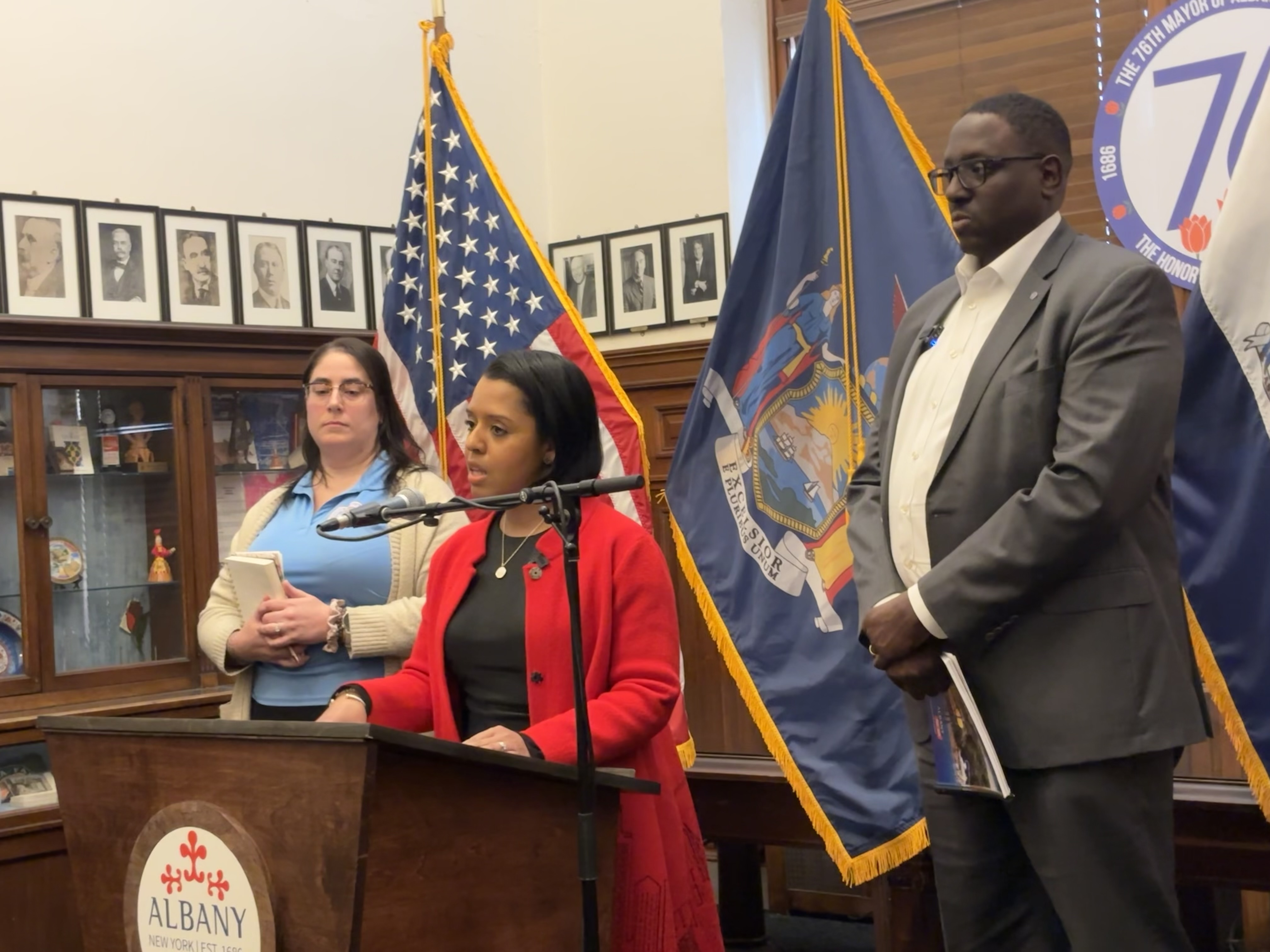
Albany City Mayor Dr. Dorcey Applyrs announced the city will have a $22 million deficit by 2026, while facing backlash over her administration’s spending decisions. According to Mayor Applyrs, the city was already dealing with a structural deficit of $15 million. 

In a memo to city workers on March 19, Mayor Applyrs announced that she had instituted a freeze on non-essential positions, reduced non-emergency overtime, and limited travel and equipment purchases. 

In a statement released to CBS 6, Mayor Applyrs said, “This week I implemented a series of citywide financial measures across every department,” Mayor Applyrs said. “This included, number one, a hiring freeze.”

WAMC

Some city officials still have unanswered questions and concerns about Mayor Applyrs’s administration’s financial choices, such as $1,800 spent on life-sized vinyl record-themed handouts for her State of the City address and a recent trip to Baltimore, Maryland. The mayor’s office has also created new positions and increased salaries for city workers, including a 13% increase in Mayor Applyrs’s salary, from $143,000 to $160,000. 

During a council hearing on February 19th, Councilmember Deirdre Brodie said, “We need to know that we can afford these salary raises this year, and how we are affording them in the future”.  Councilmember Brodie’s other concern is “This bill was put forth within days of starting the fiscal year gives me very little confidence that these unsustainable increases will slow.” 

Despite the backlash over Mayor Applyrs expenditures, she continues to defend her administration’s decisions, saying, “We have been learning about our city’s fiscal picture in real time,” adding. “And even with that, there is essential work that still must happen. I stand behind every decision that my team has made to this point.” Mayor Applyrs cited economic pressures, such as inflation, rising interest rates, and declining federal support, as the culprits behind the city’s growing deficit. 

City officials said they will announce additional steps to address the fiscal challenges the City of Albany will face in the coming months.

Rising Tensions: The Escalating Conflict Between the U.S., Israel, and Iran

Isabelle Holt || Editor-in-Chief || Issue 17

The conflict involving the United States, Israel, and Iran has intensified sharply in early 2026, evolving from long standing geopolitical tensions into a direct and ongoing military confrontation. What began as a strategic rivalry over nuclear capabilities, regional influence, and security concerns has expanded into a broader crisis with regional and global implications. Decades of mistrust form the backdrop, with Iran’s nuclear program, its development of ballistic missiles, and its support for allied armed groups across the Middle East remaining central points of concern for both the United States and Israel. Diplomatic efforts to limit Iran’s nuclear ambitions persisted into early 2026 but ultimately failed to produce a durable agreement, contributing to the current escalation.

In the opening months of the year, the United States increased its military presence across the Middle East, citing rising instability and concerns about Iran’s weapons development. Soon after, coordinated strikes by U.S. and Israeli forces targeted Iranian military and strategic infrastructure, marking a turning point from indirect confrontation to direct conflict. Iran responded with missile and drone attacks aimed at Israeli cities, U.S. bases, and allied positions in the region, setting off a cycle of retaliation that has continued to intensify. Israeli forces have carried out additional strikes on sites linked to Iran’s military capabilities, including missile production facilities and infrastructure associated with the Islamic Revolutionary Guard Corps, while Iran has demonstrated its ability to sustain repeated waves of attacks.

The United States has taken on a complex role, supporting Israeli operations while also pursuing its own military and diplomatic objectives. This has included troop deployments, strategic deterrence measures, and at times calibrated pauses in strikes to allow space for negotiations. One of the most sensitive flashpoints has been the Strait of Hormuz, a narrow but vital waterway through which a large share of the world’s oil supply passes. Iran has used its geographic position to threaten or disrupt shipping in the area, raising fears of a wider economic and military crisis. In response, the United States has warned of potential action to ensure freedom of navigation, underscoring the global stakes of the conflict.

The humanitarian consequences have been significant, with airstrikes and missile attacks causing civilian casualties, displacement, and damage to infrastructure in multiple areas. The conflict has also drawn in regional actors, as groups aligned with Iran have launched attacks on Israel and contributed to a widening of instability across the Middle East. This expansion has increased concerns that the confrontation could evolve into a broader regional war involving multiple states and non-state actors.

Economic effects have been felt well beyond the immediate conflict zone. Oil prices have risen amid fears of supply disruptions, contributing to inflationary pressures and volatility in global markets. Trade routes and energy security have become central concerns for governments worldwide, highlighting how closely interconnected the conflict is with the global economy.

Despite the intensity of the fighting, diplomatic efforts have not ceased. The United States has put forward proposals aimed at de-escalation, including restrictions on Iran’s nuclear and missile programs, while Iran has signaled cautious openness to continued negotiations even as it rejects certain terms. Occasional pauses in military activity suggest that backchannel discussions remain active, though fragile and uncertain. The situation reflects a delicate balance between continued confrontation and attempts at negotiation, with neither path clearly prevailing.

As it stands, the trajectory of the conflict remains uncertain. All sides have demonstrated both capability and resolve, yet also appear aware of the risks associated with a prolonged and expanding war. The coming weeks and months will likely determine whether diplomatic efforts can gain traction or whether the cycle of escalation deepens further, drawing in additional actors and reshaping the geopolitical landscape in lasting ways.

Caris Kraty Receives SUNY’s Norman R. McConney Jr. Award

Lindsay Powers || Staff Writer || Issue 17

The President of the HVCC Student Senate, Caris Kraty, was awarded the Norman R McConney Jr. Award for Educational Opportunity Program (EOP) Student Excellence. Kraty is one of 48 students who were awarded the EOP Student Excellence award.

The Award for EOP Student Excellence recognizes students across the SUNY System’s personal and professional achievements. Students need to have a 3.0 GPA or higher and demonstrate perseverance and resilience in the face of adversity and in overcoming significant challenges. Students must be nominated by their schools’ EOP for high academic merit and personal growth. The award is in honor of Norman R. McConney Jr., and former Deputy Speaker Arthur O. Eve, who helped establish the EOP in 1967.

Kraty, who is in her second year at HVCC and has been the President of Student Senate and the Black and Latino Student Union since 2024, is a board member of the Faculty Student Association and is the treasurer of the EOP club. Additionally, Kraty volunteers as a peer mentor, helping new students transition into the college environment. 

In a statement made by HVCC, Kraty said, “EOP is more than support; it is opportunity in action. Coming to this country from Liberia at a young age, I had big dreams but limited resources. Through Hudson Valley, SUNY, and EOP, I found mentors, leadership opportunities, and a community that reminded me my circumstances do not define my potential. This award reflects what happens when access meets empowerment. EOP gives students the tools to rise, to lead, and to create brighter futures for ourselves and our communities.”

According to the EOP, Kraty demonstrated resilience and commitment to her professional goals throughout her time at HVCC, and plans to pursue a bachelor’s degree in media studies at SUNY New Paltz.

Two Pilots Identified After Deadly Runway Collision at LaGuardia Airport

Isabelle Holt || Editor-in-Chief || Issue 17

Authorities have identified the two pilots killed in a late night runway collision at LaGuardia Airport as Antoine Forest and Mackenzie Gunther, both early in their aviation careers.

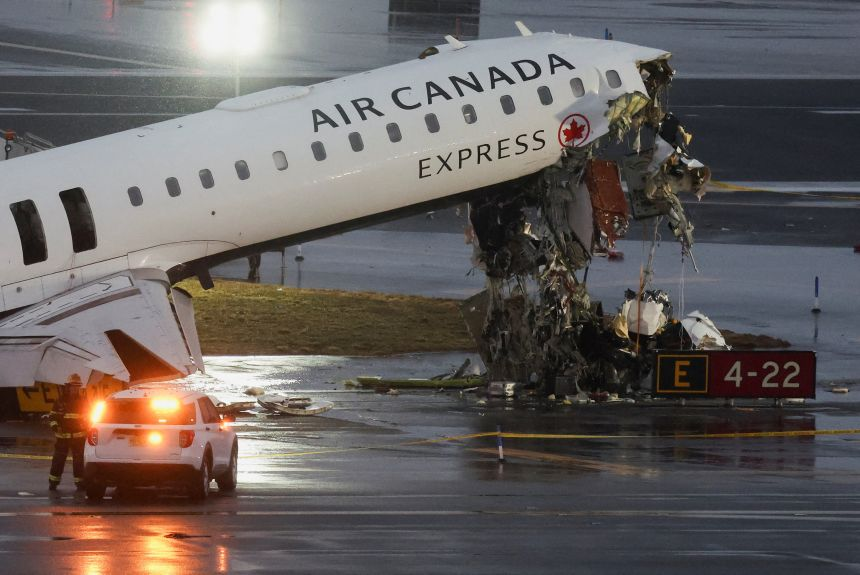
The crash occurred shortly before midnight on Sunday, when a regional passenger flight operated by Jazz Aviation, an Air Canada Express carrier, collided with an airport fire truck while on the runway. The flight had departed from Montreal and was carrying dozens of passengers. In total, 41 people were injured and transported to local hospitals. Operations at the airport were suspended until Monday afternoon.

Air Canada Plane after crash, CNN

Officials described the loss of the two pilots as particularly tragic given their youth and promising futures. Forest, 30, was originally from Québec and had pursued aviation from a young age, beginning his flying experience as a teenager and later training on bush planes in the Saguenay region. He joined Jazz Aviation in late 2022.

Gunther, a recent graduate of Seneca Polytechnic in Toronto, had only recently begun his professional career as a pilot. The institution announced it would lower flags to half-mast in his memory, expressing condolences to his family and former classmates.

Among the survivors was a flight attendant who was ejected from the aircraft during the crash yet remarkably survived. She was discovered still strapped to her seat some distance from the wreckage and is currently being treated for multiple injuries. Family members described her survival as extraordinary.

The collision also injured two firefighters who were inside the truck at the time of impact. Audio recordings from air traffic control suggest there were urgent attempts to halt the vehicle moments before the crash.

Preliminary findings from investigators at the National Transportation Safety Board indicate that both the aircraft and the fire truck had been cleared to access the same runway. Officials are examining a range of contributing factors, including communication procedures and equipment limitations.

Investigators have also pointed to potential technological shortcomings. A ground radar system designed to detect runway conflicts did not provide a warning, and the fire vehicle reportedly lacked a transponder that could have improved its visibility to controllers.

Speaking on the broader context, transportation officials emphasized the need for modernization within the U.S. air traffic control system. Concerns have also been raised about staffing levels and workload pressures in control towers, particularly during busy or complex operations.

The investigation remains ongoing, with authorities continuing to review cockpit recordings, air traffic communications, and operational protocols. No final determination has been made regarding the cause of the accident.

A New Era for Federal Labor Policy, Murphy Takes the Helm at the NLRB

Isabelle Holt || Editor-in-Chief || Issue 17

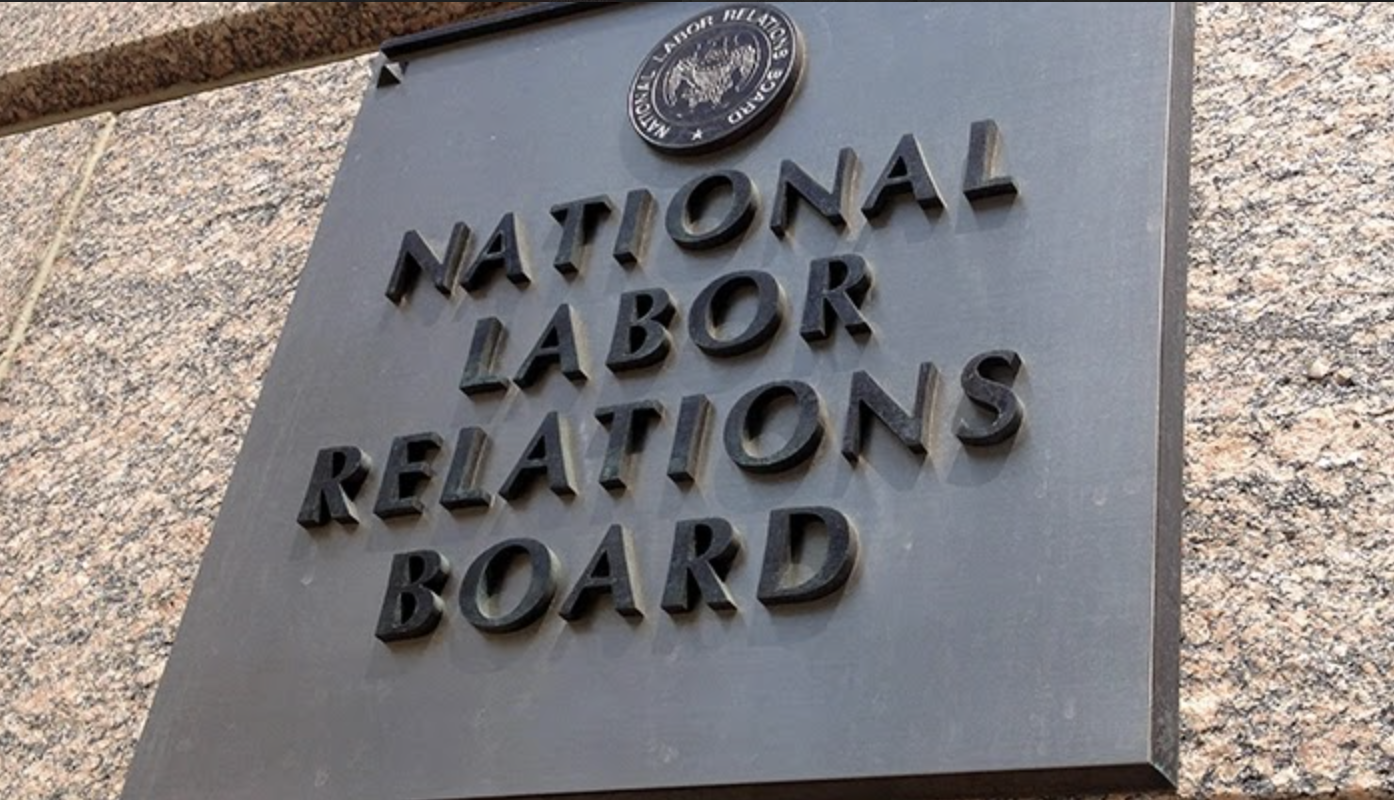
The National Labor Relations Board (NLRB), the federal agency responsible for enforcing labor law and overseeing union elections in the private sector, is entering a significant new phase of leadership. At the center of this shift is James Murphy, a longtime agency insider who has now risen to serve as chair.

Murphy’s appointment follows his confirmation to the board in December 2025 as part of a broader wave of nominees advanced by President Donald Trump. He was officially sworn in on January 7, 2026, helping restore the board’s quorum after nearly a year in which it lacked enough members to fully function.

With more than four decades of experience at the NLRB, Murphy brings deep institutional knowledge to the role. He began his career at the agency in 1974 and has served in multiple legal and advisory positions, including as chief counsel to former chairman Marvin Kaplan. His long tenure has made him a familiar figure within labor law circles, though his elevation also signals a broader ideological shift in how the board may operate moving forward.

The NLRB plays a critical role in American workplaces. Established in 1935, the agency enforces the National Labor Relations Act, protects workers’ rights to organize, and adjudicates disputes between employers and unions. When the board lacks a quorum, it cannot issue decisions, leaving cases unresolved and slowing enforcement of labor protections. That was the reality for much of 2025, when internal and political conflicts left the agency effectively stalled.

Murphy’s leadership comes as the board regains full operational capacity, and as its political balance shifts. His confirmation, alongside fellow Republican appointee Scott Mayer, established a Republican majority on the five member panel. This change is expected to influence the direction of federal labor policy, particularly after several years of more union friendly rulings under the previous administration.

Early signs of that shift are already emerging. With a new majority in place, the board has begun reconsidering policies related to employer liability, union organizing rules, and workplace standards. Supporters of the changes argue they will provide clarity and reduce regulatory burdens for businesses, while critics warn they could weaken protections for workers and unions.

Murphy now steps into the chairmanship at a moment when the NLRB faces both opportunity and scrutiny. The agency is not only working through a backlog of cases but also navigating broader legal and political debates over its authority and independence. Questions about presidential power over independent agencies, and the limits of that authority, continue to shape the environment in which the board operates.

As chair, Murphy’s role will be both administrative and symbolic. While the position does not carry sweeping unilateral power, it does influence the board’s agenda, priorities, and tone. With the NLRB once again able to act, his leadership will help determine how federal labor law is interpreted and enforced in the years ahead.

For workers, employers, and unions alike, the implications are significant. The decisions made under Murphy’s tenure could reshape organizing efforts, workplace rules, and the balance of power between labor and management across the country.

Hudson Valley ATEC Construction Faces Controversy

Prajeeth Rangamudri || News Editor || Issue 17

Spending and transparency have come under scrutiny due to a recent issue regarding the new Applied Technology Education Center (ATEC) at Hudson Valley Community College. The problem started when Steve McLaughlin, the executive of Rensselaer County, denied a $1.9 million payment intended for project contractors. 

According to Times Union reporting, the payout was meant to offset additional expenses brought on by a seven-month stop-work order in 2025. McLaughlin, however, claimed that building had begun without the necessary permissions and questioned why contractors should be compensated for work that might not have been approved. 

HVCC Plans New Building, Programs To Help Fill Shortages In Skilled Trade Workers, Glens Falls Business Journal

The county Legislature, which first authorized the payment, will probably override the veto. 

The ATEC project, which is anticipated to cost more than $60 million, is intended to serve as a significant workforce training facility at Hudson Valley Community College. Some officials attribute the additional expenses to equipment leases, pay hikes, and delays, while others point to the project’s initial management. 

All things considered, this situation raises questions about how big projects are managed and whether taxpayer funds are being spent appropriately. Many will be keeping a close eye on how these problems are resolved as the project progresses.

Staff Shoutout: Scott Hathaway

Adrianna Booth || Staff Writer || Issue 10

Scott Hathaway was holding a beat-up, 1990s, charades-style game he got at a thrift store for a dollar, turning the box in his hands and explaining how he plans to use it in his public speaking class. The set of prompt cards, decades old, he said, would allow students to practice gestures and physical expression when speaking to a crowd. 

The scene is consistent with the teaching style Hathaway has perfected over 32 years at Hudson Valley Community College, where improvisation and student comfort drive much of what he brings to the classroom. He continues to look for new ways to encourage students to speak and write with confidence after having taught for more than three decades. 

“I’m always trying to keep them engaged,” Hathaway said. “Anything that gets them moving, talking and feeling comfortable is a win.” 

Hathaway, now chair of the Fine Arts, Digital Media and Theatre Department, has spent more than half his life at HVCC, but his journey there began long before he entered college when he was 14, showing younger Boy Scouts how to perform some of the most basic merit badges. He recalled making a poster identifying the parts of an axe, teaching the lesson and quizzing the scouts. 

“It was fun teaching and instructing students,” Hathaway said. 

A couple of years later, a high school health teacher dropped into his study hall to find volunteers to serve as tutors in the kindergarten classroom downstairs. Hathaway registered, going to his K–12 school on a weekly basis to help the youngest students, and his love for teaching was cemented. 

When he first arrived at Hudson Valley as a freshman, he knew exactly what he wanted to do. He thrived in English classes and transferred, after two years, to get a master’s degree in English from the University at Albany, thinking it was essential to anyone who wanted to teach at the collegiate level. 

Yet finding a full-time position was very hard. The economy’s recession in the early 1990s created few openings, and instructors throughout the district held onto their positions for longer, limiting career openings for newcomers. 

“It wasn’t super easy to get jobs in education back then,” he said. 

Hathaway also juggled part-time work at multiple institutions such as Russell Sage, Schenectady County Community College and Southern Vermont College in Bennington. 

“It was hard to work at three different colleges at once just to make a living,” Hathaway said. “My heart always was at Hudson Valley,” he said. And while he eventually returned to HVCC with a bold move, he stumbled into the English department chair’s office and introduced himself. There were no open positions but the chair recalled him after two composition sections opened the following year. 

“It was a bit gutsy,” he said. “But nothing ventured, nothing gained.” 

He taught part time before interviewing for a full-time position, and has remained at the college since. 

Hathaway considers his teaching philosophy to be student-centered and grounded in the concept of learning effectively when students feel competent and supported. He teaches writing and public speaking, classes he calls “life skills” that students take into other classes and their future careers. 

“I try not to be the one who knows everything,” he said. “We’re all in this together.” 

He likes the hands-on approach and urges his students to practice tools. In-class exercises are often linked to topics presented in weekly classes for students to write. In public speaking courses you will find impromptu speeches, communication games and exercises designed also to make students more comfortable. 

Hathaway also insists his students are never embarrassed. He tries to satisfy various learning styles through independent work, small groups and low-pressure warm ups. 

“I try to use words like ‘we’ and ‘us,’” he said. “I don’t think it does any good to have a teacher versus student scenario.” 

One activity that he enjoyed was having journalism students visit newspapers of their own community, such as the Times Union and the Troy Record, to discover how a newsroom worked. 

“That was always a fun time,” he said. 

Hathaway, who had spent 20 years in the English Department, became interim chair in 2010 when the department’s leader left on leave. What he found was that he enjoyed mentoring faculty as much as teaching students. 

“I loved helping younger faculty,” he said. “Maybe I know more about this kind of job than I thought I did.” 

When the chair position in Fine Arts, Digital Media and Theatre opened in 2015, he saw ways the areas connected and accepted the role, even though it took him outside his discipline. Since then, he has learned what art faculty and studio students need, including equipment, space and scheduling support. 

“I learned so much about art and what student artists need to be successful,” Hathaway said. 

He said he is proud of the department’s recent expansion. Last year it launched a redesigned drawing and painting studio on the third floor of Amstutz Hall and a new room for two-dimensional design. Advanced students now have individual cubicles. The digital media program also gained an additional classroom, BTC 1053, to accommodate rising enrollment in animation and graphic design. A nearby open-access lab, open daily from 7 a.m. to midnight, gives students a place to complete digital projects without buying expensive equipment. 

“That space was a huge win for our students,” Hathaway said. 

Even after he received a statewide teaching award, a crowning achievement in his career, he said it only encouraged him to work harder. 

“I try to live up to the honor of that award,” he said. 

Now in his 32nd year of teaching, Hathaway said he does not want to leave Hudson Valley. 

“I could retire tomorrow,” he said. “But I choose instead to continue to work with students and faculty for as long as they’ll have me.” 

He looked again at the old game on his desk, ready to try it out on his next group of public speaking students. 

“My old alma mater is the place I’ve been for more than half my life,” he said. “They’ll have to drag me out, kicking and screaming.”

HVCC Appoints New Leadership for Admissions, Facilities, & Technology

Isabelle Holt || Editor-in-Chief || Issue 10

Hudson Valley Community College has announced the appointment of three new leaders whose work will play a significant role in supporting enrollment efforts and strengthening day-to-day campus operations. The changes include one internal promotion and two new additions to the college community, reflecting a mix of institutional knowledge and outside experience.

Chris Dobert has been named the college’s chief technology officer, continuing a career at Hudson Valley that began in 2020. Dobert has held several technology leadership roles at the college, including senior systems engineer and systems and support manager, and most recently served as co-interim chief technology officer. His background includes extensive experience in enterprise technology, digital modernization and cybersecurity, areas that are increasingly critical to higher education. A Hudson Valley alumnus, Dobert also earned a bachelor’s degree in computer information systems from the University at Albany, bringing both professional expertise and a personal connection to the institution.

Jim Eaton has joined the college as director of admissions and recruitment, bringing more than two decades of experience in enrollment management and student outreach. Prior to Hudson Valley, Eaton worked in admissions leadership at Siena University, where he focused on recruitment strategy, communications and data-driven enrollment practices. His approach emphasizes access and clear pathways into higher education for prospective students. Eaton holds a bachelor’s degree in public communications from The College of Saint Rose and a master’s degree in guidance and counseling from The Sage Colleges.

Dan Seaman has been appointed director of facilities and will oversee the operation and maintenance of campus buildings and grounds, along with major construction and renovation projects. Seaman brings decades of experience managing facilities in higher education, most recently serving as chief facilities officer at St. Lawrence University, where he led operations across more than two million square feet of space. His career also includes facilities leadership roles at Castleton State College, SUNY Adirondack and Finger Lakes Community College. He earned a bachelor’s degree in organizational management from Roberts Wesleyan College.

Hudson Valley Community College President Michael Brophy welcomed the new leaders, noting the important role each will play in advancing the college’s mission. He emphasized that their combined expertise will help support students, strengthen campus infrastructure and ensure the college continues to operate effectively as it looks toward future growth.

HVCC Receives Mental Health Grant

Isabelle Holt || Editor-in-Chief || Issue 10

Hudson Valley Community College has been selected as one of the first 11 community colleges in New York State to receive funding through the State University of New York’s new Mental Health First Aid Grant Program, a statewide initiative aimed at strengthening mental health support for students. The program awards up to $8,000 per campus and reflects SUNY’s growing emphasis on student wellbeing as a core component of academic success.

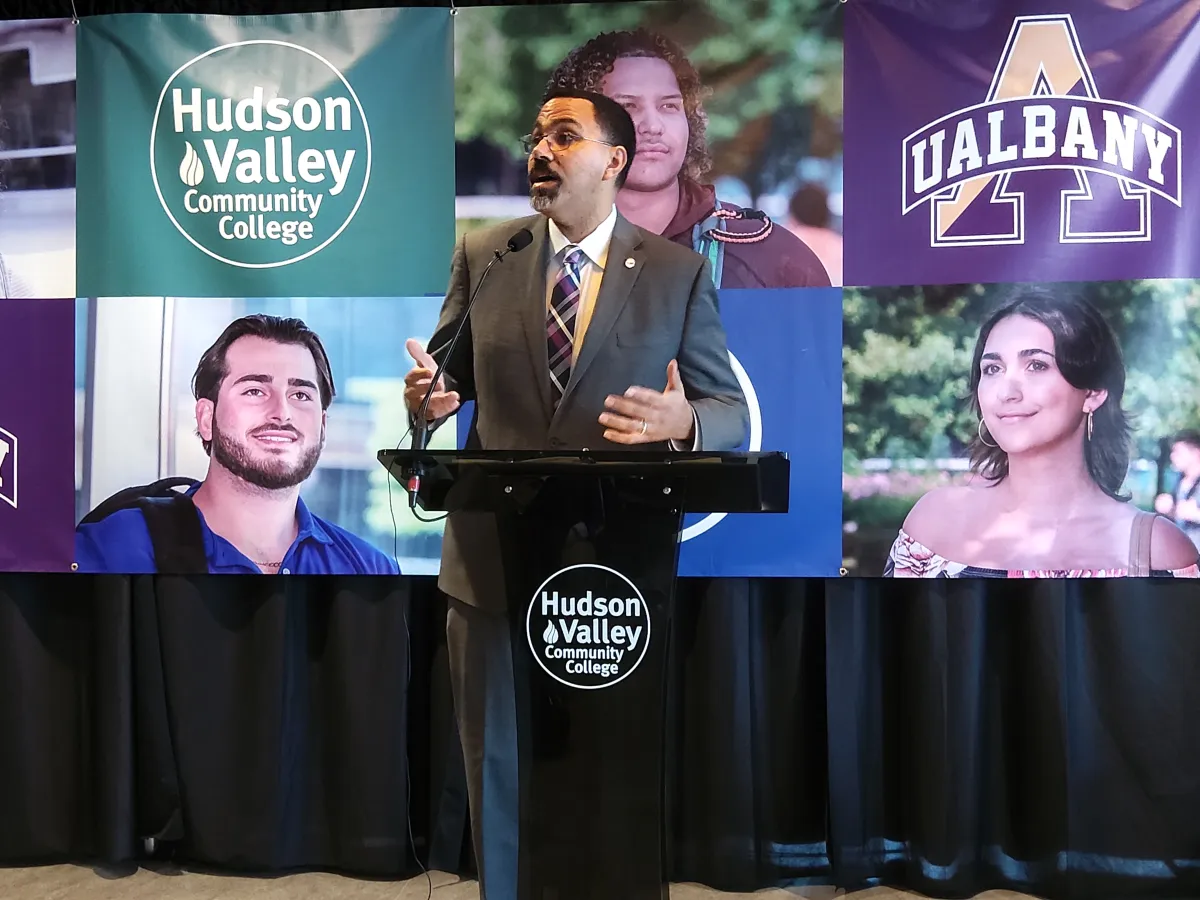
The announcement was made recently by SUNY Chancellor John B. King Jr., who emphasized the importance of equipping campuses with tools to better recognize and respond to mental health challenges. Mental Health First Aid is a nationally recognized, evidence-based training program designed to help faculty and staff identify, understand, and respond to signs of mental health concerns and substance use disorders. Through SUNY’s grant program, participating campuses will receive support for instructor certification, training materials, outreach efforts, and campus-wide training opportunities to improve mental health literacy.

Once fully implemented, the program is expected to support Mental Health First Aid training for nearly 3,000 faculty, staff, and other non-clinical campus personnel across SUNY each year. By expanding the number of trained individuals on campus, SUNY aims to increase its capacity to recognize students in distress, provide timely and informed support, and connect students with appropriate professional resources before situations escalate.

“Mental health is health, and our priority at SUNY is to advance every aspect of our students’ growth and to ensure they have the support needed to succeed in their academic, professional, and personal development,” Chancellor King said. He added that the grants will help ensure more SUNY employees are prepared to recognize and address mental health concerns and to support students when they need help most.

Hudson Valley Community College President Michael Brophy echoed that sentiment, noting the importance of addressing students’ needs beyond the classroom. “We appreciate SUNY’s recognition of the importance of mental health resources for students, and their investment in creating greater access to these resources,” Brophy said. “We strive to provide support for our students in every area of their lives, not just academics, and this new grant will allow us to offer additional support and extend our reach beyond the existing services such as those offered through our Counseling Services office.”

In addition to Hudson Valley, 26 other SUNY campuses received funding through the Mental Health First Aid Grant Program, including a mix of community colleges and four-year institutions across the state. These campuses range from large research universities such as the University at Albany and Stony Brook University to smaller colleges like Jamestown Community College and SUNY Maritime College, underscoring SUNY’s system-wide commitment to student mental health.

Students seeking mental health support can access resources through SUNY’s mental health webpage, while Hudson Valley students have several options available locally. These include appointments with professional counselors through the college’s Counseling Services office, access to the Help Now Crisis Line at (518) 629-7320 for immediate support outside regular hours, and Welltrack Boost, a self-help app available through student email accounts that offers wellbeing assessments and educational tools. Anyone experiencing an immediate mental health crisis can also call or text 988 to reach the Suicide and Crisis Lifeline, which provides free, confidential support 24 hours a day.

By participating in this new grant program, Hudson Valley Community College is taking an important step toward fostering a more informed, supportive campus environment where mental health is recognized as an essential part of student success.

Prayers For the Pope

Tyler Dinuzzo || Issue 15 || March 5, 2025

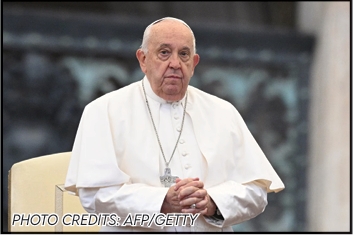
On Sunday, February 23rd, Pope Francis was suddenly struck by a sudden kidney complication, to everyone’s surprise. The 88-year-old Pope had been struggling with dwindling health (likely tied to his impressive age), clashing with pneumonia and lung infections. After the sudden kidney catastrophe, the Pope was immediately brought to a hospital and has been recovering there for a few days now. After a plethora of tests, the doctors treating him stated that thankfully the failure seems to be mild, but for a man of the Pope’s status, it is of course imperative for them to remain on guard and continue supplying him with support. Despite the sudden striking of misfortune, the Pope maintains attentiveness and supposedly, according to the Vatican, “in good humor,” despite the unexpected nature and of the situation. The Pope released a statement requesting that Catholics pray for him
and his health following him being unable to deliver a prayer physically for two weeks in a row.
Pope Francis seems to slowly be recovering as the days go by, and the Vatican’s reports seem to be
mostly positive about his state for the past few days-or, at least as positive as you can possibly be in a situation this unexpected and frightening. Catholics around the world are gathering in prayer for the Pope, especially those in his home country of Argentina, where the support could be considered deafening, if the hyperbole is to be forgiven. After a lifetime of pushing forward and making great strides in the Catholic religion worldwide, the Pope has more than earned this nearly universal respect. Hopefully, an efficient recovery may be granted to Pope Francis.