
HVCC Appoints New Leadership for Admissions, Facilities, & Technology

Isabelle Holt || Editor-in-Chief || Issue 10

Hudson Valley Community College has announced the appointment of three new leaders whose work will play a significant role in supporting enrollment efforts and strengthening day-to-day campus operations. The changes include one internal promotion and two new additions to the college community, reflecting a mix of institutional knowledge and outside experience.

Chris Dobert has been named the college’s chief technology officer, continuing a career at Hudson Valley that began in 2020. Dobert has held several technology leadership roles at the college, including senior systems engineer and systems and support manager, and most recently served as co-interim chief technology officer. His background includes extensive experience in enterprise technology, digital modernization and cybersecurity, areas that are increasingly critical to higher education. A Hudson Valley alumnus, Dobert also earned a bachelor’s degree in computer information systems from the University at Albany, bringing both professional expertise and a personal connection to the institution.

Jim Eaton has joined the college as director of admissions and recruitment, bringing more than two decades of experience in enrollment management and student outreach. Prior to Hudson Valley, Eaton worked in admissions leadership at Siena University, where he focused on recruitment strategy, communications and data-driven enrollment practices. His approach emphasizes access and clear pathways into higher education for prospective students. Eaton holds a bachelor’s degree in public communications from The College of Saint Rose and a master’s degree in guidance and counseling from The Sage Colleges.

Dan Seaman has been appointed director of facilities and will oversee the operation and maintenance of campus buildings and grounds, along with major construction and renovation projects. Seaman brings decades of experience managing facilities in higher education, most recently serving as chief facilities officer at St. Lawrence University, where he led operations across more than two million square feet of space. His career also includes facilities leadership roles at Castleton State College, SUNY Adirondack and Finger Lakes Community College. He earned a bachelor’s degree in organizational management from Roberts Wesleyan College.

Hudson Valley Community College President Michael Brophy welcomed the new leaders, noting the important role each will play in advancing the college’s mission. He emphasized that their combined expertise will help support students, strengthen campus infrastructure and ensure the college continues to operate effectively as it looks toward future growth.
HVCC Receives Mental Health Grant

Isabelle Holt || Editor-in-Chief || Issue 10

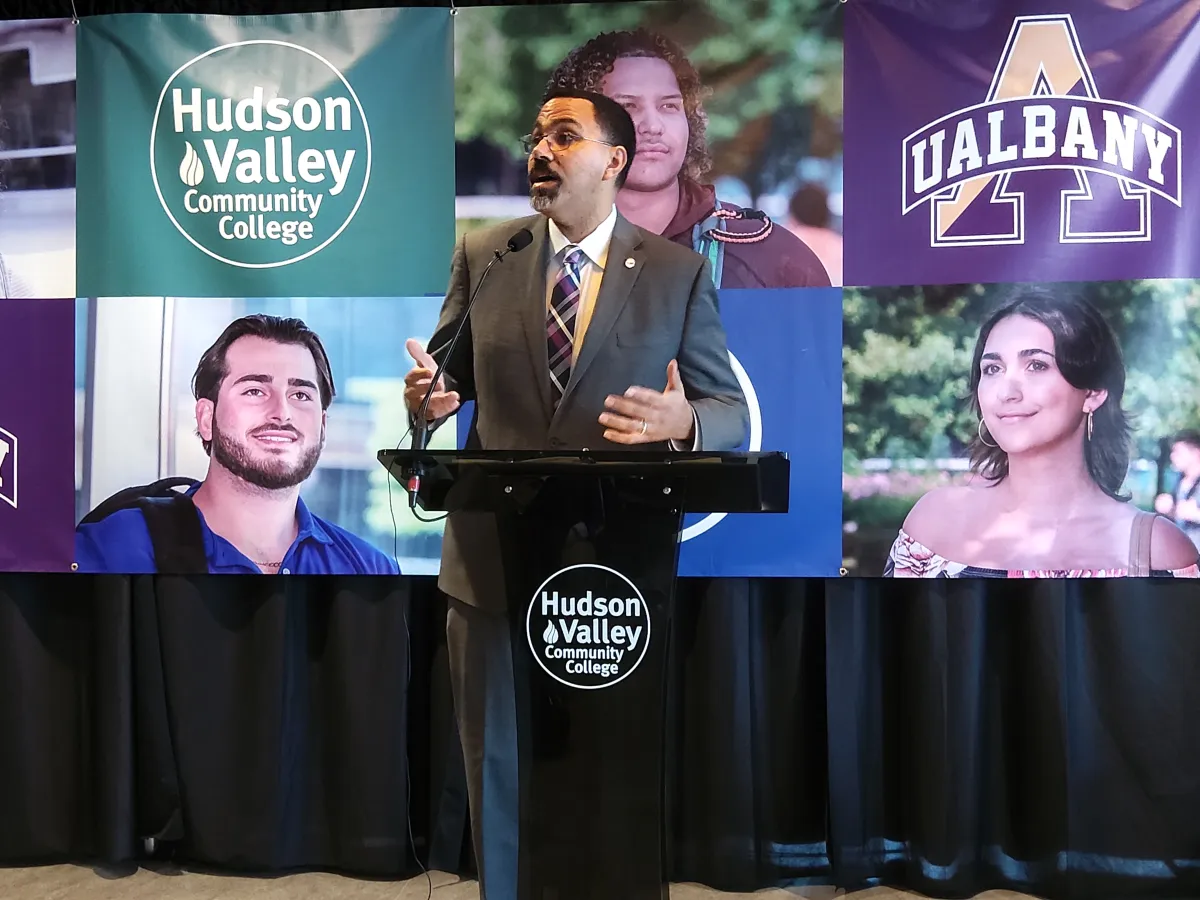
Hudson Valley Community College has been selected as one of the first 11 community colleges in New York State to receive funding through the State University of New York’s new Mental Health First Aid Grant Program, a statewide initiative aimed at strengthening mental health support for students. The program awards up to $8,000 per campus and reflects SUNY’s growing emphasis on student wellbeing as a core component of academic success.

The announcement was made recently by SUNY Chancellor John B. King Jr., who emphasized the importance of equipping campuses with tools to better recognize and respond to mental health challenges. Mental Health First Aid is a nationally recognized, evidence-based training program designed to help faculty and staff identify, understand, and respond to signs of mental health concerns and substance use disorders. Through SUNY’s grant program, participating campuses will receive support for instructor certification, training materials, outreach efforts, and campus-wide training opportunities to improve mental health literacy.

Once fully implemented, the program is expected to support Mental Health First Aid training for nearly 3,000 faculty, staff, and other non-clinical campus personnel across SUNY each year. By expanding the number of trained individuals on campus, SUNY aims to increase its capacity to recognize students in distress, provide timely and informed support, and connect students with appropriate professional resources before situations escalate.

“Mental health is health, and our priority at SUNY is to advance every aspect of our students’ growth and to ensure they have the support needed to succeed in their academic, professional, and personal development,” Chancellor King said. He added that the grants will help ensure more SUNY employees are prepared to recognize and address mental health concerns and to support students when they need help most.

Hudson Valley Community College President Michael Brophy echoed that sentiment, noting the importance of addressing students’ needs beyond the classroom. “We appreciate SUNY’s recognition of the importance of mental health resources for students, and their investment in creating greater access to these resources,” Brophy said. “We strive to provide support for our students in every area of their lives, not just academics, and this new grant will allow us to offer additional support and extend our reach beyond the existing services such as those offered through our Counseling Services office.”

In addition to Hudson Valley, 26 other SUNY campuses received funding through the Mental Health First Aid Grant Program, including a mix of community colleges and four-year institutions across the state. These campuses range from large research universities such as the University at Albany and Stony Brook University to smaller colleges like Jamestown Community College and SUNY Maritime College, underscoring SUNY’s system-wide commitment to student mental health.

Students seeking mental health support can access resources through SUNY’s mental health webpage, while Hudson Valley students have several options available locally. These include appointments with professional counselors through the college’s Counseling Services office, access to the Help Now Crisis Line at (518) 629-7320 for immediate support outside regular hours, and Welltrack Boost, a self-help app available through student email accounts that offers wellbeing assessments and educational tools. Anyone experiencing an immediate mental health crisis can also call or text 988 to reach the Suicide and Crisis Lifeline, which provides free, confidential support 24 hours a day.

By participating in this new grant program, Hudson Valley Community College is taking an important step toward fostering a more informed, supportive campus environment where mental health is recognized as an essential part of student success.

Prayers For the Pope

Tyler Dinuzzo || Issue 15 || March 5, 2025

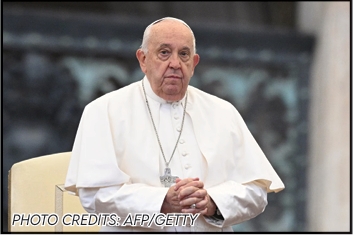
On Sunday, February 23rd, Pope Francis was suddenly struck by a sudden kidney complication, to everyone’s surprise. The 88-year-old Pope had been struggling with dwindling health (likely tied to his impressive age), clashing with pneumonia and lung infections. After the sudden kidney catastrophe, the Pope was immediately brought to a hospital and has been recovering there for a few days now. After a plethora of tests, the doctors treating him stated that thankfully the failure seems to be mild, but for a man of the Pope’s status, it is of course imperative for them to remain on guard and continue supplying him with support. Despite the sudden striking of misfortune, the Pope maintains attentiveness and supposedly, according to the Vatican, “in good humor,” despite the unexpected nature and of the situation. The Pope released a statement requesting that Catholics pray for him
and his health following him being unable to deliver a prayer physically for two weeks in a row.
Pope Francis seems to slowly be recovering as the days go by, and the Vatican’s reports seem to be
mostly positive about his state for the past few days-or, at least as positive as you can possibly be in a situation this unexpected and frightening. Catholics around the world are gathering in prayer for the Pope, especially those in his home country of Argentina, where the support could be considered deafening, if the hyperbole is to be forgiven. After a lifetime of pushing forward and making great strides in the Catholic religion worldwide, the Pope has more than earned this nearly universal respect. Hopefully, an efficient recovery may be granted to Pope Francis.

Two Viruses, One Problem…

Zachary Suarez || Issue 15 || March 5, 2025

Flu death casualties surpass the casualties from Covid since it’s outbreak in 2019. Flu deaths have been at an all time high according to Dr. Darien Sutton, A certified physician/ medical correspondent for ABC News. There has been a major spike recently. The CDC reported 26.9% positive flu tests compared to 18.2% last year. From 2024 to currently there have been 33 million illnesses. The positive take is that covid is taking a backseat. The surge has been light. On the contrary, the more people that catch the flu the greater the chance they catch both strands of the virus. This is something to look out for considering we are in flu season and it extends to mid spring time. On the same note, West Texas is experiencing a major increase in Measles infections. The recent outbreak got to around 100 people in the state and the potential to spread to others. Currently only a few people are hospitalized. The reason for the outbreak occurring specifically in Texas is due to the low vaccine rate in the MRA vaccine. There is a 20% of children that are not vaccinated for Measles in the pocket of West Texas. Measles is the most contagious virus known. What makes measles so different is the long-lasting effects and an occasional hazard to negatively affect the brain. The people kids-adults that are vaccinated should be covered. Most children receive at least one Measles, mumps, and rubel la vax by 2 years old. According to the CDC, 95% of a community needs to be vaccinated for herd immunity (A sufficient percentage is immune to protect against infection in turn making it difficult for the virus to spread).

The EV Race Heats Up!

Adem Jones || Issue 15 || March 5, 2025

Volkswagen and Contemporary Amperex Technology Co., Limited (CATL), the world’s largest EV battery manufacturer, have announced a partnership that is set to make major changes in the EV industry. The German automaker is strengthening its relationship with China’s battery giant to develop advanced lithium batteries for Volkswagen’s electric vehicles in China. This move is a testament to the growing relationship between Western automakers and Chinese technology firms. As the global race for dominance in the EV market heats up, companies are working hard to secure supply chains, stay competitive, and move through an industry that’s rapidly changing. CATL is bringing its cutting-edge technology and manufacturing knowledge, while Volkswagen is contributing its automotive expertise and success in the auto market. The deal goes beyond just making batteries, it includes battery recycling initiatives and vehicle-to-grid (V2G) technology, which allows EVs to send electricity back to the grid, helping both companies step up their sustainability efforts. This move is very strategic for both companies. The European battery industry has been struggling, with companies like Northvolt facing financial troubles. Northvolt, which was once seen as Europe’s answer to better performing Asian battery companies, recently filed for Chapter 11 bankruptcy and is scrambling to secure funding. Volkswagen, which owns a 21% stake in Northvolt, has little interest in throwing more money into a sinking ship, leaving the automaker looking elsewhere for stable and cost-effective battery solutions. With Europe’s battery market faltering, China’s CATL remains the logical choice. This collaboration also brings attention to China’s increasing importance in the EV battery space. Chinese manufacturers, led by CATL, accounted for two thirds of the global EV battery market in the first half of 2024. Despite U.S. and EU efforts to impose higher tariffs and reduce reliance on Chinese tech, CATL continues to outpace competitors thanks to its technological advancements, government support, and cost efficiency. Volkswagen’s decision to work with CATL shows that even large scale companies can’t deny CATL’s impact. Despite geopolitical tensions, business is business, and China remains the epicenter of battery innovation. The Volkswagen-CATL deal is a glimpse into the future of the auto industry, where legacy automakers are forced to collaborate with rising tech powerhouses to survive. The days of traditional automakers controlling every aspect of vehicle production are fading fast, and the companies that adapt will be the ones that thrive. As the world moves further into an electrically powered future, strategic partnerships like this one will define who leads and who gets left behind.
Volkswagen isn’t just making a business deal with CATL, it’s making a bet on the future of mobility, and that future, whether the West likes it or not, is increasingly being shaped in China.

HVCC Presidential Finalist Face the Campus

Christian Rasmussen || Issue 15 || March 5, 2025

The week of February 24th to February 28th, 2025, students, staff, and faculty were all able to meet Hudson Valley Community College’s new presidential finalists. The finalists consisted of the following: -Michael S. Brophy, Ph.D., President, Hilbert College-J. Kyle Dalpe, Ph.D., President, Western Nevada College-Christopher M. Reber, Ph.D., President, Hudson County Community College-Irene Rios, Ph.D., Ammerman Campus CEO/Executive Dean, College-wide Interim Vice President of Academic Affairs, Suffolk County Community College. Student Open Sessions were at 2 PM this week, where many members
of the student body were able to ask questions and get their opinions on the finalists. Many members of Student Senate, including president Austin Shulkin, and Vice President Ryan Connors, both members of the presidential search committee, were present to ask hard hitting questions that a college presidential candidate must be able to answer.

These candidates all gave solid answers on questions regarding student advocacy, campus engagement, AI in corporation, and other foundational aspects of a growing community college. After the controversial termination of Dr. Roger Ramsammy, HVCC’s previous president, the road ahead seems bright for Hudson Valley Community College, as all candidates show a strong drive and passion to make HVCC the best it can be. “Overall, a very strong candidate pool. It was an excellent time for the presidential search. With many other pools ending, we were able to have a very strong pool with an original number of over 70 candidates. There was good diversity both in age, gender, and race, and overall, the campus community is very pleased with the final four.” President of Student Senate and Presidential Search Committee Member Austin Shulkin had to say. All of these candidates have solid approval ratings from students, staff, and faculty alike. The goal by the search committee is to have a June inauguration of our next president. Keep an eye on the Campus chronicle for more information.

New Gene Linked to Emergence of Spoken Language

Libby Star || Issue 15 || March 5, 2025

in understanding the genetic background of how humans developed spoken language abilities. The protein in question, NOVA1, is expressed in the central nervous system of humans and mice and has been studied since the 1990s. According to the study published in Nature, a single amino acid change in the protein is unique to modern humans. This human variant of NOVA1 was substituted into baby mice using CRISPR gene-editing to test the actual effects of the unique gene. To the researchers’ surprise, the baby mice with the human variant of NOVA1 squeaked differently to their mothers than their normal counterparts. When these mice reached adulthood, they continued to call out in an abnormal way when encountering a female in heat. While other genes have been linked to our modern speech abilities, such as FOXP2 (the “human language gene”), this NOVA1 variant is unique in that no other species has been discovered to possess it, not even Neanderthals (which did have FOXP2). The gene is not the only factor giving us the ability to speak and comprehend language–that requires both specific muscles in our mouth and throat, in addition to specific areas of the brain dedicated to speech. However, the study provided striking evidence affirming the NOVA1 variant’s important role in how Homosapiens became the dominant species on Earth today.

Suspect in Troy Bank Robbery Caught in 7 Minutes

Zachary Suarez || Issue 15 || March 5, 2025

February 10th may be the record for the fastest anyone has been apprehended and in custody after a robbery. At 11:42 AM, M&T Bank reported the robbery to 911. The suspect, Dax Courtwright, 49 surprisingly didn’t draw a weapon or harm anyone on the scene. Instead, demanded money and left shortly after with a couple hundred dollars. By 11:49 officers caught him in a parking lot near the M&T bank. Courtwright was bought into custody without any incident. He has been emitted to Rensselaer County Jail. Courtwright was charged with third-degree robbery and second-degree grand larceny.

Luck Strikes at Local Hannaford: Big Win!

Tyler Dinuzzo || Issue 15 || March 5, 2025

Every day, countless people try their luck and purchase lottery tickets all across the country. Whether they’re idly shopping or meeting up with a friend or whatever else, plenty of people just can’t resist a ticket, because of that obvious, age-old question: What if I win? Despite the chances being astronomically microscopic, lottery tickets are still sold, and every so often, once in a blue moon, the universe calls back to that question everyone asks-someone wins. Recently, that lucky someone was an
individual in everyone’s favorite good ol’ Saratoga County. Lottery tickets are sold in plenty of places all over New York, and this fortune slip happened to be in Ballston Lake. On Sunday, February 23rd, the New York Lottery announced that a ticket was sold for a third-prize winning $100,000 prize. That’s a one with five zeros. Talk about a jackpot! A Hannaford located right at 43 Round Lake Road in Ballston Lake was reportedly the location in which this ticket was sold, and likely a location that one lucky individual will remember more than anything else. We could talk endlessly about how incredible of a tale this is, but it is important to recall that these moments, while ceremonious, are incredibly rare. People may think of this moment because it’s the one moment where the gamble of a lottery ticket actually succeeded, but people will only remember stories like these because who would want to talk about the dizzying number of times people haven’t gotten that dream? The astronomical number of times people tested their luck, and it just wasn’t their day, will always be forgotten in favor of the deafening ceremony of the individuals who get really lucky. (Photo Credits: Newsbreak)

Microsoft Majorana 1: Quantum Breakthrough

Jonah Flanagan || Issue 15 || March 5, 2025

Microsoft has made a new leap in the technology world with the brand new Majorana 1, the world’s first quantum chip powered by a new Topological Core architecture. This architecture is designed to enable quantum computers to solve meaningful, industrial-scale problems in years, not decades. The chip leverages a new type of material called a top conductor, which can observe and control Majorana particles to produce more reliable and scalable qubits (the building blocks of quantum computers). This new architecture offers a clear path to fitting a million qubits on a single chip, which is a needed thresh old for quantum computers to deliver transformative, real-world solutions in fields like materials science, chemistry, and healthcare. “We took a step back and said ‘OK, let’s invent the transistor for the quantum age. What properties does it need to have?’” said Chetan Nayak, Microsoft technical fellow. “And that’s really how we got here – it’s the particular combination, the quality, and the important details in our new materials stack that have enabled a new kind of qubit and ultimately our entire architecture,” The key breakthroughs enabling this progress include developing a new materials stack to create stable Majorana particles, as well as a new measurement approach that allows the qubits to be digitally controlled rather than relying on fine-tuned analog control. This progress validates Microsoft’s choice years ago to pursue a topological qubit design, which was a high-risk, high reward scientific and engineering challenge that is now paying off.

Photo Credits: John Brecher for Microsoft