Christian Rasmussen || Issue 14 || February 25, 2025
The Spring 2025 Semester Club Fair was held on Wednesday, February 19th, 2025. 20 or more tables were set up in the Siek Campus Center. From 11:30 to 1 PM, students went around and learned from each individual club, ranging from Student Senate to Upcoming Filmmakers, to Hiking Club. With tens of students signing up, many clubs gained a sizable number of signatures and increased their club attendees. Sat at these tables were club leaders and club advisors, where spread out on the table was information about their respective clubs and objects of interest pertaining to them. With merchandise, videos, and brochures, clubs were able to appeal to new or returning students to join. Looking for more events to attend? Keep up to date with upcoming events using social media, like @HVCCSenate on Instagram.
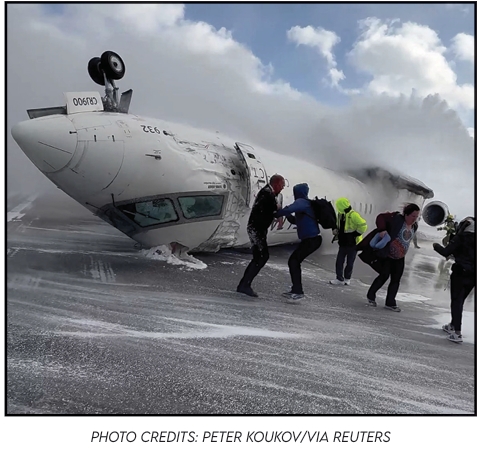
Just two days after Delta Air Lines offered $30,000 to each passenger aboard the flight that crashed and flipped in Toronto earlier this week, the airline is now confronting its first two lawsuits related to the incident and more could be on the way. The flight, operated by Delta, was carrying 76 passengers when the CRJ-900 aircraft crash-landed on Monday after noon. If all passengers accept Delta’s compensation offer, the airline will pay out approximately $2.3 million in total. However, one Texas-based passenger has already filed a lawsuit, arguing that the offer doesn’t adequately account for the physical and emotional trauma he endured. In his lawsuit, filed on Friday, the passenger described being “drenched in jet fuel,” which he claims caused emotional distress and mental anguish. He also reported suffering significant injuries to his head, neck, back, knees, and face. The crash resulted in 21 people being hospitalized, though Delta CEO Ed Bastian confirmed on Thursday that all have since been released. In an effort to address misinformation circulating online, Delta also released additional details about the flight’s crew. The company clarified that both the captain and first officer are fully certified by the Federal Aviation Administration (FAA).
Under international aviation treaties, passengers injured on international flights are entitled to up to $200,000 in compensation, but this amount can increase if the airline is found negligent. Passengers have up to two years to file lawsuits under these regulations. Investigations are underway and inconclusive what protocols were breached to lead to such an error landing. Once those findings come out Delta can be sure to expect more lawsuits.
A new multimedia exhibition at HVCC explores daily commutes as more than routine travel. “How We Get Here,” currently on display in the Teaching Gallery of the Administration Building, examines movement, memory, and personal experience through various artistic mediums. The exhibition is a collaboration between the Student Art League, Graphic Design Club, and Darkroom Club, featuring works in inkjet print, photography, video, and spoken word poetry. The works in this exhibition draw from a range of influences, from classic advertising to personal travel experiences and the routines of daily transit. The Graphic Design Club reimagines the Volkswagen Beetle ads of the 1960s, using nostalgia and consumer culture to reflect on modern commuting.
Some artists focus on other details that they notice during their commute, while others take a documentary-style approach, capturing the realities of students making their way to campus each day. Coordinated by Student Art League members A.J. Robert and Sara-Anne Blackwell, the exhibition includes contributions from a range of student artists with support from faculty advisors across departments. Participants include Student Art League co-presidents Mathias Mojallali and Perci Denley, Graphic Design Club president Aujai Tomlinson, and Darkroom Club president Ava DelVecchio, among others. “How We Get Here” is open to the public from February 6 to March 1. The Teaching Gallery hours are Tuesdays, Thursdays, and Fridays from 10 a.m. to 4 p.m.; Wednesdays from 1 p.m. to 7 p.m.; and Saturdays from noon to 4 p.m. More information is available at http://www.hvcc.edu/teachinggallery.
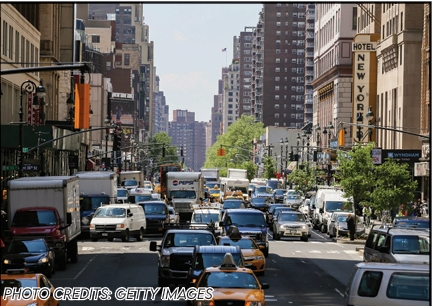
The city that never sleeps is also the second city with the worst traffic in the world right behind Istanbul. New York City was ranked the worst city for traffic congestion for the second year in a row. Manhattan being the borough where most of the traffic issues stem from. On Tuesday February 4, around 497,966 vehicles were accounted for in the city. Dreading traffic is a universal New Yorker experience. Reducing the overbearing traffic issue has always been something in the works and being optimized constantly. President Donald Trump had his administration order a stop on congestion pricing tolls in New York City. A nine-dollar toll on cars is imposed through a license reader. Most of these tolls are for vehicles entering Manhattan from South of Central Park on weekdays.
Though taxpayers’ money does go out to the roads we drive on and still get tolled for it. Should tolls be lowered or terminated completely. Should we continue to fund the MTA? Should the money go to highways? This passed Tuesday 2.19, Trump took to social media with “CONGESTION PRICING IS DEAD. Manhattan, and all of New York is SAVED.” Shortly after the announcement, the Metropolitan Transportation Authority filed a federal lawsuit to keep congestion pricing alive. Showing its effectiveness decreased congestion by 9%. Gov. Kathy Hochul says the tolls will continue. The dispute is fluid and still being held up in court. Hochul and the MTA are working on the city’s future and its controversial congestion pricing plan.
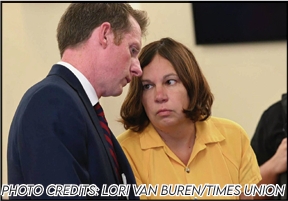
52-year-old Keri Mazzuca of Altamont has pleaded guilty to first-degree man slaughter and tampering with physical evidence in connection with the 1997 death of her newborn son. The infant was discovered burned and smothered to death near the Moses statue in Albany’s Washington Park on September 7, 1997, leading many to refer to the case as the “Baby Moses Case.” The case garnered widespread attention at the time, but despite extensive investigations, it remained unsolved for over two decades. The breakthrough came in 2020 when the Cold Case Analysis Center at the College of Saint Rose collaborated with Albany police. This led to a detailed DNA analysis by the FBI, which linked Mazzuca to the crime and resulted in her arrest in September 2024. During court proceedings, Deputy Chief District Attorney Jessica Blain-Lewis stated that Mazzuca caused the death of her newborn due to an extreme emotional disturbance. This factor would have been central to the defense had the case proceeded to trial. Under the plea agreement, Mazzuca faces up to 25 years in state prison, with sentencing scheduled for April 18. Albany County District Attorney Lee Kindlon praised the relentless efforts of law enforcement and forensic teams over the years and emphasized the role of emerging scientific techniques in solving cold cases. He expressed hope that this resolution would reinvigorate efforts to tackle other unsolved cases in the future. The “Baby Moses” case serves as a reminder of the advancements in forensic science and that investigator can always seek justice, no matter how much time has passed.
January 2025 is now officially the hottest January ever recorded, continuing a trend of rising global temperatures. According to the Copernicus Climate Change Service, the month’s average temperature was 55.8°F, making it 3.1°F warmer than pre-industrial levels. This marks the 18th out of the last 19 months where global temperatures have surpassed the 1.5-degree warming threshold set by the Paris Agreement. What makes this record stand out is that it happened despite La Niña, a weather pattern that typically brings cooler temperatures. Instead, much of the world saw significant warming. Canada, Alaska, Siberia, South America, Africa, and Australia all experienced unusually high temperatures. Meanwhile, parts of the U.S., Russia, and Southeast Asia recorded colder-than-average conditions, showing the complexity of cli mate patterns. Europe also felt the heat. It was the second warmest January ever recorded there, with southern and eastern Europe seeing temperatures more than 4°F above average. In contrast, regions like Iceland, the U.K., and northern France experienced colder-than-normal weather.
Scientists had expected 2025 to be cooler than last year due to La Niña’s influence, but so far, that hasn’t been the case. The Arctic, in particular, saw extreme temperature spikes, with some areas hitting 54°F above normal. While these individual records may seem like outliers, experts say they are part of a much bigger trend of increasing global temperatures. In the U.S., January was colder than usual in many places, but that doesn’t mean global warming is slowing down. A colder month in one region doesn’t change the overall upward trend in global temperatures. Data from the National Centers for Environmental Information shows that January’s global surface temperature was 2.4°F above the 20th-century average, making it the warmest January in recorded history. Looking ahead, there is a 7% chance that 2025 could end up being the hottest year ever. While that number may seem small, the fact that it is even a possibility says a lot about global warming. With record-breaking months becoming more frequent, climate experts urge for continued research, policy action, and global cooperation to slow the trend. January 2025 is another reminder that climate change is an ongoing issue with real-time impacts around the world.
Anyone who lives in a relatively urban area can tell you just how important public transportation is. Big city, small city, either one, public transportation is one of the key elements of traditional urban life. A few weeks ago, Carm Basile was revealed to be the new senior advisor for Park Strategies, a company that specializes in helping small businesses achieve their objectives. Basiles is looking to be a good fit for the job of Park Strategies, as Carm Basile has a lengthy history as the CEO of CDTA, a public-benefit company that directed and managed countless public transportation related projects within the Capital District of New York State (You see their buses just about everywhere in the area!). Carm was a major part of the company for over four decades, leaping from regional bus operator to chief executive for fifteen years until late 2024. It is hard to deny the positive impact Basile had on the company, overseeing the company even as it was named Best Mid-Sized Transit System in North America by the American Public Transit Association.
Basile’s extensive experience in the vast world of corporate directing and management granted to him by his time in CDTA will surely prove to be more than helpful for Park Strategies, whose entire company is about, well, business. According to Park Strategies’ official website, they assist a multitude of businesses with government relations, association management, and more, as well as offering insight and advice to smaller businesses via their business consulting services-all things that Carm Basile has no doubt dealt with a plethora of times in his past with CDTA. You don’t need to use much imagination to see how a public transport company like CDTA would have experience in those fields. Hopefully Basile’s expertise will prove to be as helpful for Park Strategies as most would expect.
Amazon is moving forward with plans to build a 3.2 million-square-foot distribution center in Montgomery County, near a New York State Thruway exit. The proposed facility, which would be one of the largest warehouses in the state, is expected to bring jobs and economic growth to the region, but it also raises concerns about traffic, environmental impact, and long-term community effects. The project site is in the town of Florida, just off Exit 28 of the Thruway. While Amazon has not officially confirmed the development, multiple reports state that the company is negotiating to purchase more than 200 acres of land for the facility. If approved, the warehouse would serve as a major distribution hub, handling goods for Amazon’s growing logistics network. Local officials and business leaders see the project as a major economic opportunity. Montgomery County Executive Matthew Ossenfort called the potential development “a game-changer,” citing the promise of job creation and increased tax revenue. Similar Amazon warehouses in other parts of New York have created thousands of jobs, ranging from warehouse staff to management positions. Supporters argue that this facility could provide much-needed employment opportunities for residents and boost local businesses.
However, not everyone is on board. Residents and community groups have raised concerns about the impact of such a massive facility. One major issue is traffic. With thousands of trucks and delivery vehicles expected to move in and out of the warehouse daily, local roads and Thruway access points could see increased congestion. Some fear this could lead to safety hazards and higher maintenance costs for infrastructure. Environmental concerns are also at the forefront. Large-scale warehouses require significant energy use, and the increased truck traffic could contribute to air pollution. Local activists are calling for thorough environmental impact studies before any final approvals are granted. Despite the concerns, the project is still in the early stages. Amazon would need to go through multiple layers of local and state approvals before construction can begin. This includes zoning changes, environmental reviews, and negotiations with local government officials. If the plan moves forward, it will mark another major expansion of Amazon’s footprint in New York. The company already operates several fulfillment centers across the state, including in Schodack and Liverpool. These facilities have played a role in Amazon’s broader strategy of speeding up delivery times for customers. As discussions continue, Montgomery County residents will be watching closely. The project has the potential to reshape the local economy, but questions remain about how it will affect daily life. Public meetings and hearings in the coming months will give the community a chance to weigh in on what could be one of the biggest developments in the area’s history.
Governor Kathy Hochul is emphasizing the efforts of New York’s Office of Fire Prevention and Control to safeguard firefighters and their families during Firefighter Cancer Awareness Month. Studies indicate that firefighters face a higher risk of cancer compared to the general public, primarily due to their exposure to toxins in smoke. As part of the 2025 State of the State address, Governor Hochul announced new legislation to prohibit the sale of firefighter gear containing harmful chemicals known as PFAS in New York. This measure aims to ensure that firefighters have access to the safest protective equipment available. “Keeping our firefighters safe as they protect our communities is critical,” said Governor Hochul. “I will continue to ensure they have the equipment and resources they need to stay safe.” Additionally, New York is training firefighters on how to decontaminate their gear and minimize their exposure to carcinogens. Since 2022, over 3,200 firefighters have undergone this training. Decontamination practices, such as using wipes and showering after a fire, can reduce exposure to harmful substances by up to 85%. The state is providing decontamination kits to over 1,100 fire stations thus far and expanding training to include more cancer prevention education. Protecting firefighters from these health risks remains a top priority.
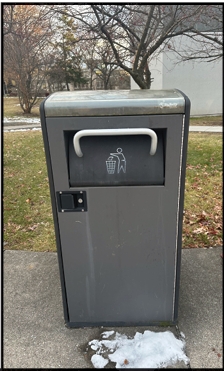
Do you recall the beloved Pixar film Wall-E? Wall-E is a compactor robot, tasked with the job of cleaning Earth. Wall-E compresses garbage in small cubes and he’s energized by a solar power unit. Wall-E isn’t unlike the Solar Powered Waste Compactors, or SPWC for short, that are throughout our campus. Solar Powered Waste Compactors are an environmental container for garbage. The compactor can hold around five times the normal capacity of a traditional trash bin. A Solar Powered Waste Compactor is equipped with solar panels powered by the sun to operate. SPWC are usually supplied with a battery to store the solar powered energy to continue operating regardless of the weather conditions or time of day. A signal is sent to the workers when the compactor is full to be emptied. The existence of Solar Powered Waste Compactors reduces our carbon footprint and garbage trucks don’t have to monitor waste levels on a daily basis due to the signal notification. The invention of Solar Powered Waste Compactors has the economic advantage of reducing costs by up to eighty percent. The cost is less due to decreased workers wage hours, gas fuel, and vehicle maintenance from unnecessary trips to check the status of traditional trash bins. The SPWC condenses trash into smaller cubes, minimizing the size of landfills and fits more garbage into the container. On our campus, there are Solar Powered Waste Compactors that are passed daily by faculty and students. The knowledge of understanding the benefits and use of SPWCs’ is equally as important as their location at Hudson Valley. At the Marvin Library at the Borrowing desk, Admissions Office in Gunther, or the PDF attached to this announcement are Scavenger Hunt sheets to find six of the Solar Powered Waste locations on the main campus! Participants should fill them out by Thursday, February 28, of which 5 people will be randomly selected to win free HVCC merchandise!!! Send the forms to [psanford2@hvcc.edu], [g-purcell4@hvcc.edu] or slip them under the door of Amstuz 314 to be entered into the giveaway!!


 The Hudsonian