Christian Rasmussen || Issue 10 || December 3rd, 2024
Troopers from Buffalo, New York, have arrested Devin Williams, a 42-year-old on Wednesday, November 20th, on charges of third-degree grand larceny. He is currently being held in Schenectady County Jail and is accused of stealing $25,000 from his employer in Schenectady, New York. After investigation, troopers determined that he had used the company credit card to make unauthorized purchases for his enrichment. The unauthorized purchases were allegedly made between October and December of 2022, 2 years before the arrest was made. The complaint was made on March 22, 2023, where the company accused Williams of utilizing the company’s credit card for his own personal purchases. He was located and arrested in his home in Buffalo, where he was transported to SP Princetown for processing and then later transported to the Schenectady County Correctional Facility to wait for arraignment. Troopers did not identify the business in question. Third-degree grand larceny is a felony that can sentence you to between 2 and a third years and years in prison. It is considered to be a class “D” felony, on the lower side of the scale. Grand larceny is the act of stealing money from your business for your own personal gain through unauthorized purchases. Over 25,000 dollars were stolen by Devin Williams, and the items bought with the illegal money are not currently disclosed. Devin Williams is currently awaiting a court decision on his sentencing, but it is to be presumed that he will be sentenced to a few years in prison.
As The 29th United Nations Climate Change Conference, COP29, enters its second week in Baku, Azerbaijan, attention intensifies on corporate accountability in the climate crisis. Todd Paglia, executive director of stand. Earth, is a leading voice at the conference, pushing for transparency and responsibility from major corporations. His target: Cargill, a global food giant accused of contributing to deforestation and greenwashing its climate efforts. “We’ve uncovered troubling practices tied to Cargill’s operations,” Paglia says, pointing to the company’s efforts to obscure the true extent of its environmental impact. Cargill’s involvement in a controversial project to build a railroad through the Amazon rainforest, putting Indigenous land at risk, adds to Paglia’s concerns. “This is a company that says one thing and does another,” he adds. Beyond corporate accountability, experts at COP29 are also calling for broader action. Amy Wilentz, a professor at the University of California, Irvine, brought up the difficulty of addressing climate change in regions where environmental issues are often viewed through religious or cultural lenses. “If you don’t call it climate change, if you just call it ‘the problem with the harvest,’ people are more likely to listen,” Wilentz explains. Wilentz also pointed out the political and economic barriers standing in the way of climate progress. “The whole world economy runs on fossil fuels,” she says, stressing that political leaders often avoid confronting climate change to protect their ties to industries like oil and gas. To push for more urgent action, Wilentz suggests direct action, such as the climate protests in England. “Maybe we should respond with actual roadblocks,” she proposes, advocating for civil disobedience to challenge the status Quo. Meanwhile, one of the standout initiatives of COP29 is the Global Cooling Pledge, which was launched last year at COP28 and reaffirmed by over 30 countries and organizations at this year’s conference. The pledge aims to reduce cooling-related emissions and ensure that vulnerable populations have access to life-saving cooling solutions as global temperatures continue to rise. Dr. Amna Bint Abdullah Al Dahak, UAE Minister of Climate Change and Environment, highlighted the pledge’s potential to curb emissions by 78 billion tons by 2050. “Cooling is not a luxury but a necessity,” she stressed, with extreme heat becoming an increasing global challenge. Countries like Brazil, Cambodia, and Ghana are already integrating cooling into their national climate plans, and cities are taking steps to improve urban cooling and reduce energy consumption. Despite the momentum surrounding the pledge, critics point to COP29’s location in Baku, citing Azerbaijan’s reliance on oil and gas and its questionable human rights record as problematic. However, Todd Paglia remains hopeful that the conference can still drive meaningful change. “The fight against climate change is far from over,” Paglia says, urging the global community to continue pushing for real, lasting solutions. COP29 may be nearing its end, but the crucial conversations sparked here will help shape the future of climate action.
Hudson Valley is seeing a milestone in its Applied Technologies Department, with a record number of female students enrolled in its automotive technology degree certificate programs. This fall, 12 women are pursuing automotive-related majors. This is one of the highest percentages of female students in this field over the college’s history. Currently, ~8.4% of the automotive department’s student population is women. Hudson Valley offers several automotive programs, those including Automotive Management A.A.S, Automotive Technical Services A.O.S, Automotive Technical Services-AutoBody Repair A.O.S, and Electric and Autonomous Vehicles A.O.S and certificate. Chris McNally, Department Chair of Applied technologies, believes that this shift is particularly significant. The college’s student body is 53 percent female, seeing an incremental increase of women in automotive programs is a noteworthy shift. For HVCC, this achievement is not about numbers- it’s about creating an inclusive environment for all students. McNally shared, “Through conversations with graduates, current students, and nationally recognized experts in attracting and retaining female students in STEM programs, we have worked intentionally to make these programs more welcoming to female students.” The increase in female enrollment in HVCC’s automotive programs is a clear indication of a broader shift in the industry. As demand for technicians continues to rise, diversity in the workplace is essential for meeting challenges of a rapidly changing field. A new perspective could be helpful.
Christian Rasmussen || Issue 10 || December 3rd, 2024
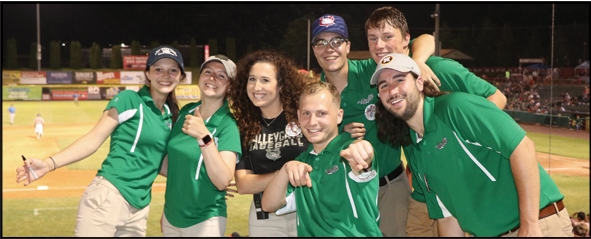
The ValleyCats an independent minor league baseball team in the Frontier League, have started an internship program involving their marketing and sales team. HVCC’s School of Business students were emailed last week with information about this internship. The Valley Cats are popularly known for their locality and home field, the Joseph L. Bruno Stadium, right next to Hudson Valley Community College. The internship will focus on the sales and marketing aspects of the sports team. During the first half of the internship, students will focus on using technology to collect and analyze data to help promote ticket sales and ‘drive business development’. The second half of this internship will include real-world experience in terms of marketing and working with the ValleyCats staff to learn about the business development process. The internship will last from May to early September, and students will spend some of their summertime learning the ins and outs of marketing strategy and sales management and development. The ValleyCats are the home of many opportunities for students, such as working concessions, singing the national anthem, or being a game mascot! Many students have received small part-time positions to get a few extra bucks without going too far from campus. Business programs and all their subsections, such as marketing and management, strongly urge internships to promote student success and growth. An internship this close to home is a great chance to get that experience under your belt. This is an amazing opportunity for all business students, so if you’re interested, please check your inbox and look for an email from Rachel C. Farina for more details!
The Chief Financial Officer of Ronald McDonald House Charities of the Capital Region has been fired after being charged with criminal mischief for allegedly drawing swastikas on a pro Trump lawn sign. Michael Coleman, 59, is facing the charge after allegedly defacing the sign on October 1 in Duanesburg. According to court documents, Coleman confessed to the vandalism but claimed he did not remember when or where it occurred. Coleman’s alleged actions were captured on a surveillance camera installed by the Schenectady Republican Committee to monitor political signs in the area. Committee Chairman Thomas Kennedy said he was shocked by the discovery. “I was very disappointed to find out he worked for Ronald McDonald House,” Kennedy said. “There’s no excuse for tampering with people’s voices.” The incident also involved the theft of other pro-Trump signs in nearby neighborhoods, including Courtney Drive and Lea Drive, according to court records. Residents had reported signs going missing multiple times leading up to the November election. Political activists from both sides have condemned the vandalism, highlighting the damage such acts can do to public discourse. Libby Post, a political consultant and activist, said, “Defacing political signs just further erodes our political discourse.” Ronald McDonald House Charities, known for providing housing and support to families of sick children, has worked to distance itself from the controversy in a statement that explained the disconnect between his actions and the charity’s mission. “The recent actions taken by Michael Coleman do not align with the mission and values of RMHC-CR,” the statement reads. “The focus of RMHC-CR is and will continue to be caring for families with sick children, so they can focus on what matters most – the health and wellbeing of their child.” Coleman had been with the organization for several years before his termination. Details about his tenure and specific contributions to the charity were not disclosed. Coleman turned himself in before being charged and is scheduled to appear in Duanesburg Town Court on December 4. As the investigation continues, the incident has raised questions about the motivations behind such acts and their implications on public trust. For now, Ronald McDonald House leaders are working to reassure the community that their focus remains on helping families during some of the most challenging times in their lives. For the families relying on Ronald McDonald House, however, the charity’s message remains clear: their mission is to provide support, not division.
In August 2024, the Department of Justice (DOJ) took a major step in its ongoing fight against Big Tech, declaring that Google’s hold over the search market is an illegal monopoly. The ruling claims that Google’s dominance in search engines and its tightly connected platforms like Chrome and Android, has blocked competition, leading to unfair advantages in the digital space. This decision results from a year’s long investigation into how Google has used its position to maintain control, often by making exclusive deals with companies like Apple to make Google the default search engine on their devices. The DOJ’s solution? A series of drastic measures, including forcing Google to sell Chrome and restructure its Android business. The DOJ is also calling for Google to stop paying device makers to keep its search engine preinstalled, which it argues is a way of keeping other competitors out of the game. Additionally, the department wants Google to make its search index available to rivals at a lower cost, giving them a fair shot at competing. If the court agrees to these measures, it could change the way Google operates and have a lasting impact on the digital world. However, Google has made it clear it plans to fight back. In response to the DOJ’s proposals, the company has called the suggestions “unprecedented” and warned that breaking up its services could have serious consequences. It argues that these drastic actions could affect the services people rely on daily and that the proposals are a severe overreaction. Google has already indicated it will appeal the ruling and will offer its proposals to counter the DOJ’s moves. For many, this case is about more than just Google. If the DOJ wins, it could set a precedent for similar cases against other tech giants, pushing for tighter regulations and more competition across the board. This could ultimately lead to a digital marketplace where smaller companies have a better chance to compete, resulting in more choices and possibly better privacy protections for consumers. On the other hand, a breakup of Google could shake up the user experience that millions of people depend on daily, from searching the web to using Gmail and Google Maps. As this legal battle continues, the outcome could reshape the digital landscape. It’s clear that the government is serious about taking on the power of Big Tech, and how this case plays out will likely affect how other tech companies operate moving forward. Whether or not the ruling will lead to major changes or is just the beginning of a larger push to break up monopolies in the tech industry remains to be seen, but the stakes are high.
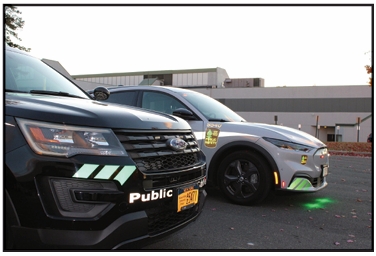
The safety and well-being of students, staff, and visitors is the top priority of the Public Safety department. Whether you’re on campus for classes, events, or simply visiting, Public Safety is here to ensure a secure environment, offering a range of services designed to keep everyone safe and assist in times of need. In case of ANY emergency, public Safety is a good resource to quickly access help, as they are already on campus. Public Safety recommends not hesitate to give them a call, because they would rather deal with a false incident than miss a real emergency. You can dial the emergency number (518-629-7210) through a personal phone or use the outdoor emergency phones and dial 911 there to get in contact with them. So, what does Public Safety do? In the event a student ever feels unsafe walking alone, especially during evening hours or nights, Public Safety offers escort services to accompany you across campus safely. Students can use this service whether they’re heading to their car, or even between buildings. On the other hand, if you ever find yourself locked outside of your car or having a dead battery, a call to Public Safety can provide assistance to get back on the road. Public Safety also keeps the campus safe by regularly patrolling the campus through parking lots to be on the lookout for unusual things, provide help, and promote security. Our Business Manager Izzie Holt had gotten to do an exclusive ride along, and this is what she had to share about this amazing and unique experience, “As a student, I often see the officers around campus, but I never really understood the full scope of their responsibilities until I spent a few hours with Pontoon. The ride-along began with a quick discussion/brief about the officer’s typical duties. It was clear that their role goes far beyond just responding to campus happenings. They patrol the campus, ensuring the safety of students, staff, and visitors. But they also serve as a visible presence, providing reassurance and helping to prevent potential incidents. We drove around different areas of the campus, checking for any suspicious traffic activity, ensuring that parking lots were secure, and responding to any calls from the dispatcher to assess situations. One of the most interesting parts of the ride-along was when we stopped by a forum class specifically designed for students in criminal justice or related fields. The officer spoke about real-world applications of what students were learning in the classroom, offering insight into the daily tasks and challenges faced by public safety officers. It was interesting to hear how the profession works from an educational perspective. In the end, this ride-along gave me a greater appreciation for the role public safety officers play in maintaining a safe and supportive campus environment. They are not just enforcers of rules; they’re part of a broader community, ensuring that everyone on campus can feel safe and focus on their education. I would highly recommend this experience to any student who’s interested in learning more about the challenges and responsibilities of public safety officers.” Overall, it’s the job of Public Safety to create a secure and safe environment for students who are learning. Don’t be afraid to use the resources when you suspect there is an emergency.
Experts warn of growing cancer incidence among young adults, citing lifestyle and environmental factors.
Recent studies reveal that cancer rates are on the rise among young adults, particularly for colorectal and breast cancer, two types traditionally more common in older adults. Data from Cedars-Sinai shows that diagnoses for these cancers in younger age groups have steadily increased over the past few decades, with individuals in their 20s, 30s, and 40s facing higher risks than before.
Experts aren’t entirely certain why these rates are rising but believe changes in lifestyle, diet, and environmental factors might contribute. Factors such as processed food consumption, sedentary habits, and rising obesity levels are under scrutiny. Additionally, genetics and family history remain important aspects, with some individuals more susceptible to cancer at younger ages due to inherited genetic factors.
The rise in these cases has led to adjustments in screening recommendations. For example, the American Cancer Society now suggests that individuals begin colorectal cancer screening at 45 instead of 50, in response to the increasing diagnoses in younger adults. Breast cancer screenings are also being reconsidered, with recommendations for early screenings for those with a family history or higher risk factors.
Dr. John Leppert from Cedars-Sinai explains that “Catching cancer early can be a huge factor in treatment success,” adding that, especially with early-onset cancer, “regular checkups and knowing family history are more important than ever.” Doctors recommend that young adults stay proactive about their health, report unusual symptoms early, and advocate for screenings if they believe they might be at risk.
The rise in cancer rates among younger adults is alarming, but there are positive steps that can be taken. Young adults can reduce their risk by making lifestyle changes such as increasing physical activity, eating a balanced diet, and staying on top of regular health screenings. While there’s still much to learn, researchers and health professionals are working to understand this trend, offering strategies to help younger populations stay vigilant and informed.
The United States presidential election has concluded. Donald Trump is back in office for his second term. Some people are upset, others are joyful, and the neutral part of the population feels no particular way. It has been a year of infighting for the United States as it always is during the presidential election. And though the battle for president is done, the political war will rage on.
For decades, people in the U.S. have found themselves in an endless war of politics. Vote red or vote blue. Democrat or Republican. Far left or far right. You’re either saving the country or destroying it. You must choose a side; neutrality is not an option. This is dangerous rhetoric. Being constantly promoted to the two extremes can leave one feeling everything is black and white with no grey in between. We ironically see freedom of choice trampled over with this two-party system lunacy. There has always been a growing divide in politics, and it never ends no matter how many election cycles we have and no matter who is running for president.
Whether the matter is about elected officials, policies and law, or the justice system, politics is always going to cause an uproar. Because politics is concerned with the governing body over a group of people; someone is always going to have something to say.
Photo credits: The Observer
In the States, everyone has an equal opportunity to be heard. That doesn’t guarantee all requests to be granted, because we live in a nation where every vote counts and in turn the majority rules. But it seems people aren’t satisfied with that, the system that creates the most opportunity for fairness.
The reality is that nobody is going to get everything they want out of government. Somebody is always going to be stepping on someone else’s foot, intentionally or not.
And because of the vicious climate of politics, how it’s worsened over the years, the fighting will not cease.
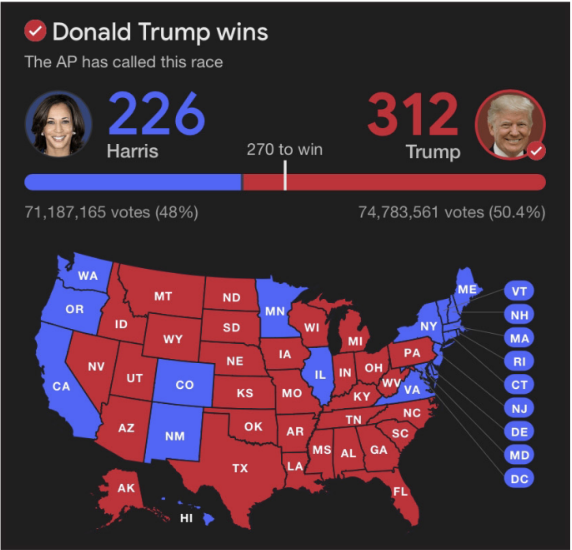
After nearly two years of campaigning for both parties, the 2024 presidential election is finally over. Although votes are still being counted days later, the election was called for Donald Trump earlier than possibly anyone expected. Nearly every poll and aggregator claimed the election was extremely close — Nate Silver, statistician and founder of poll-aggregation site 538, claimed to have run 80,000 simulations on his forecasting model and found the results to be “literally closer than a coin flip” with Harris having a 50.015% chance to win. Journalists and citizens alike bemoaned a possible repeat of the 2000 election, with drawn-out discourse over the true winner and possible recounts.
Nevertheless, the results were clear—and they were as surprising as they were devastating to Democrats.
Not only did Trump win the electoral college, including all of the “tipping point” swing states (Wisconsin, Michigan, Pennsylvania, North Carolina, and Georgia), but he beat the odds and took the popular vote as well.
Furthermore, nearly every state had a noticeable shift towards the Republican Party in its voter results, with California and New York holding the strongest shift at 12%.
No bones about it — it was a blowout, the belated “red wave” that conservatives had promised in 2022.
Both candidates made unique speeches Wednesday touching on their top issues.
Kamala Harris’ speech focused on the future of American democracy, which was the top polled voting issue for Democrats this election. Harris was sure to point out that “A fundamental principle of American democracy is that when we lose an election, we accept the results.” This is no doubt referring to the attack on the Capitol in 2021 spurred on by Trump’s insistence that the 2020 election had been stolen. Though she conceded that America may well be “entering a dark time”, Harris reassured voters that “the light of America’s promise” would endure.
Trump’s speech started out a bit differently. “We have a country that needs help, and it needs help very badly,” Trump said at a rally in Florida Wednesday morning. “We’re going to fix our borders, we’re going to fix everything about our country.” The language leaned towards an image of an America that had been thoroughly broken, and had even been taken over by foreign, un-American entities: “This will forever be remembered as the day the American people regained control of their country.” Although Trump claimed “It’s time to put the divisions of the past four years behind us,” he may not have been referring to anyone on the left at all–in the same speech, he praised Vice President elect JD Vance for voyaging “into the enemy camp” for Vance’s interviews on CNN and MSNBC.
It’s hard to reconcile a supposed message of unity with this and Trump’s vague, often ominous promise to purge “the enemy from within”. So, what’s next for America in 2025? The most talked-about potential policy change this week is Trump’s proposed tariffs on all foreign goods. The current plan is to place tariffs up to 60% on goods imported from China, and a universal tariff of 10% or more on all other imports. Though tariffs are meant to encourage consumers to buy products made in their home country, America has offloaded so much of its manufacturing that consumers may just have to deal with the increased prices.
Many American manufacturers also use parts and materials imported from other countries, so even domestic products will likely see a price increase. Even those who voted for Trump are reportedly feeling uneasy about what this means for their personal finances. While the economy was the issue that likely pushed Trump over the top in this election, many liberals are more concerned with “Project 2025” a game plan written by some of those closest to Trump’s administra-tion that could prove devastating to social and economic progr-essivism in the United States. Among the proposed policies are a move towards a national ban on abortion, legislation aimed at restricting birth control options, cutting environmental regulations drastically, removing legal protections for all LGBT+ people, dis-mantling federal programs like Medi-care and Medicaid, and even getting rid of the Department of Ed-ucation altogether. The plan could cripple the working class by destroying America’s social safety net, and make the country an extremely dangerous place for women and minorities. And jud-ging from Google search result trends, with “what is Project 2025” spiking after Trump’s election, many voters were not informed that this plan even existed. Ultimately, as with every new administration, we’ll have to wait and see which campaign promises are fulfilled, and which were made to be broken.





 The Hudsonian