Meta Settles Trumps Lawsuit For $25M

Adem Jones || Issue 12 || February 4, 2025

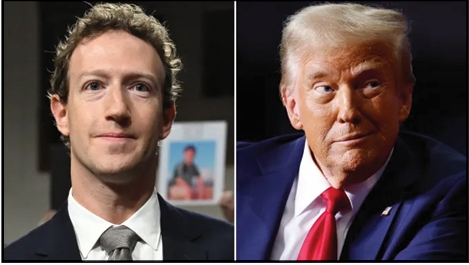
Meta Platforms has agreed to pay $25 million to settle a lawsuit filed by President Donald Trump in 2021, following the suspension of his Facebook and Instagram accounts after the January 6 Capitol events. The settlement allocates $22 million to a fund supporting the construction of President Trump’s presidential library, with the remaining $3 million covering legal fees and other plaintiffs involved in the case.
In the lawsuit, President Trump alleged that Meta’s actions violated his First Amendment rights, asserting that the company engaged in improper censorship by suspending his ac
counts. Meta assured that the suspensions
were due to policy violations related to inciting violence, not external pressures.
This settlement marks a significant development in the ongoing discussions about content moderation and free speech on social media platforms. It also reflects Meta CEO Mark Zuckerberg’s efforts to navigate the complex relationship between technology companies and political figures.

Meta had previously contributed $1 million to President Trump’s inaugural fund and recently ended its fact-checking program. Some see this move as a way for the platform to reposition itself to be in better standing under the Trump administration. Zuckerberg states that this shift embraces free speech in our shifting political and social landscape. Meta will use a ‘community notes’ style system, similar to the platform X, previously Twitter. Critics have expressed concern over the settlement, suggesting it sets a concerning tone. Senator Elizabeth Warren commented, “It looks like a bribe and a signal to every company that corruption is the name of the game.” She questioned what Zuckerberg might expect in return for this “investment.”
This is the second recent legal settlement involving President Trump and a major corporation. In December, ABC News agreed to pay $15 million to settle a defamation lawsuit related to coverage of allegations against President Trump. The Meta settlement brings to light the ongoing challenges and debates surrounding content moderation, free speech, and the influence of major technology companies in the political sphere.

Farm Groups urge Trump to prevent deportation of Key Workers

Adem Jones || Issue 10 || December 3rd, 2024

Farm groups across the U.S. are calling on the Trump administration to spare their workers from deportation, warning that sending them home could disrupt the country’s food supply. These workers, many of whom are undocumented, are a vital part of the farming industry, making up a significant portion of the agricultural workforce. If the government follows through with deportations, farm
groups say it could create a serious labor shortage and lead to higher food prices for consumers.
Agriculture has long relied on immigrant workers, especially those from Mexico, to help plant, harvest, and process crops. The National Farmers Union (NFU), which represents thousands of family farmers, has spoken out about the situation. Rob Larew, the president of NFU, says that these workers are crucial to keeping farms running, stating, “Our agricultural system depends on these workers. Without them, we’d see serious disruptions in food production and increased prices for consumers.”
The main concern is a possible end to the Temporary Protected Status (TPS), a program that lets workers from certain countries stay in the U.S. temporarily if their home countries are facing war or natural disasters. Many farm workers currently benefit from TPS, and if the program is discontinued, it could affect thousands of people working in agriculture. The Trump administration has
shown interest in ending TPS for several countries, and farm groups are worried about the consequences. Chuck Conner, president of the National Council of Farmer Cooperatives,
says losing these workers would be disastrous for the agriculture industry. “We risk losing our ability to feed America,” he said. “There’s simply no other group of workers who can replace them.” Farm groups are asking for a solution that would allow workers to stay, at least for the time being. They’re not
looking for permanent amnesty, but rather a temporary fix to prevent a mass exodus of workers that would hit the farming industry hard. Bob Stallman, a farmer and advocate for agriculture, points out that these workers have been trained and have built lives in the U.S. over the years. “It doesn’t make sense to remove them when we’re already struggling to find enough workers,” he says. There’s also concern about the broader economic effects. Some experts worry that losing a large portion
of the farm labor force would make fresh produce more expensive and
harder to find in stores. While the Trump administration has pushed for stricter immigration policies, many in agriculture are calling for more flexibility, especially when it comes to workers who are already part of the system. The debate over immigration and farm labor is likely to continue, as
the Trump administration weighs its options. On one side, some argue for stronger border security and stricter immigration laws. On the other, farm groups say that without the workers already in place, the country could face serious consequences, from labor shortages to rising food costs. The outcome of this issue could have a lasting impact on U.S. agriculture, and many are hoping that the administration will listen to the concerns of farmers before making any final decisions.

Donald Trump’s Cabinet Picks

Adem Jones || Issue 10 || December 3rd, 2024

As President-elect Donald Trump announces his picks for key Cabinet positions, the nominations have quickly sparked debate and concern, particularly given the controversial figures selected to serve in high-profile roles. The incoming administration’s choices are drawing criticism from progressive voices, who see many of Trump’s picks as a continuation of his previous administration’s trend of favoring wealthy elites, media personalities, and individuals with questionable pasts. On Tuesday, Trump revealed several eye-catching selections, including Dr. Mehmet Oz, a celebrity physician and
TV personality, nominated to lead the U.S. Centers for Medicare and Medicaid Services. Alongside Oz, billionaire financier Howard Lutnick was selected for commerce secretary, and Linda McMahon, the former WWE executive, and longtime Trump ally, was tapped to head the Department of Education. While Trump has long advocated for bringing in outside business and media figures, these appointments have drawn heavy scrutiny. Dr. Oz, known more for his TV shows than his medical credentials, will now oversee one of the nation’s most critical health agencies. Critics argue that Oz’s lack of government experience and controversial stances on health, such as promoting suspicious alternative treatments, make him unqualified to manage Medicare and Medicaid at a time when millions rely on these programs for healthcare. Lutnick, a billionaire whose company Cantor Fitzgerald has a history of financial scandals, is slated to manage the U.S. economy in the role of commerce secretary. His appointment raises serious questions about whether Trump’s administration will continue prioritizing the interests of the wealthiest Americans over working people, especially as Lutnick’s wealth is largely tied to the finance sector, an industry often criticized for exploiting the economic system to its benefit. Trump’s focus on financial elites and corporate interests seems to be setting the stage for a Cabinet more concerned with protecting the wealthy than addressing the needs of the general population. McMahon’s appointment to head the Department of Education is another
source of contention. While McMahon has spent decades in the business world, overseeing the WWE empire, her limited background in education raises alarm for critics. Trump’s push to give states more control over education has already sparked concern that it could lead to the defunding and dismantling of public education. As someone with no real educational experience, McMahon’s selection is seen by many as a sign that Trump may double down on policies that prioritize privatization and undermine public schools, further exacerbating inequality. Another controversial pick that has raised eyebrows is Trump’s nomination of Rep. Matt Gaetz for Attorney General. Gaetz, already under investigation by the FBI for his alleged involvement in sex trafficking, continues to be a polarizing figure. The public release of hacked documents that included serious allegations against Gaetz only added to concerns about his suitability for a role that demands the highest standards of integrity. Despite these revelations, Trump has shown no signs of reconsidering Gaetz’s nomination,
raising questions about his commitment to accountability and justice. Other nominees, such as Fox News host Pete Hegseth for Secretary of Defense, and former presidential candidate Tulsi Gabbard for Director of National Intelligence, are similarly attracting scrutiny. Hegseth’s ties to conservative media and his involvement in inflammatory political rhetoric have led many to question whether he is fit to lead the nation in defense, while Gabbard’s controversial views on foreign policy have raised red flags for those concerned about the direction of U.S. intelligence and military operations. Perhaps most concerning is Trump’s nomination of Robert F. Kennedy Jr., a vocal critic of vaccines, to head the Department of Health and Human Services. Kennedy’s anti-vaccine stance is a serious public health
risk, especially after such a life-altering global pandemic. His selection underscores the broader question of whether the Trump administration will continue to prioritize fringe, right-wing viewpoints over scientific evidence and public health. As these nominees head toward Senate confirmation, many progressive lawmakers and activists are already calling for intense scrutiny of each candidate. With several of these picks facing public scandals or controversies, there are growing concerns that the incoming administration may be more focused on rewarding political allies and business interests than on governing in the best interest of the American people. The pushback is likely to intensify as the Cabinet nominees move through the confirmation process. Senate Democrats, who hold a narrow majority, will need to carefully consider whether they can support these individuals given their
controversial pasts and positions. Some moderates may be forced to weigh the political fallout of supporting figures who are widely seen as unqualified or harmful to public welfare. As Trump prepares to take office for a second term, it’s clear that his approach to Cabinet appointments will prioritize loyalty and conservative credentials over experience, expertise, or ethical considerations. For many Americans, these nominations signal a troubling continuation of the administration’s disregard for qualifications and transparency in favor of rewarding political allies and corporate backers.

Donald Trump and Elon Musk’s Relationship

Adem Jones || Issue 10 || December 3rd, 2024

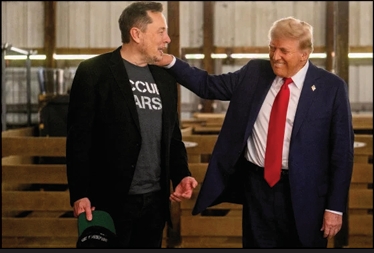
President-elect Donald Trump has tapped billionaire entrepreneur Elon Musk to lead the newly created Department of Government Efficiency (DOGE), solidifying a growing alliance between two of the most influential figures in politics and technology. This partnership, marked by public endorsements and mutual admiration, has already begun to reshape political and technological discourse in the U.S. Musk, known for his leadership roles at Tesla, SpaceX, and social media platform X, endorsed Trump during the 2024 campaign after an assassination attempt on the former president in July. Musk’s public backing came as a surprise to some, given his previously critical stance on Trump. Musk even tweeted in 2021 that Trump should “hang up his hat & sail into the sunset.”
However, his endorsement marked a turning point, with Musk becoming one of Trump’s most vocal supporters. “President Trump is the only one who can save democracy,” Musk declared at a rally in Allegheny County, Pennsylvania, in October. Musk’s influence went beyond words. Reportedly he invested at least $175 million into Trump’s campaign, aiding Republican efforts in swing states like Pennsylvania. Musk also played a direct role in the campaign, organizing town halls and fielding voter questions. His support has not gone unnoticed by Trump, who praised Musk as a “star” during campaign speeches and celebrated his contributions to technology and innovation. Trump’s admiration culminated in Musk’s appointment to DOGE, a new federal agency aimed at improving government efficiency and reducing waste. “This department will send shock waves through the system,” Musk said in a statement. Musk’s involvement in Trump’s administration raises questions about potential conflicts of interest, given his companies’ extensive ties to the federal government. SpaceX and Tesla have both benefited from billions of dollars in government contracts and subsidies. At the same time, Tesla is under federal investigation for the safety of its self-driving technology. Eric Lipton, an investigative reporter for The New York Times, highlighted this duality, saying, “He is simultaneously being targeted by the federal government and being paid billions of dollars by the federal government.” Despite the scrutiny, Musk has become a central figure in Trump’s inner circle,
even participating in phone calls with foreign leaders like Ukrainian President Volodymyr Zelenskyy.
His role signals a shift in the relationship between business leaders and political power, blending financial influence with policymaking. Not everyone believes the alliance will last. Adam Clark Estes, senior technology correspondent at Vox, expressed skepticism about the sustainability of their partnership. “I don’t think those two personalities can stay friends for too long,” Estes said. “Even
if he lasts the next two months, I think he’ll leave a tremendous impression on the Trump administration.”

Photo Credits (below): Justin
Merriman / Bloomberg via
Getty Images file